Best Japanese Kimono Apprenticeship Schools 2026: Enrollment Guide
Preserving the Silk Thread: Japanese Fashion Education in 2026
The global renaissance of traditional Japanese clothing has reached a critical inflection point in 2026. As international demand for authentic, handcrafted garments like the kimono, yukata, and hakama surges, the preservation of ancient textile techniques has never been more vital. For aspiring artisans, designers, and cultural historians, entering a Japanese fashion education school or a traditional apprenticeship program offers an unparalleled opportunity to master centuries-old crafts. However, navigating the intricate landscape of Japanese vocational training, university degrees, and the highly exclusive 'deshi' (master-apprentice) system requires precise planning and up-to-date knowledge.
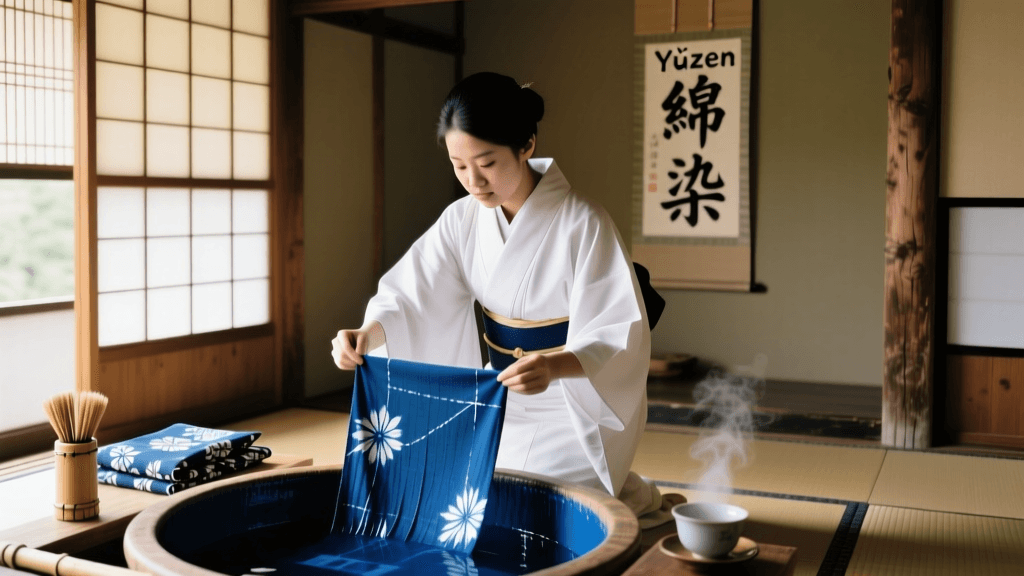
In 2026, the intersection of heritage craftsmanship and modern sustainability defines the curriculum of top-tier institutions. Schools are now integrating eco-friendly botanical dyes, peace silk (Ahimsa silk) sourcing, and digital archiving of master patterns alongside rigorous hand-dyeing and weaving practices. Whether you aim to specialize in the vibrant, pictorial designs of Kyo-Yuzen dyeing or the complex, mathematical precision of Nishijin-ori weaving, understanding the current educational pathways is your first step toward mastering Japanese traditional garments.
The Evolution of the Deshi System and Formal Education
Historically, the transmission of Japanese textile arts relied exclusively on the 'deshi' system, where a live-in apprentice would spend a decade or more under the strict tutelage of a master artisan. While this traditional master-apprentice model still exists in 2026, particularly in highly specialized workshops in Kyoto and Kanazawa, it has been supplemented by formalized vocational schools (Senmon Gakko) and university fine arts programs. These modern institutions provide a structured environment where international students can acquire the necessary Japanese language skills, cultural context, and technical foundations before entering a master's workshop.
According to the Association for the Promotion of Traditional Craft Industries, the Japanese government has actively subsidized traditional craft education in 2026 to combat the aging artisan population. This has led to an increase in English-supported foundational courses and specialized grants for international students who commit to preserving designated traditional crafts (Dento-teki Kogeihin).
Core Techniques Taught in 2026 Programs
- Kyo-Yuzen Dyeing: Originating in the 17th century, this resist-dyeing technique uses rice paste to create intricate, multi-colored pictorial designs on silk. Apprentices spend their first two years solely mastering the application of paste using specialized conical paper tubes (Tsutsu).
- Nishijin-ori Weaving: Produced in Kyoto's Nishijin district, this technique involves dyeing the threads before weaving them into complex brocades. Modern 2026 programs teach both the traditional hand-operated Jacquard looms and the preservation of punch-card pattern programming.
- Edo-Komon Micro-Patterns: A highly specialized stencil-dyeing method from Tokyo where patterns are so fine they appear as a solid color from a distance. Carving the 'Ise-katagami' stencils requires immense precision and is a dedicated major in several Tokyo vocational schools.
- Shibori Tie-Dyeing: Arimatsu and Kanazawa remain the hubs for Shibori. Students learn dozens of binding, stitching, and clamping techniques to create organic, textured patterns on silk and hemp.
Comparing Educational Pathways for 2026 Enrollment
Choosing the right educational vehicle depends on your current skill level, Japanese language proficiency, and long-term career goals. Below is a comprehensive comparison of the three primary pathways available to domestic and international students in 2026.
| Pathway Type | Duration | 2026 Est. Tuition (JPY) | Primary Focus | JLPT Requirement |
|---|---|---|---|---|
| University Degree (BFA/MFA) | 2 to 4 Years | ¥1,800,000 - ¥2,200,000 / yr | Theory, design integration, textile science, contemporary fashion | N1 or N2 |
| Vocational School (Senmon Gakko) | 2 to 3 Years | ¥1,200,000 - ¥1,500,000 / yr | Intensive hands-on technique, workshop readiness, business management | N2 minimum |
| Traditional Master-Deshi (Direct) | 5 to 10+ Years | Stipend / Room & Board | Total immersion, mastery of a single micro-technique, lineage preservation | N1 (Fluent) |
Top Institutions for Traditional Garment Education
1. Traditional Arts Super College of Kyoto (TASCK)
Located in the heart of Japan's cultural capital, TASCK is arguably the most prestigious vocational institution for traditional crafts. Their 2026 curriculum offers dedicated tracks in Nishijin weaving, Kyo-Yuzen dyeing, and traditional embroidery. The school is unique in its 'dual-mentor' system, where students learn foundational skills in modern classrooms before being placed in the workshops of Living National Treasures for their final year.
2. Kyoto University of the Arts (Traditional Arts Department)
For those seeking an academic approach alongside practical skills, this university offers robust BFA and MFA programs. The 2026 syllabus heavily emphasizes the intersection of traditional textiles and modern sustainable fashion. Students frequently collaborate with contemporary fashion houses to adapt kimono silhouettes and dyeing techniques for global ready-to-wear markets, ensuring the survival of the craft through commercial viability.
3. Bunka Fashion College (Tokyo) - Fashion Textile Course
While globally renowned for avant-garde and contemporary fashion design, Bunka's textile department maintains a rigorous traditional crafts module. Students here learn the historical context of the kimono, the geometry of the 'Tanmono' (traditional bolt of cloth), and advanced Shibori techniques, blending them with modern digital textile printing and 3D garment simulation.
Step-by-Step Enrollment Guide for International Students
Applying to a Japanese fashion school as an international student requires navigating specific bureaucratic and linguistic hurdles. The 2026 enrollment cycle has seen streamlined digital applications, but strict language and visa requirements remain in place.
- Achieve JLPT N2 or Higher: Almost all hands-on vocational programs and master apprenticeships require a minimum of N2 on the Japanese Language Proficiency Test. The nuanced vocabulary of traditional dyeing and weaving cannot be easily translated, making fluency a matter of workplace safety and precision.
- Prepare a Specialized Portfolio: Unlike Western fashion portfolios that focus on silhouette and conceptual sketches, Japanese traditional craft programs look for patience, precision, and material understanding. Include high-resolution macro photography of your textile manipulations, dyeing experiments, and any evidence of repetitive, meticulous handwork.
- Secure the Certificate of Eligibility (COE): Once accepted, your school will sponsor your COE for a 'Student' visa. According to the official Study in Japan portal, processing times in 2026 average 8 to 10 weeks, so early application is critical.
- Interview and Practical Exam: Top schools like TASCK require an in-person or live-streamed practical exam. You may be asked to demonstrate basic brush control, thread tensioning, or color mixing within a strict time limit.
The 2026 Apprentice's Toolkit: Essential Equipment
While schools provide heavy machinery like looms and large steaming vats, first-year apprentices are expected to procure their own hand tools. Building a relationship with traditional toolmakers is considered part of the education. Here are the essential tools a 2026 Kyo-Yuzen apprentice must acquire:
- Yuzen Brushes (Hake): Made from specific animal hairs, including horse, goat, and raccoon dog. An apprentice needs at least five different stiffness grades for applying background dyes versus fine detail work.
- Tsutsu (Paste Cones): Hand-rolled brass or copper cones with interchangeable tips of varying millimeters, used to extrude the rice-paste resist onto the silk.
- Shinshi (Tenter Hooks): Small bamboo or metal frames with needle-points used to stretch the silk taut during the dyeing process, preventing the fabric from shrinking when wet.
- Hera (Spatulas): Cypress wood spatulas used for mixing thick dyes and applying ground-color pastes evenly across the textile.
- Eco-Filtration Dye Vats: In 2026, many independent apprentices invest in personal, closed-loop micro-filtration systems for their home studios to comply with Kyoto's strict new zero-waste water disposal regulations regarding synthetic mordants.
Sustainability and Technology in the 2026 Curriculum
The romanticized image of the artisan washing silk in the freezing waters of the Kamo River is largely a thing of the past. Modern environmental regulations and the urgent need for sustainable practices have transformed the educational landscape. In 2026, students are taught advanced water-recycling techniques and the chemistry of plant-based mordants that eliminate heavy metal runoff. Furthermore, digital archiving is now a mandatory module. Apprentices learn to use high-fidelity spectral scanners to digitize the exact color profiles and weave structures of antique Edo-period garments, ensuring that if a physical masterpiece degrades, the mathematical data required to recreate it remains intact.
Conclusion: Committing to the Craft
Embarking on a Japanese kimono apprenticeship or enrolling in a traditional fashion school in 2026 is not merely an educational choice; it is a commitment to cultural preservation. The path is demanding, requiring years of repetitive practice, linguistic dedication, and a deep respect for the materials. However, for those who persevere, the reward is the ability to breathe life into silk, transforming raw threads into wearable masterpieces that carry the weight of history and the innovation of the future. As the global fashion industry increasingly turns toward slow fashion, heritage crafts, and sustainable textiles, the artisans trained in Japan's rigorous 2026 programs will be at the absolute forefront of the luxury textile revolution.