Sustainable Japanese Natural Dye Plants & Eco Methods 2026
The Renaissance of Kusaki-Zome in 2026
As the global fashion industry faces stringent circularity mandates in 2026, the ancient Japanese art of Kusaki-zome (草木染め), or natural plant dyeing, has transitioned from a niche heritage craft to a cornerstone of sustainable textile production. Unlike synthetic petrochemical dyes that account for nearly 20% of global industrial water pollution, Kusaki-zome relies on renewable botanical sources, biodegradable mordants, and closed-loop water systems. According to the Ellen MacArthur Foundation, the shift toward regenerative agriculture and bio-based dyes is one of the most critical pillars of circular fashion in 2026, making Japanese botanical dyeing techniques more relevant than ever.
For modern artisans, sustainable fashion designers, and eco-conscious hobbyists, mastering Japanese natural dye plants offers a pathway to create vibrant, colorfast textiles while maintaining a zero-waste studio. This guide explores the most vital Japanese dye plants, eco-friendly mordanting methods, and actionable, water-conscious recipes for the modern dyer.
Core Japanese Natural Dye Plants for Sustainable Textiles
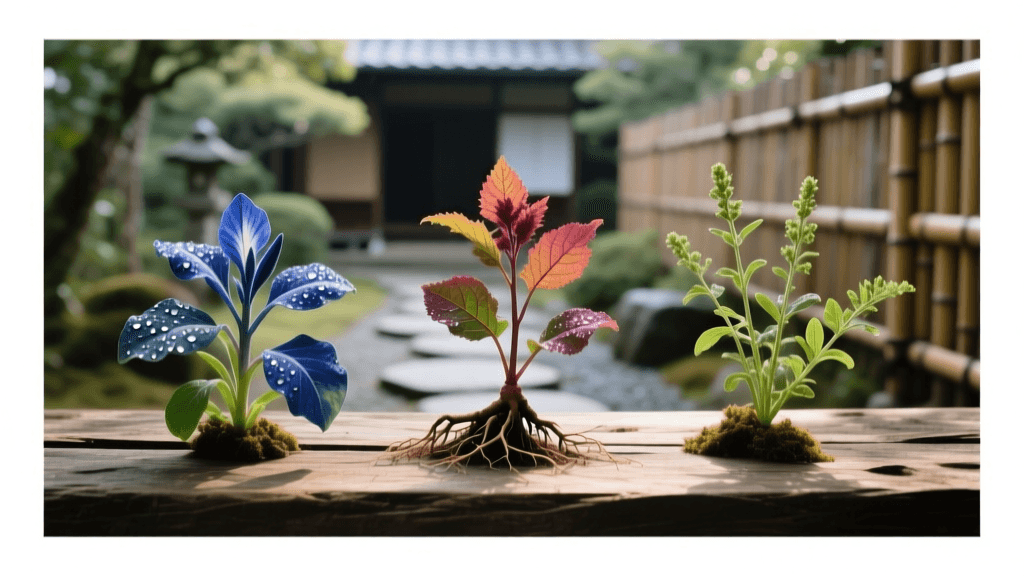
Japan’s diverse climate and rich botanical history have yielded a vast palette of natural dyes. The following four plants are foundational to Kusaki-zome and are widely cultivated or foraged using regenerative practices in 2026.
1. Ai (Japanese Indigo - Persicaria tinctoria)
Unlike tropical indigo species, Japanese indigo (Persicaria tinctoria) thrives in temperate climates and is famously cultivated in Tokushima Prefecture. The leaves are composted with water and sake to create sukumo, the dried dye precursor. In 2026, premium organic Tokushima sukumo retails for approximately ¥5,000 per 100g. Ai is unique because it requires no metallic mordant; the dye bonds directly to the fiber through oxidation. The spent indigo vat is highly alkaline and can be safely neutralized with vinegar and poured into garden soil, acting as a nitrogen-rich fertilizer.
2. Kakishibu (Persimmon Tannin - Diospyros kaki)
Kakishibu is not a traditional immersion dye but a fermented, sun-cured juice extracted from unripe, astringent persimmons. When applied to cotton, hemp, or paper and exposed to ultraviolet sunlight, the tannins polymerize, creating a durable, water-resistant, and insect-repellent coating known as kakishibu-shibori. It yields beautiful earthy browns and coppers. Because it requires zero heat and no chemical mordants, it is one of the most energy-efficient dyeing methods available to modern eco-textile studios.
3. Kihada (Amur Cork Tree - Phellodendron amurense)
The inner bark of the Kihada tree contains berberine, a potent alkaloid that produces brilliant, luminous yellows. Historically used to dye Buddhist sutras because berberine naturally repels silverfish and booklice, Kihada is highly valued in 2026 for sustainable interior textiles and archival garments. The bark is harvested using sustainable stripping techniques that do not kill the tree, aligning with modern agroforestry standards recognized by the Ministry of Economy, Trade and Industry (METI) for traditional Japanese crafts.
4. Akane (Japanese Madder - Rubia argyi)
While European madder is more common globally, Japanese Akane produces deep, complex reds ranging from brick to burgundy. The roots are harvested after three to five years of growth. Akane requires a mordant to bind to cellulose fibers, but when paired with eco-friendly alum or soy milk, it produces incredibly colorfast reds that resist fading even under direct sunlight.
Eco-Friendly Mordants and Binders
Traditional dyeing often relied on heavy metals like chrome or tin to fix colors, which are highly toxic to aquatic ecosystems. In 2026, sustainable Kusaki-zome strictly utilizes bio-mordants and low-impact minerals.
- Gojiru (Soy Milk): The proteins in raw soy milk act as a natural binder for cellulose fibers (cotton, linen, hemp), allowing botanical dyes to bond without metallic salts. Fabric is soaked in a 1:10 soy milk-to-water ratio and dried before dyeing.
- Aku (Wood Ash Lye): Hardwood ash soaked in rainwater creates an alkaline solution essential for building an indigo vat. It is entirely biodegradable and returns potassium to the earth.
- Sabitsui (Iron Liquor): Created by soaking rusty iron scraps in vinegar and water, iron liquor acts as a modifier to sadden colors (shifting yellows to olive greens) and is used in micro-doses to prevent fiber degradation.
- Myoban (Potassium Alum): While a mineral salt, alum is considered low-toxicity and safe for home studios when disposed of properly. It is the standard mordant for achieving bright reds with Akane and vibrant yellows with onion skins.
Actionable Zero-Waste Recipe: Onion Skin Dyeing with Iron Modifier
Food waste is a massive resource for the 2026 eco-dyer. Yellow onion skins (tamanegi no kawa) contain high concentrations of quercetin, yielding brilliant golds and oranges. Here is a precise, water-conscious method for dyeing 100g of organic cotton.
Materials & Measurements
- 100g dry yellow onion skins (approx. 15-20 onions)
- 100g scoured organic cotton fabric
- 2 Liters rainwater or filtered tap water
- 100ml raw soy milk (for protein binding)
- 1 tsp Iron Liquor (sabitsui)
Step-by-Step Process
- Protein Binding: Soak the scoured cotton in diluted soy milk for 2 hours. Wring out (do not rinse) and air dry. This prepares the cellulose fiber to accept the dye.
- Extraction: Simmer the onion skins in 2L of water at 80°C (176°F) for 45 minutes. Strain the liquid, reserving the spent skins for a secondary, lighter dye bath or composting.
- Dyeing: Add the pre-treated cotton to the hot dye bath. Maintain at 70°C for 45 minutes, stirring gently for even absorption.
- Modification: Remove the fabric. It will be a vibrant golden yellow. Dissolve 1 tsp of iron liquor in a small bucket of cool water. Submerge the yellow fabric into the iron bath for 5 minutes. The color will instantly shift to a deep, sustainable olive green.
- Rinsing: Rinse in cool water until it runs clear. Hang to dry out of direct sunlight.
Comparison of Japanese Dye Plants & Eco-Impact
| Botanical Source | Color Yield | Preferred Eco-Mordant | Water Temp | Sustainability Profile |
|---|---|---|---|---|
| Ai (Indigo) | Deep Blue | None (Alkaline Vat) | Cold / Ambient | High; spent vat fertilizes soil |
| Kakishibu (Persimmon) | Brown / Copper | None (UV Curing) | Cold | Very High; zero heat, utilizes agricultural waste |
| Kihada (Cork Tree) | Luminous Yellow | Soy Milk / Alum | 80°C | High; bark harvested without felling tree |
| Akane (Madder) | Brick Red | Alum | 60°C - 70°C | Moderate; requires 3-year root growth cycle |
| Tamanegi (Onion Skin) | Gold / Olive | Soy Milk + Iron | 80°C | Very High; 100% food waste diversion |
Water Stewardship and Closed-Loop Studio Practices
A major critique of traditional textile dyeing is water consumption. In 2026, sustainable Kusaki-zome studios implement closed-loop water systems. Rainwater harvesting is standard practice, as natural rainwater lacks the chlorine and heavy minerals found in municipal water that can dull botanical colors. Furthermore, dye baths are never discarded after a single use. A primary indigo vat can be maintained for years, fed regularly with sukumo and ash lye. Exhausted botanical baths (like madder or onion) are used for successive, lighter dyeings before the remaining water is neutralized and used to irrigate non-edible garden plants. The plant matter itself is composted, returning vital carbon and nutrients to the soil.
Conclusion
The practice of Kusaki-zome is a profound meditation on nature, time, and sustainability. By embracing Japanese natural dye plants like Ai, Kakishibu, and Kihada, and utilizing zero-waste mordants like soy milk and iron liquor, modern artisans can create breathtaking, colorfast textiles that honor the environment. As the fashion world continues to pivot toward true ecological responsibility in 2026, these ancient, eco-friendly methods provide a proven, beautiful blueprint for the future of sustainable fashion.