Kimono Guide 2026: Ceremonial Kurotomesode vs Everyday Komon
The Resurgence of the Kimono in 2026
The Japanese kimono is far more than a static historical artifact; it is a living, breathing garment that continues to evolve. As we navigate through 2026, the kimono is experiencing a vibrant renaissance, driven by a renewed interest in sustainable fashion, artisanal craftsmanship, and cultural heritage. However, for both seasoned collectors and newcomers to traditional Asian garments, navigating the strict sartorial rules of Japan can be daunting. The most critical concept to master is the distinction between ceremonial and everyday wear. Understanding these boundaries ensures that you respect the garment's cultural significance while expressing your personal style.
According to the Victoria and Albert Museum, the kimono's T-shaped structure has remained remarkably consistent for centuries, yet the textiles, motifs, and styling rules have continuously adapted to societal shifts. In 2026, the contrast between high-ceremony garments and casual daily wear is more pronounced than ever, with modern innovations in fabric technology and styling bridging the gap between ancient tradition and contemporary street fashion.
The Golden Rule: TPO (Time, Place, Occasion)
Before diving into specific garment types, one must understand the TPO rule—Time, Place, and Occasion. In Japanese fashion etiquette, TPO dictates everything from the fabric weight and sleeve length to the formality of the obi (sash) and footwear. Wearing a highly ceremonial garment to a casual café outing is considered overly formal and slightly out of touch, just as wearing a casual summer cotton garment to a winter wedding would be a severe faux pas. In 2026, while younger generations are experimenting with rule-breaking street styles, the foundational TPO principles remain the gold standard for traditional dressing.
Ceremonial Grandeur: Kurotomesode and Furisode
Ceremonial kimono represent the pinnacle of Japanese textile artistry. They are characterized by luxurious materials, complex dyeing techniques, and strict regulatory motifs.
Kurotomesode: The Pinnacle of Married Formality
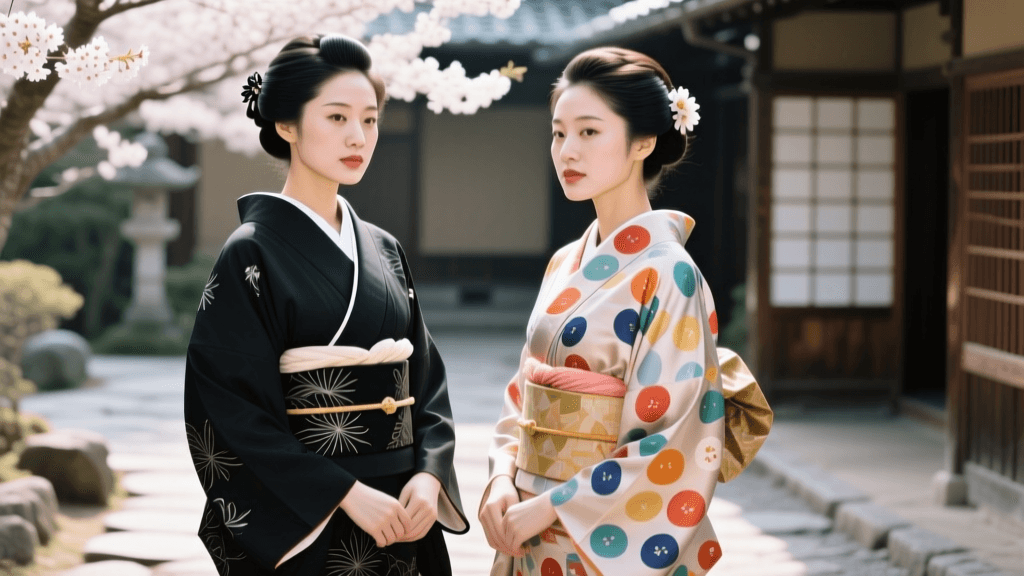
The kurotomesode is the most formal kimono for married women. Translated as "black with set sleeves," this garment is dyed in deep, rich black silk and features exactly five family crests (kamon) placed on the back, chest, and shoulders. The defining feature is the e-ba pattern—a continuous, elaborate design that flows across the lower hem and seams, often depicting auspicious motifs like cranes, pine trees, or flowing water. In 2026, renting a high-end kurotomesode for a wedding ceremony typically costs between ¥25,000 and ¥45,000, reflecting the premium placed on authentic Nishijin-ori silk weaving and hand-painted Yuzen dyeing.
Furisode: The Canvas of Youth
For unmarried women, the furisode (swinging sleeves) is the ultimate ceremonial garment, worn primarily for Coming of Age Day (Seijin no Hi) and formal weddings. The sleeves are the most striking feature, measuring up to 114 centimeters in length. These expansive sleeves historically signaled youth and availability, swaying gracefully to attract attention. The Metropolitan Museum of Art notes that the furisode's expansive canvas allows for some of the most breathtaking, full-coverage textile designs in Japanese history. Today's 2026 furisode trends lean heavily into classical revival, with young women seeking vintage Taisho-era (1912-1926) aesthetics, featuring bold geometric patterns mixed with traditional florals.
Everyday Elegance: Komon and Yukata
While ceremonial garments are reserved for a handful of life events, everyday kimono are designed for comfort, mobility, and frequent wear.
Komon: The Urban Wanderer
The komon is the quintessential everyday kimono, translating to "small pattern." Unlike the hem-restricted designs of the kurotomesode, a komon features a repeating pattern that covers the entire garment. The sleeves are practical, measuring around 49 centimeters, allowing for easy movement on crowded Tokyo subways or while navigating the steps of a Kyoto temple. In 2026, the komon is the darling of the modern kimono revival. Fashion-forward wearers are pairing vintage silk komon with contemporary accessories, such as leather ankle boots, denim obi belts, and minimalist wool shawls. A quality vintage komon can be sourced in Kyoto's thrift markets for as little as ¥5,000 to ¥15,000, making it an accessible entry point for daily traditional styling.
Yukata: Summer's Breathable Cotton
When the humid Japanese summer arrives, the silk komon is swapped for the yukata. Originally a bathhouse robe, the yukata is an unlined, lightweight cotton or hemp garment worn directly over a simple undergarment (hadajuban), bypassing the complex layers required for silk kimono. It is secured with a simple, unlined hanhaba obi (half-width sash). In 2026, sustainable organic cotton yukata are highly sought after, with brands releasing limited-edition collaborations featuring modern, abstract indigo dye patterns. The Japan National Tourism Organization frequently highlights yukata-wearing as a premier cultural experience for visitors attending summer Bon Odori festivals and fireworks displays.
2026 Comparison Chart: Ceremonial vs. Everyday Kimono
| Feature | Ceremonial (Kurotomesode / Furisode) | Everyday (Komon / Yukata) |
|---|---|---|
| Sleeve Length | Long (75cm - 114cm) | Short / Standard (49cm) |
| Primary Fabric | Heavy Silk, Crepe (Chirimen), Brocade | Light Silk, Cotton, Linen, Poly-blends |
| Pattern Placement | Hem only (Kurotomesode) or All-over (Furisode) | Repeating all-over pattern or Woven |
| Undergarments | Full Nagajuban, Silk Juban, Padding | Han-juban (half slip) or Hadajuban (undershirt) |
| Footwear | Formal Zori with white Tabi socks | Geta (wooden clogs), Zori, or Modern Boots |
| 2026 Avg. Cost (Retail) | ¥150,000 - ¥500,000+ | ¥15,000 - ¥60,000 (Vintage much lower) |
Fabric Care and Modern Maintenance
The divergence between ceremonial and everyday garments is perhaps most evident in their maintenance. Ceremonial silk garments are notoriously delicate. The traditional cleaning method, maruarai (full washing), involves a master artisan completely disassembling the kimono, washing the individual fabric bolts, and re-sewing them. In 2026, this artisanal service is increasingly rare and expensive, often costing upwards of ¥30,000 per garment. Consequently, most modern wearers rely on specialized spot-cleaning and frequent airing to preserve their ceremonial silks.
Conversely, the everyday wear market has embraced modern convenience. Many contemporary komon and yukata are crafted from high-quality washable polyester blends or treated cottons that mimic the drape of silk while surviving a gentle cycle in a modern washing machine. For daily wearers in 2026, investing in a mesh laundry bag specifically sized for kimono sleeves is a practical necessity, allowing for easy home maintenance without sacrificing the garment's structural integrity.
Sourcing, Renting, and Styling in 2026
If you are looking to build a traditional wardrobe, knowing where to source your garments is crucial. For ceremonial wear, renting remains the most practical option for residents and tourists alike. Platforms operating out of Kyoto and Tokyo offer comprehensive 2026 rental packages that include the kimono, obi, undergarments, and professional dressing services (kitsuke). This ensures that the complex folding of the ohashori (the waist fold that adjusts the kimono's length) is executed flawlessly.
For everyday komon and yukata, the secondary vintage market is a treasure trove. The Toji Temple flea market in Kyoto, held on the 21st of every month, remains a premier destination for hunting down mid-century silk komon at bargain prices. When styling these everyday pieces, 2026 fashion encourages personalization. Swap out traditional silk obi-jime (decorative cords) for braided leather straps, or pair a muted, geometric komon with a crisp, oversized white collared shirt underneath for a striking, layered silhouette that honors Asian traditions while firmly planting them in the modern global wardrobe.
Conclusion
Understanding the dichotomy between the ceremonial kurotomesode and the everyday komon is essential for anyone passionate about Asian traditional garments. The kimono is not a monolith; it is a highly regulated, deeply expressive wardrobe system. By respecting the TPO guidelines and embracing the distinct characteristics of both formal and casual wear, you can participate in the ongoing, beautiful evolution of Japanese fashion in 2026 and beyond.