Kimono Formality Guide 2026: Types, Rules & Styling
The Language of Silk: Navigating Kimono Formality in 2026
The Japanese kimono is far more than a beautiful garment; it is a deeply codified language of silk, family crests, and seasonal motifs. In 2026, the global appreciation for traditional Asian garments has reached new heights, driven by a powerful intersection of heritage preservation and the modern sustainable fashion movement. However, navigating the strict rules of kitsuke (the art of wearing kimono) can be daunting for newcomers and seasoned collectors alike. Whether you are attending a formal tea ceremony in Kyoto, a summer festival in Tokyo, or a contemporary art gallery opening, understanding the hierarchy of Japanese dress is essential.
The foundational principle of Japanese traditional dress is TPO—Time, Place, and Occasion. Unlike Western formalwear, where a black tuxedo or a dark suit can serve as a universal catch-all for evening events, Japanese formality is dictated by specific garment types, sleeve lengths, pattern placement, and the presence of kamon (family crests). According to the Metropolitan Museum of Art's Heilbrunn Timeline of Art History, the kimono's T-shaped structure has remained remarkably consistent since the Edo period, even as surface designs, dyeing techniques, and societal rules have continually evolved to meet the needs of the modern era.
The Kimono Formality Hierarchy
To master the art of kimono selection, one must understand the ladder of formality. The table below outlines the primary garment types for women, ranked from the most formal to the most casual, serving as your quick-reference guide for 2026.
| Garment Type | Formality Level | Sleeve Length | Crests (Kamon) | Primary Occasions |
|---|---|---|---|---|
| Kurotomesode | Ultra-Formal | Short (Tomesode) | 5 | Weddings (Mother of Bride/Groom) |
| Irotomesode | Ultra-Formal | Short (Tomesode) | 1, 3, or 5 | Weddings (Close Relatives), Imperial Events |
| Furisode | Formal | Long (Swinging) | 0 or 1 | Coming of Age, Unmarried Women's Formal Events |
| Homongi | Semi-Formal | Short/Medium | 1 or 3 | Tea Ceremonies, Gallery Openings, Formal Parties |
| Tsukesage | Semi-Formal | Short/Medium | 0 or 1 | Dinners, Graduations, Celebratory Gatherings |
| Komon | Casual | Short | 0 | Everyday Wear, Casual Outings, Theater |
| Yukata | Informal/Summer | Short | 0 | Summer Festivals, Onsen Ryokans, Fireworks |
Detailed Breakdown of Garment Types
Kurotomesode & Irotomesode: The Pinnacle of Formality
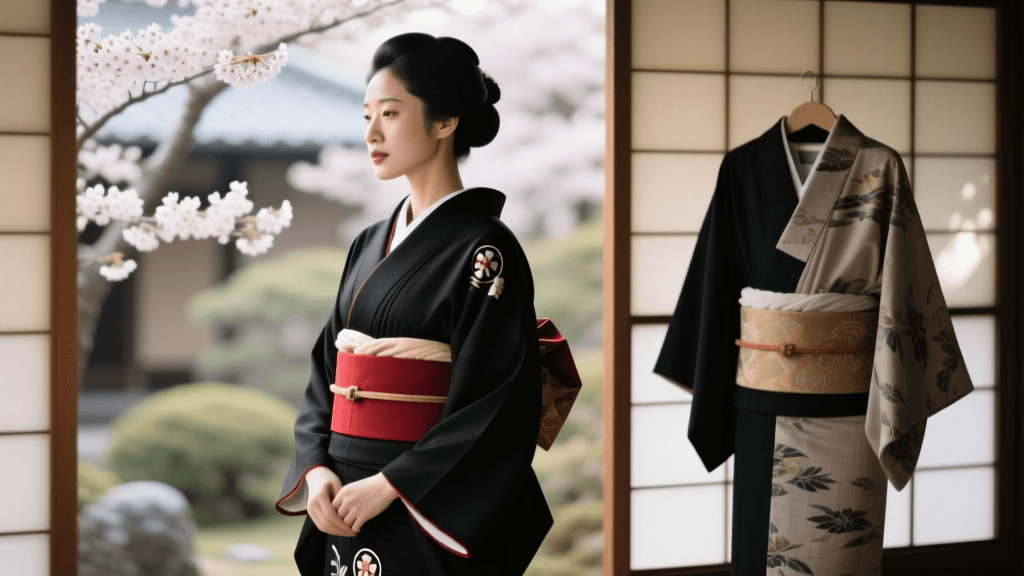
The Kurotomesode (black with short sleeves) is the absolute highest level of formalwear for married women. It features a solid black base with exquisite, continuous motifs (called e-ba) that flow across the lower half of the garment, below the obi. It always bears five family crests. In 2026, it remains strictly reserved for the mothers of the bride and groom at weddings. The Irotomesode follows the exact same pattern rules but features a colored background (such as deep navy, sage green, or plum). It is worn by married female relatives of the bride or groom and can feature one, three, or five crests depending on the exact closeness of the relation.
Furisode: The Elegance of Youth
Characterized by its dramatic, floor-sweeping sleeves (ranging from 95cm to 114cm in length), the Furisode is the most formal kimono for unmarried women. The Victoria and Albert Museum's extensive textile archives highlight how the swinging sleeves historically served not just as aesthetic markers of youth, but as tools for non-verbal communication in courtship. Today, furisode are predominantly seen during Seijin no Hi (Coming of Age Day) and at formal weddings attended by single female guests. In 2026, contemporary furisode designs have embraced bold, neo-traditional motifs, blending classic yuzen dyeing with digital textile printing for hyper-vibrant seasonal florals.
Homongi & Tsukesage: Semi-Formal Elegance
The Homongi (visiting wear) is a versatile, elegant garment suitable for both married and unmarried women. Its defining feature is the continuous pattern that flows seamlessly over the seams, across the shoulders, and down the sleeves. It is the perfect choice for attending a high-end tea ceremony or an upscale dinner. The Tsukesage is slightly less formal; its patterns are dyed or embroidered in isolated clusters that do not cross the seams, and the motifs generally point upward from the hem and downward from the shoulders. Both are excellent investments for a modern wardrobe, offering a bridge between strict ceremonial requirements and social elegance.
Komon & Yukata: Everyday and Casual Wear
Komon translates to 'fine pattern.' These kimono feature small, repeating motifs covering the entire fabric. They are the workhorses of the kimono wardrobe, perfect for a casual lunch, a trip to the theater, or a casual stroll through a historic district. Yukata, originally worn as bathrobes by the nobility, are now the ubiquitous summer garments made of breathable cotton or modern cooling-synthetics. They are unlined, worn without the complex undergarments (nagajuban) required for silk kimono, and are the standard attire for summer matsuri (festivals).
Obi Pairings and Accessories for 2026
A kimono is incomplete without its obi (sash). The formality of the obi must match or slightly exceed the formality of the kimono.
- Maru / Fukuro Obi: The most formal obi, heavily brocaded with gold and silver threads. Woven in a tube or folded to show pattern only on the outside. Essential for Kurotomesode, Irotomesode, Furisode, and Homongi.
- Nagoya Obi: Pre-folded and sewn for easier tying, featuring a narrower back section. Ideal for Tsukesage, Komon, and semi-formal Homongi. In 2026, upcycled vintage Nagoya obi are highly sought after by sustainable fashion enthusiasts.
- Hanhaba Obi: A half-width, casual obi. Strictly reserved for Yukata and everyday Komon. Modern 2026 trends heavily feature reversible, geometric Hanhaba obi that allow wearers to mix and match patterns effortlessly.
Accessorizing in 2026: The modern kitsuke movement has embraced subtle technological and material innovations. Magnetic obi-ita (obi stiffeners) and silicone koshi-himo (tying cords) have replaced traditional cotton ropes for many beginners, offering all-day comfort without cutting off circulation. Furthermore, 3D-printed obidome (obi clasps) crafted from bio-resins are trending in Tokyo's Harajuku and Shimokitazawa fashion districts.
2026 Market Guide: Buying vs. Renting
Whether you are building a permanent collection or preparing for a single event, understanding the current market is crucial. The sustainable fashion boom has made vintage kimono (often sold in 'recycle' shops) more popular than ever among younger generations.
| Acquisition Method | Garment Type | Estimated 2026 Cost (USD) | Best For |
|---|---|---|---|
| Bespoke / New Silk | Kurotomesode / Furisode | $4,000 - $12,000+ | Heirlooms, Brides, Ultra-Formal Family Events |
| Recycle / Vintage Shop | Homongi / Komon | $40 - $350 | Collectors, Everyday Wear, Sustainable Styling |
| Rental (Full Kitsuke) | Furisode / Homongi | $80 - $250 (per day) | Tourists, One-off Events, Coming of Age Day |
| Retail / Fast-Fashion | Yukata / Washable Komon | $30 - $120 | Summer Festivals, Machine-Washable Convenience |
Pro-Tip for 2026 Shoppers: When buying vintage silk, always check the condition of the eri (collar) and the hem for hidden stains or fabric weakness. Many reputable online sellers in Kyoto now offer AI-enhanced condition reports, highlighting micro-tears or dye-blotches that are invisible to the naked eye on standard photographs.
Conclusion
Mastering the Japanese kimono formality hierarchy is a rewarding journey into one of Asia's most profound sartorial traditions. By respecting the rules of TPO while embracing the sustainable and technological styling innovations of 2026, you can wear these magnificent garments with both historical reverence and contemporary flair. Whether you are tying a formal Fukuro obi for a wedding or slipping into a breezy cotton Yukata for a summer fireworks display, the kimono remains a timeless canvas for personal and cultural expression.