Chinese Fashion History Research 2026: Degrees & Drape Analysis
The Renaissance of Chinese Fashion History in Academia
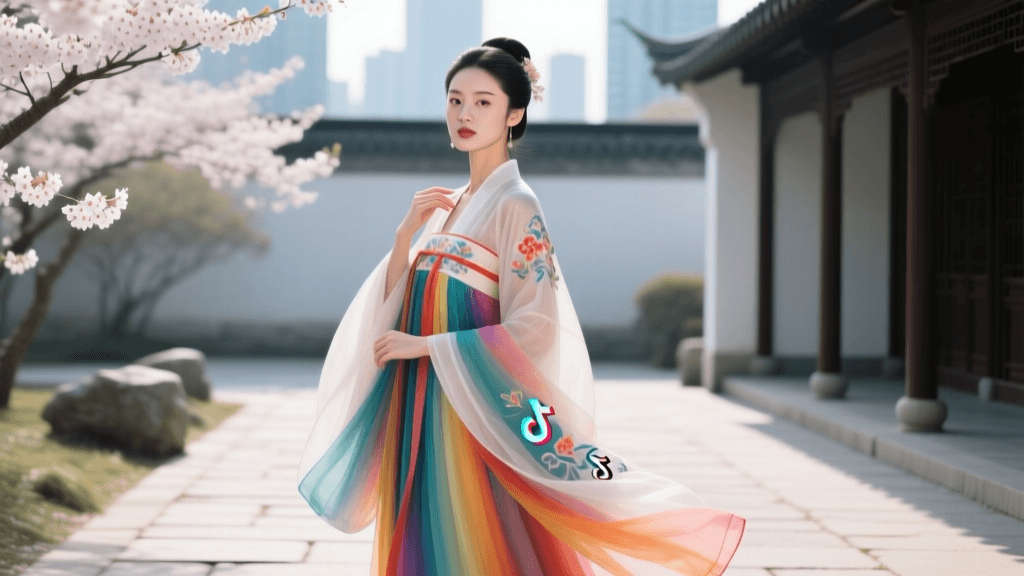
The intersection of ancient Chinese sartorial traditions and modern academic research has reached a pivotal moment in 2026. No longer confined to the dusty archives of art history departments, Chinese fashion history is now a dynamic, interdisciplinary field that merges archaeology, textile engineering, and digital simulation. Driven by the massive global popularity of the Xin Zhongshi (new Chinese style) movement, universities across Asia are expanding their graduate programs to meet the demand for historically accurate yet commercially viable design research. Today, the study of Hanfu, traditional ethnic minority garments, and historical Silk Road textiles requires a rigorous scientific approach, particularly in the realm of fabric drape analysis and 3D digital reconstruction.
For students, historians, and designers looking to enter this field in 2026, understanding the academic landscape and the scientific methodologies used in modern textile labs is essential. This guide explores the top academic programs, the science of fabric drape analysis, and how researchers are bridging the gap between antiquity and the future of Asian fashion.
The 2026 Academic Landscape for Chinese Fashion History
In 2026, the academic study of Chinese fashion history is heavily integrated with material science and digital technology. The surge in consumer interest in Xin Zhongshi has forced the industry to demand designers who do not merely copy ancient motifs, but who understand the structural integrity, weaving techniques, and kinetic movement of historical garments. According to the 2026 graduate enrollment data from Donghua University, applications for the Master's program in Textile History and Digital Reconstruction have increased by 45% over the past three years, reflecting a broader industry shift toward heritage-backed design.
Leading institutions are now offering specialized tracks that combine traditional archival research with advanced textile testing. Below is a comparison of the top academic programs for Chinese textile and fashion history research in 2026.
| Institution | Program Focus | 2026 Tuition (RMB/Year) | Key Lab Facility |
|---|---|---|---|
| Donghua University (Shanghai) | Textile History & Digital Reconstruction | 12,000 | Key Lab of Textile Science & Engineering |
| Beijing Institute of Fashion Technology (BIFT) | Xin Zhongshi Design & Heritage Preservation | 10,000 | National Costume Museum & Material Archive |
| Tsinghua University (Beijing) | Art History & Silk Road Exchange | 8,000 | Academy of Arts & Design Textile Lab |
| Soochow University (Suzhou) | Silk Weaving Techniques & Intangible Heritage | 9,500 | National Engineering Lab for Silk Production |
The Science of Silk: 3D Fabric Drape Analysis
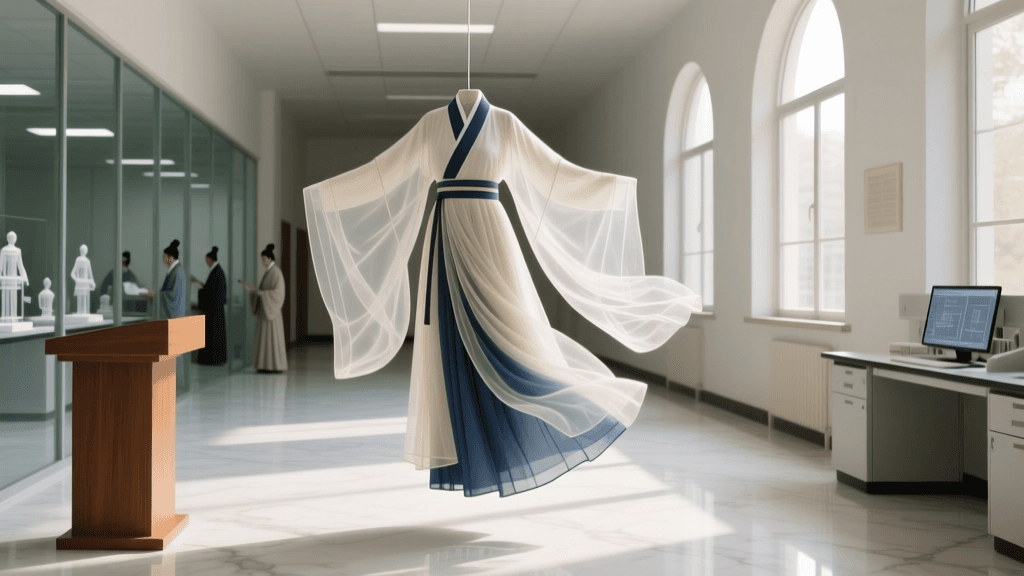
One of the most critical aspects of Chinese fashion history education in 2026 is the scientific quantification of how historical fabrics move. The ethereal, flowing aesthetic of traditional Hanfu—often described in classical poetry as "clouds and water"—is not merely an artistic concept; it is a measurable physical property. Fabric drape analysis is the study of how a textile deforms under its own weight, and it is crucial for accurately recreating historical silhouettes like the Tang dynasty pibo (shawl) or the Song dynasty beizi (overcoat).
In modern university labs, researchers use standardized physical testing equipment alongside digital simulation to measure specific drape metrics. The goal is to create a "digital twin" of ancient textiles, allowing designers to visualize how a historically accurate garment will behave on a modern human body before a single thread is woven.
Key Metrics in Drape Analysis
When studying historical Chinese textiles, academic researchers focus on three primary physical properties:
- Drape Coefficient (DC): Measured using a digital drape tester (such as the SDL Atlas system), the DC indicates the percentage of a fabric's area that covers a standard pedestal when draped. A lower DC indicates a softer, more fluid fabric, which is highly desirable for recreating the flowing sleeves of Wei-Jin period garments.
- Bending Length: This measures the stiffness of the fabric. Historical garments made from heavy brocades (like Song dynasty zhijin) require a higher bending length to maintain their structural, architectural silhouettes, whereas lightweight silk gauzes (luo) require a very short bending length.
- Shear Stiffness: This dictates how the fabric resists twisting and wrinkling. Understanding shear stiffness is vital for the Xin Zhongshi movement, as modern designers must adapt historical draping techniques to contemporary, active lifestyles without losing the traditional visual flow.
Case Study: Recreating the Tang Dynasty Banbi
To understand how these academic theories are applied in 2026, we can look at a recent capstone project from the Key Lab of Textile Science. Researchers undertook the digital and physical reconstruction of a Tang Dynasty banbi (half-sleeve jacket) using drape analysis. By analyzing excavated textile fragments from the Astana Graves and cross-referencing them with the Metropolitan Museum of Art's extensive Chinese silk archives, the team reconstructed the exact warp and weft density of 8th-century damask.
The physical reproduction was woven using a modern computerized jacquard loom calibrated to mimic the tension of ancient drawlooms. Once the fabric was produced, it was subjected to rigorous FAST (Fabric Assurance by Simple Testing) analysis. The resulting data was then inputted into advanced virtual simulation platforms like CLO 3D. The software's advanced particle physics engine allowed researchers to map the historical drape coefficient onto a 3D avatar, revealing that the original Tang garments relied on a specific bias-cut technique that modern commercial Hanfu manufacturers had previously overlooked. This 2026 study has since become a foundational text for high-end Xin Zhongshi brands seeking historical authenticity.
Digital Twins and the Future of Archival Research
The integration of AI and 3D modeling has revolutionized how academic institutions handle fragile, priceless artifacts. In the past, studying the drape of a Ming Dynasty emperor's dragon robe required careful physical handling, risking damage to the degraded silk. Today, universities utilize non-invasive 3D scanning and photogrammetry to capture the topography of historical garments in museum collections.
These scans are converted into digital twins, allowing students to run virtual stress tests, alter the lighting conditions to study historical dye reflectivity, and simulate centuries of wear and tear. This methodology not only preserves the physical artifacts but also democratizes access to Chinese fashion history. A student in Europe or the Americas can now access open-source university databases to study the exact shear stiffness of a Qing Dynasty court robe, fostering a truly global academic community dedicated to Asian traditions.
Essential Tools for the Modern Fashion Historian
For those embarking on academic research in Chinese fashion history in 2026, familiarity with both traditional and digital tools is mandatory. The modern historian's toolkit includes:
- CLO 3D & Marvelous Designer: The industry-standard software for 3D garment simulation, heavily used in academia for testing historical drape and pattern drafting.
- SDL Atlas Drape Testers: Physical hardware used in university labs to calculate the exact drape coefficient of newly woven heritage textiles.
- Spectrophotometers: Used to analyze the chemical composition and exact color values of historical natural dyes, such as madder root and indigo, ensuring accurate color reproduction in modern Xin Zhongshi collections.
- Digital Archival Databases: Access to platforms like the China National Silk Museum's digital archive and international university repositories is essential for primary source research.
Conclusion: Bridging Antiquity and the Future
The academic research surrounding Chinese fashion history in 2026 is a thrilling blend of ancient artistry and cutting-edge science. By treating historical garments not just as static art pieces, but as complex, kinetic structures governed by the laws of physics, universities are providing the foundational research needed to sustain the Xin Zhongshi movement for decades to come. For students and designers, mastering the science of fabric drape analysis and engaging with rigorous academic programs is the key to honoring the past while innovating for the future of Asian traditional garments.