Kunqu Opera Hanfu 2026: Sourcing Water Sleeves & Robes
The Intersection of Historical Hanfu and Theatrical Xifu
The year 2026 has marked a fascinating renaissance in traditional Chinese performing arts, where the boundaries between historical Hanfu and theatrical Xifu (opera costumes) are being thoughtfully navigated by modern troupes. As audiences demand greater historical authenticity alongside theatrical spectacle, Kunqu and Peking Opera costume designers are blending traditional Ming and Song dynasty silhouettes with the exaggerated, highly symbolic garments required for the stage. According to the UNESCO Intangible Cultural Heritage registry, Kunqu remains one of the oldest and most refined forms of Chinese opera, and its visual language is inextricably linked to the evolution of traditional Chinese dress. For practitioners, collectors, and cultural enthusiasts, understanding how to source, style, and maintain these performance-grade garments in 2026 requires a deep dive into textile mechanics, embroidery traditions, and modern stagecraft.
Decoding the Mang Robe: Status and Spectacle on Stage
The Mang (蟒袍), often translated as the python robe, is the pinnacle of ceremonial stage wear in both Kunqu and Peking Opera. While historically derived from Ming dynasty court dress, the theatrical Mang robe is heavily stylized to communicate character status, temperament, and alignment from the moment the actor steps onto the stage. In 2026, bespoke theatrical Mang robes remain a significant investment for professional troupes, with master-crafted pieces from Suzhou and Hangzhou ateliers starting at approximately $3,800 to $5,500 USD, reflecting the rising costs of premium silk and specialized metallic threadwork.
The color coding of the Mang robe is strict and universally understood by opera aficionados. Bright yellow is exclusively reserved for emperors and imperial family members. Red signifies high-ranking officials and noble loyalty, while black is worn by fierce, upright generals or judges with iron-like integrity. White and pale blue are often utilized for young scholars or elegant, tragic figures. The embroidery features the mang (a four-clawed dragon-like creature), as the five-clawed dragon was historically restricted to the actual emperor. Modern 2026 productions frequently utilize advanced Su Xiu (Suzhou embroidery) techniques combined with subtle, non-reflective metallic threads to ensure the intricate scales and cloud motifs pop under high-definition LED stage lighting without causing blinding glare for the audience.
The Xuezi: Elegance in Informal Stage Wear
While the Mang robe represents courtly power, the Xuezi (褶子) is the most versatile and frequently worn garment in traditional opera. It is an informal, cross-collared robe with wide sleeves, closely resembling the historical Duanyi or everyday scholar's Hanfu. The Xuezi is worn by a vast array of characters, from impoverished scholars to wealthy merchants, with the distinction lying entirely in the fabric quality, color, and embroidery density.
In 2026, the 'flower Xuezi' (embroidered with scattered floral or butterfly motifs) remains highly popular for romantic leads and young women in Kunqu operas like The Peony Pavilion. Conversely, the 'plain Xuezi' (素褶子), typically in black, blue, or deep purple with minimal embroidery at the collar and cuffs, is the uniform of the dignified, older scholar or the tragic hero. Sourcing a high-quality performance Xuezi today involves selecting heavy silk crepe that provides the necessary structural drape, ensuring the garment flows elegantly during the highly choreographed walking sequences (Yuanba) unique to Kunqu.
Mastering Shuixiu: The Mechanics of Water Sleeves
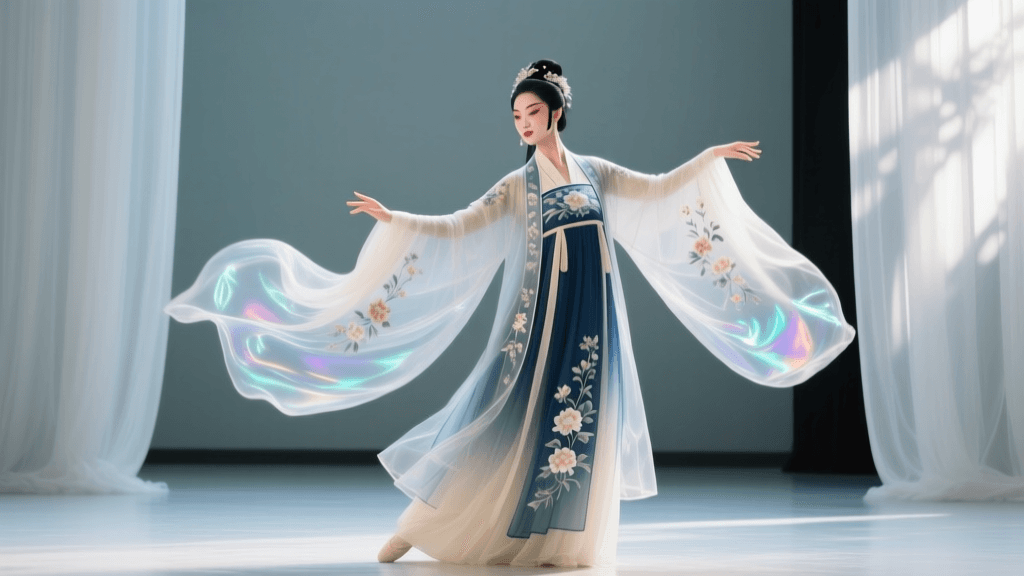
No discussion of Kunqu or Peking Opera Hanfu is complete without addressing Shuixiu (水袖), or water sleeves. These are the elongated white silk extensions attached to the cuffs of the Mang, Xuezi, and other robes. Far from mere decoration, water sleeves are an extension of the actor's body, used to express a complex vocabulary of emotions—from weeping and shyness to rage and dismissal. As noted in historical analyses of theatrical dress by Encyclopædia Britannica, the stylized nature of Chinese opera costumes relies heavily on these kinetic elements to bridge the gap between the actor and the character's internal state.
The standard length of a water sleeve in 2026 professional Kunqu performances typically ranges from 60 cm to 120 cm beyond the fingertips, depending on the actor's height and the specific role type (Hangdang). The mechanics of manipulating the sleeves involve dozens of codified movements, such as Douxiu (flicking the sleeve outward to show anger or resolve), Fanxiu (turning the sleeve over to indicate shyness or contemplation), and Zhuaxiu (grabbing the sleeve to denote anxiety or grief). To execute these movements flawlessly, the textile must possess a precise balance of weight, slip, and stiffness.
2026 Textile Comparison Chart for Stage Sleeves
Choosing the right fabric for water sleeves is critical for modern performers. Below is a comparison of the primary textiles used by professional troupes in 2026:
| Textile Type | Weight & Drape | Stage Performance (2026) | Avg. Cost per Pair | Maintenance Level |
|---|---|---|---|---|
| Heavy Silk Crepe | Medium-Heavy, excellent fluid drape | Superior for dramatic flicks; resists tangling under stage fans. | $85 - $120 | High (Dry clean only, prone to water spots) |
| Charmeuse Silk | Lightweight, high sheen, slippery | Beautiful ripple effect, but difficult to control in complex catches. | $60 - $90 | Very High (Snags easily, loses shape) |
| Silk-Polyester Blend | Medium weight, structured stiffness | Ideal for students and rigorous daily rehearsals; holds pleats well. | $35 - $55 | Low (Machine washable on gentle, durable) |
| Raw Tussah Silk | Heavy, textured, matte finish | Used for older, dignified characters; minimal glare under LED lights. | $110 - $150 | Medium (Requires specialized steaming) |
Sourcing Authentic Performance Costumes in 2026
For theater companies, university Asian studies departments, and serious independent performers, sourcing authentic Kunqu and Peking Opera garments requires navigating a specialized market. In 2026, the epicenter of high-end theatrical costume production remains Suzhou, specifically the workshops surrounding the Suzhou Silk Museum and the historic Xiangcheng district. These ateliers employ master embroiderers who utilize the Panjin (gold-couching) technique, laying gold and silver threads flat against the silk and securing them with tiny, invisible silk stitches.
For international buyers, direct commissioning from these Suzhou workshops is highly recommended for lead roles. The process typically requires a 3 to 4 month lead time, involving digital consultations, fabric swatch mailings, and precise body measurements that account for the thick padding (Kao) worn beneath armor and heavy robes. For ensemble members or educational troupes, established online theatrical suppliers based in Hangzhou and Beijing offer high-quality, machine-embroidered alternatives that capture the visual essence of the garments at a fraction of the cost, usually ranging from $250 to $600 per complete outfit.
Footwear and Headwear: Completing the Silhouette
A Mang robe or Xuezi is incomplete without the proper footwear and headwear, which fundamentally alter the actor's posture and movement. The Houguan (official's hat) with its trembling wings, or the elaborate Fengguan (phoenix crown) for noblewomen, are meticulously crafted from kingfisher feather alternatives (due to modern conservation laws) and iridescent silk threads. In 2026, ethical synthetic alternatives that perfectly mimic the iridescence of traditional kingfisher feathers (Tian-tsui) have become the industry standard, offering brilliant blues and greens that withstand the heat of modern stage lighting.
Footwear is equally specialized. Male officials and scholars wear Chaofang (thick-soled boots) with white uppers and black velvet tops. The soles, traditionally made of compressed cotton and paper, are now often constructed from high-density EVA foam and layered leather in 2026 to provide better shock absorption for acrobatic sequences while maintaining the rigid, elevated aesthetic. Female characters typically wear soft, embroidered silk shoes, requiring the actor to adopt a specific gliding step (Suibuzi) to create the illusion of floating across the stage.
Preservation and Wardrobe Management for Troupes
The investment in performance-grade Hanfu-inspired theatrical wear necessitates rigorous preservation protocols. The heavy metallic threads used in Mang robes are highly susceptible to oxidation and tarnishing, especially when exposed to the humidity of actor perspiration and varying theater climates. In 2026, professional wardrobe departments utilize climate-controlled storage units set to 45% relative humidity and 65°F (18°C) to preserve the integrity of the silk and metallic yarns.
Garments are never hung on standard wire or thin wooden hangers, as the sheer weight of a fully embroidered Mang robe (which can exceed 5 kilograms) will distort the shoulder seams and warp the silk base. Instead, they are stored flat in acid-free archival boxes, layered with unbleached cotton muslin to allow the fibers to breathe while protecting them from dust and light exposure. Water sleeves are detached after every performance, gently hand-washed in specialized silk detergents, and meticulously ironed with a low-heat steam press to ensure the crisp, blinding white lines required for the next curtain call. By respecting both the historical roots of Hanfu and the rigorous demands of the stage, modern practitioners ensure that the visual poetry of Kunqu and Peking Opera continues to captivate audiences worldwide.