Kunqu Opera Costumes 2026: Styling Hanfu vs Theatrical Xifu
The Intersection of Hanfu and Traditional Performing Arts
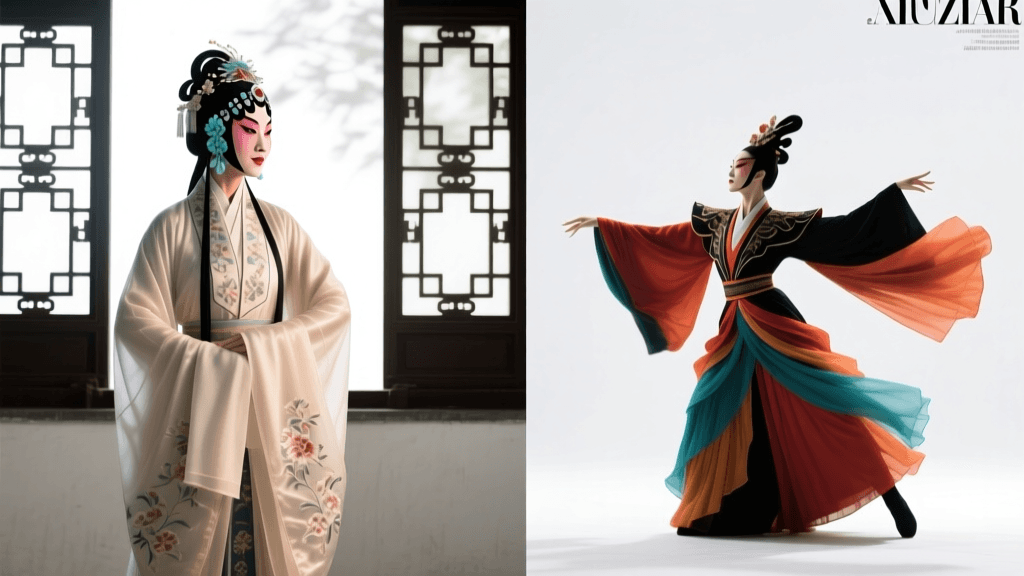
The world of traditional Chinese performing arts is experiencing a profound visual and cultural renaissance in 2026. As the global Hanfu revival movement matures, its influence has spilled over from street fashion and historical reenactments into the highly stylized realm of traditional theater. For performers, troupe directors, and costume designers in the realms of Kunqu and Peking Opera, a fascinating dialogue has emerged between historical accuracy and theatrical exaggeration. Understanding the nuanced differences between authentic Ming-dynasty Hanfu and traditional theatrical costumes—known as 'Xifu' or 'Xiyi'—is now essential for anyone involved in the staging, sourcing, or appreciation of these classical arts.
Kunqu opera, often hailed as the 'ancestor of a hundred operas,' originated in the Ming Dynasty. Consequently, its foundational aesthetics are deeply rooted in the clothing of that era. However, centuries of theatrical evolution have codified a separate wardrobe system designed specifically for the stage. In 2026, as immersive theater and intimate stage productions gain massive popularity, troupes are increasingly blending historically accurate Hanfu with traditional stagecraft, creating a need for a comprehensive guide to navigating these two distinct sartorial worlds.
Historical Roots: Ming Hanfu vs. Theatrical Xifu
To properly style a performer, one must first understand the historical divergence between everyday clothing and stage clothing. Authentic Ming-dynasty Hanfu was designed for daily life, court ceremonies, and scholarly pursuits. Garments such as the 'Aoqun' (jacket and skirt) or the 'Daopao' (scholar's robe) featured specific tailoring, woven patterns, and structural elements that denoted social status, season, and occasion. The silhouettes were generally restrained, allowing for natural movement and reflecting the Confucian ideals of modesty and order.
Theatrical 'Xifu', on the other hand, evolved to solve the practical problems of the pre-modern stage. In large, open-air teahouses and dimly lit pavilions, subtle historical details were invisible to the audience. According to the Britannica guide to Kunqu, theatrical costumes were heavily exaggerated to communicate character archetypes instantly. The 'Mang' (python robe) used by emperors and high officials on stage features exaggerated padded shoulders, massive water sleeves, and hyper-vibrant, high-contrast embroidery that would never have been permitted or practical in actual Ming court dress. Xifu ignores historical era boundaries, freely mixing Ming, Song, and even Qing elements to create a timeless 'theatrical antiquity' that audiences recognize instantly.
The 2026 Stage Trend: Immersive Theater and Authentic Silhouettes
The 2026 performance season has seen a massive spike in 'immersive' and 'garden' Kunqu performances, particularly in cultural hubs like Suzhou, Hangzhou, and Shanghai. In these intimate settings, where the audience sits mere feet from the actors, the heavy makeup and exaggerated Xifu can feel overwhelming and historically jarring. As noted by the UNESCO Intangible Cultural Heritage registry, the preservation of Kunqu relies on its ability to adapt while maintaining its core elegance.
To address this, avant-garde troupes in 2026 are commissioning 'New Classic' wardrobes. These costumes utilize the exact tailoring, fabrics, and woven brocades of historical Ming Hanfu, but incorporate subtle theatrical modifications. For example, a historically accurate 'Pifeng' (cloak) might be tailored with slightly wider armholes to accommodate the sweeping, dance-like gestures of Kunqu, and the collars are reinforced to withstand the rigors of quick changes. This hybrid approach satisfies the modern audience's demand for historical authenticity while preserving the kinetic beauty of traditional opera choreography.
Garment Comparison Chart: Hanfu vs. Theatrical Xifu
For costume directors and performers sourcing garments in 2026, distinguishing between historical Hanfu and stage Xifu is critical. The following table outlines the primary differences in construction and application.
| Feature | Historical Ming Hanfu | Traditional Theatrical Xifu |
|---|---|---|
| Primary Use Case | Immersive theater, historical reenactment, film, daily wear. | Proscenium stage, large-scale Peking/Kunqu opera, acrobatic combat. |
| Silhouette & Tailoring | Natural shoulder lines, flat cutting, historically accurate proportions. | Padded shoulders, exaggerated width, structured for dramatic posing. |
| Sleeves | Fitted or moderately wide sleeves; historical 'Pipa' or straight sleeves. | Extended 'Water Sleeves' (Shuixiu) made of attached white silk for dance. |
| Textiles & Patterns | Woven brocades (Zhuanghua), subtle damasks, seasonally appropriate fabrics. | Heavy satin, high-contrast Su embroidery, metallic threads for stage lighting. |
| Color Coding | Dictated by historical sumptuary laws and seasonal aesthetics. | Strictly codified by character archetype (e.g., yellow for royalty, black for integrity). |
Sourcing and Pricing Guide for 2026 Performers
Sourcing high-quality garments requires knowing where to look, as the markets for Hanfu and Xifu are largely separate. For historically accurate Ming Hanfu, premium brands like Minghuatang and Shisanyu remain the gold standard in 2026. A custom-woven Mamianqun (horse-face skirt) using traditional Zhuanghua brocade techniques will cost between 2,500 and 4,500 RMB, with a lead time of roughly 45 to 60 days. These garments are ideal for intimate garden performances where the audience can appreciate the subtlety of the woven gold threads.
For traditional Xifu, performers must look to specialized theatrical tailors, primarily located in Suzhou's Zhenhu embroidery town and Beijing's Liulichang district. A hand-embroidered 'Xuezi' (the informal robe worn by scholars and young men in Kunqu) featuring intricate Su embroidery will cost upwards of 12,000 RMB in 2026. The 'Mang' robes, requiring tens of thousands of hand-stitches and metallic couching, can easily exceed 35,000 RMB. When ordering Xifu, it is vital to specify the actor's exact 'stage measurements,' which include the wingspan with arms fully extended and the desired length of the water sleeves, rather than standard tailoring measurements.
Mastering the Water Sleeves (Shuixiu)
The most iconic element bridging Hanfu aesthetics and theatrical performance is the 'Shuixiu', or water sleeve. While historical Hanfu occasionally featured extended cuffs for warmth and modesty, the theatrical water sleeve is a specialized tool for emotional expression. In 2026, the standard length for Kunqu water sleeves ranges from 60 to 80 centimeters of pure white silk, attached to the cuff of the base garment.
For performers transitioning from historical Hanfu modeling to stage acting, mastering the Shuixiu requires intense physical conditioning. The sleeves are manipulated through a vocabulary of over fifty distinct movements, including 'throwing,' 'catching,' 'flicking,' and 'trembling.' When sourcing a garment, ensure the attachment point of the water sleeve is reinforced with a hidden cotton binding. Inexpensive, mass-produced costumes often stitch the silk directly to the satin cuff, leading to catastrophic tearing during vigorous choreography. A professional theatrical tailor will use a flexible, reinforced gusset that allows the silk to flow like water while bearing the mechanical stress of the performance.
Preservation and Stage Care in the LED Era
The modernization of stage lighting has introduced new challenges for traditional garment care. In 2026, high-intensity LED arrays and localized spotlights are standard in both large theaters and outdoor immersive venues. While LEDs emit less ambient heat than older halogen rigs, the concentrated lux levels can cause severe photodegradation to the delicate natural dyes and silk threads used in premium Hanfu and Xifu.
Troupes must implement strict post-performance care protocols. Garments should never be stored while damp with stage sweat, as the salt will rapidly deteriorate the silk fibers and tarnish metallic embroidery threads. For heavily embroidered Xifu, dry cleaning is generally discouraged, as the harsh chemicals can strip the natural oils from the silk and cause the metallic threads to oxidize. Instead, professional theatrical wardrobe masters use specialized steam-wand techniques and gentle, pH-neutral spot treatments. Furthermore, garments should be stored flat or on wide, padded hangers in climate-controlled, UV-blocking garment bags to ensure these masterpieces of Asian traditional art survive for future generations.
Whether you are outfitting a grand Peking Opera production or an intimate Kunqu garden performance, understanding the delicate balance between historical Hanfu and theatrical Xifu is the key to visual storytelling. By respecting the origins of both traditions, performers and designers in 2026 continue to push the boundaries of Asian traditional arts, ensuring their relevance and breathtaking beauty on the global stage.