2026 Kimono Auction Guide: Appraising Vintage Silk Value
The 2026 Landscape of Kimono Secondhand Auctions
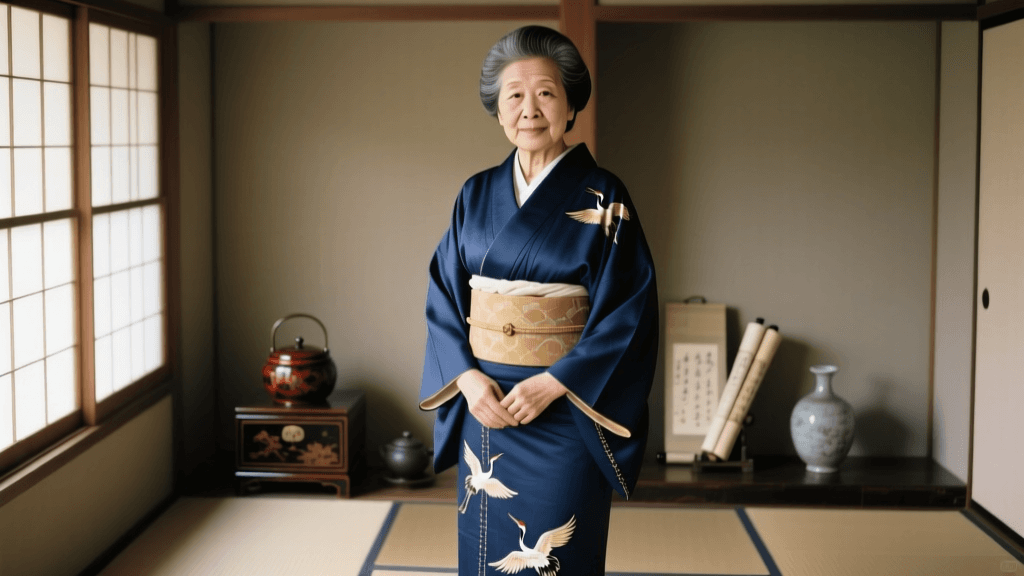
As we navigate the secondary market in 2026, the global appetite for vintage Japanese garments has reached unprecedented levels. Collectors, fashion archivists, and textile enthusiasts are increasingly turning to Japanese domestic auction platforms to source authentic, historical pieces. However, the kimono secondhand market is notoriously complex. Unlike Western vintage clothing, where brand labels often dictate price, a kimono's value is derived from an intricate matrix of weave, dye technique, era, and condition. Understanding these appraisal metrics is essential for anyone looking to bid confidently on platforms like Yahoo! Auctions Japan, Rakuma, or specialized textile houses this year.
The 2026 market has seen a massive surge in demand for Taisho-era (1912–1926) textiles, characterized by their bold, Art Deco-inspired "Taisho Roman" motifs. Conversely, mass-produced post-war garments have seen a dip in auction value, making it crucial to distinguish between artisanal masterpieces and everyday wear. This guide will equip you with the precise appraisal metrics required to evaluate vintage silk garments accurately in today's market.
Core Metrics for Kimono Value Appraisal
Fabric and Weave Identification
The foundation of any kimono appraisal begins with the textile. In 2026, high-resolution auction photography and AI-assisted textile zoom tools have made it easier to identify weaves remotely, but knowing what to look for remains critical.
- Chirimen (Crepe Silk): Known for its pebbled texture and excellent drape. While beautiful, Chirimen is highly susceptible to water shrinkage. Auction pieces made of Chirimen with visible water stains should be heavily discounted, as modern cleaning methods struggle to restore the fabric's original tension.
- Rinzu (Damask Silk): A glossy, patterned silk that was immensely popular during the Taisho era. Rinzu garments featuring woven geometric or floral backgrounds command a premium in 2026 auctions, often starting at $300 USD before bidding wars escalate the price.
- Tsumugi (Pongee): A slubby, matte silk spun from shorter threads. While historically considered casual wear, regional masterworks like Oshima Tsumugi or Yuki Tsumugi are highly prized by collectors today due to the severe shortage of traditional weavers.
Dyeing Techniques and Artistry
The method used to apply color and pattern drastically alters a garment's auction ceiling. According to the Victoria and Albert Museum, the evolution of Japanese dyeing techniques represents a pinnacle of global textile history, and auction houses price these pieces accordingly.
- Yuzen and Kaga Yuzen: Hand-painted resist-dyeing. Authentic, hand-painted Yuzen kimono featuring the signature "ito-me" (tiny white outlines where the resist paste was applied) are top-tier auction items. As noted by the Japan National Tourism Organization, regional variations like Kaga Yuzen from Ishikawa Prefecture are celebrated for their realistic, nature-inspired motifs and command the highest prices in the 2026 secondary market.
- Shibori: Intricate tie-dye techniques. Pieces featuring Kanoko Shibori (fawn-spot tie-dye) that required thousands of hand-tied micro-knots are highly valued. You can authenticate this by feeling the fabric; genuine Shibori has a distinct three-dimensional, textured relief.
- Katazome (Stencil Dyeing): While beautiful, stencil-dyed pieces generally fetch lower auction prices than hand-painted Yuzen, unless they are the work of a designated Living National Treasure.
Condition, Lining, and the Kamon Factor
Condition grading in Japanese auctions is notoriously strict. A garment labeled "junk" (janiku) on Yahoo! Auctions might simply have a minor, treatable stain, but it could also harbor structural rot. Always inspect the Douura (upper body lining) and Hakkake (lower hem lining). Yellowing or brittle lining indicates improper storage and high acidity, which will eventually degrade the outer silk.
Additionally, count the Kamon (family crests). A kimono with five crests (Itsutsu-mon) is formal wear (Kurotomesode or Furisode) and generally holds higher baseline value than a one-crest (Hitotsu-mon) or crestless casual garment, provided the formal motifs remain culturally relevant and aesthetically pleasing to modern buyers.
2026 Market Value Comparison by Era and Type
To help you benchmark your bids, the table below outlines the average 2026 auction hammer prices for vintage kimono, categorized by era and style. Note that these prices assume good to excellent condition, free of major structural flaws.
| Era / Style | Key Characteristics | 2026 Avg. Auction Price (USD) | Collector Demand |
|---|---|---|---|
| Meiji (1868-1912) | Somber colors, heavy crests, antique silk, subtle woven patterns | $150 - $450 | Niche / Archival |
| Taisho (1912-1926) | "Taisho Roman", bold geometrics, art deco, vibrant Rinzu silk | $400 - $1,500+ | Extremely High |
| Early Showa (1926-1945) | War-time restrictions, subdued palettes, Oshima Tsumugi rise | $120 - $600 | Moderate |
| Post-War (1950s-1970s) | Bright Yuzen, synthetic blends emerging, mass-production | $40 - $180 | Low (unless master dyer) |
The Arai-Hari Factor: Calculating Hidden Restoration Costs
When appraising a kimono that has minor staining or odors, you must factor in the cost of Arai-Hari (traditional washing and resewing). In 2026, the artisan shortage in Japan has pushed the price of professional Arai-Hari to between $350 and $600 USD per garment, not including international shipping. The process involves completely unpicking the kimono into its original flat panels, washing the silk with specialized natural soaps, stretching it on wooden frames to dry, and re-sewing it by hand.
If you are bidding on a stained Taisho-era Furisode with a hammer price of $500, you must mentally add $500 for potential restoration. If the total exceeds the market value of a pristine piece, it is wiser to walk away. Always ask auction sellers for close-up photos of the collar (eri) and the hem (suso), as these are the primary areas for makeup stains and mud splatters, respectively.
Navigating Japanese Proxy Auctions in 2026
International buyers rely on proxy services like Buyee, ZenMarket, and Neokyo to access domestic Japanese auctions. In 2026, proxy fee structures have stabilized, with most major services charging a flat fee of around 500 JPY per item, plus domestic shipping and payment processing fees. However, Japan Post's EMS (Express Mail Service) rates have seen incremental increases in 2026 due to global aviation fuel costs. When calculating your maximum bid, always add a 25% buffer for proxy fees, domestic transit, and international EMS shipping to avoid budget overruns.
Pro-Tip for 2026 Bidding: Utilize the "sniping" features offered by these proxy platforms. Bidding early drives up the price and alerts automated bot networks. Set your maximum bid and let the proxy service place it in the final 30 seconds of the auction.
Decoding Auction Terminology
Japanese auction listings use specific terminology to describe flaws. Recognizing these terms in the item description (often machine-translated poorly) is vital for accurate appraisal:
- Shimi (Stain): Can range from a tiny water spot to a massive, oxidized blemish. Always demand a photo with a ruler or coin for scale.
- Yake (Sun Fading): Often seen on the shoulders or back where the silk was exposed to light while displayed. Yake is irreversible and severely diminishes value.
- Kabi (Mold): Appears as small white or black speckles. Mold spores can spread to your entire collection if not professionally fumigated and cleaned immediately upon arrival.
- Hokori / Nioi (Dust / Odor): Common in garments stored in traditional tansu chests. Cedar and camphor odors can usually be aired out, but heavy mildew smells indicate deep-set kabi.
Conclusion
The 2026 kimono secondhand market offers incredible opportunities to acquire wearable art, provided you approach auctions with a disciplined, analytical mindset. By mastering the identification of silk weaves, understanding the premium placed on hand-dyed Yuzen techniques, and accurately calculating hidden restoration costs, you can build a world-class collection without overpaying. Always leverage high-resolution imagery, understand the historical context of the era, and bid with a clear understanding of the garment's true structural integrity.