Kimono vs Hanbok vs Cheongsam: 2026 Styling Guide
The Resurgence of Heritage Fashion in 2026
In the global fashion landscape of 2026, traditional Asian garments have transcended their ceremonial boundaries to become cornerstones of modern, sustainable wardrobes. As consumers increasingly prioritize longevity, artisanal craftsmanship, and cultural appreciation over fast fashion, the kimono, hanbok, and cheongsam have experienced a massive renaissance. However, for collectors, stylists, and heritage fashion enthusiasts, understanding the distinct structural and stylistic differences between these three iconic garments is essential. Whether you are investing in a bespoke piece or styling vintage finds, this comprehensive guide breaks down the silhouettes, fabrics, and 2026 market trends of Japan's kimono, Korea's hanbok, and China's cheongsam.
Kimono: The Art of the T-Shaped Silhouette
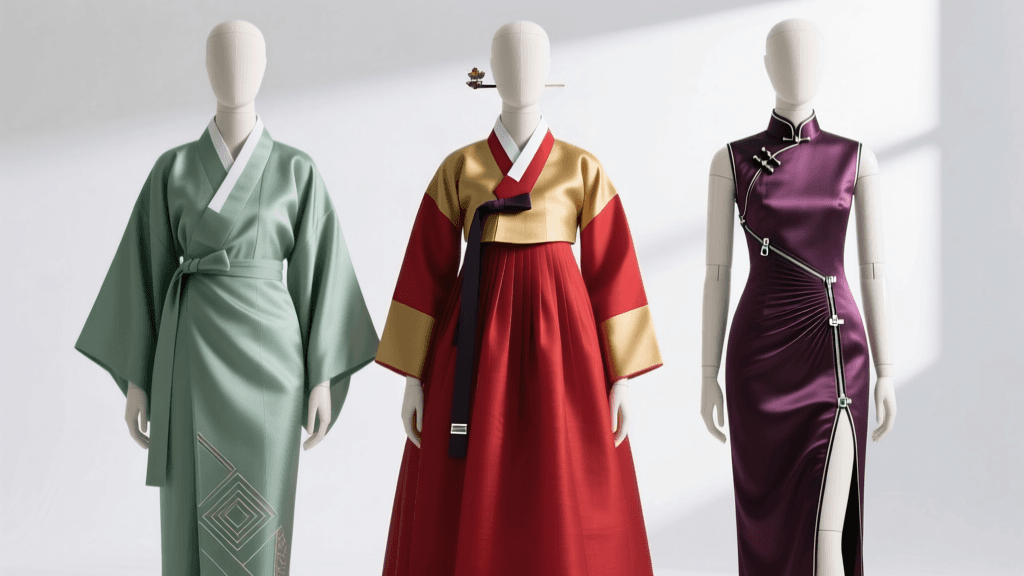
The Japanese kimono is renowned for its straight-line construction and T-shaped silhouette. Unlike Western tailoring, which cuts fabric to follow the curves of the body, the kimono is constructed from rectangular panels of fabric, minimizing waste and allowing the garment to be easily disassembled and re-dyed. According to the Victoria and Albert Museum's Asian textile archives, this zero-waste philosophy is a historical hallmark that perfectly aligns with the 2026 demand for sustainable fashion.
Construction and Fastening
The kimono relies entirely on the obi (a wide, structured sash) to secure the garment, as it features no buttons, zippers, or hooks. The wrapping is always left over right (right over left is strictly reserved for dressing the deceased). In 2026, modern styling has introduced simplified, pre-tied obi belts and magnetic closures for daily wear, though traditionalists still prefer the intricate knotting of a woven silk fukuro obi.
2026 Fabric Trends and Styling
While traditional rinzu (silk damask) and chirimen (silk crepe) remain highly prized for formal events, the 2026 market has seen a surge in washable, high-performance polyester blends that perfectly mimic the drape and luster of silk. For contemporary streetwear, upcycled vintage kimono silks are being tailored into modern haori jackets, paired effortlessly with wide-leg denim and minimalist leather boots.
Hanbok: Volumetric Elegance and High-Waisted Grace
The Korean hanbok is defined by its striking contrast between a fitted upper garment and a voluminous, flowing lower half. The traditional women's hanbok consists of the jeogori (a cropped jacket with long, curved sleeves known as baerae) and the chima (a high-waisted, full wrap skirt). Men's hanbok features the jeogori paired with baji (roomy, tapered trousers). The National Museum of Korea highlights that the hanbok's elegant lines and gentle curves are designed to harmonize with the natural movements of the human body.
Construction and Fastening
The hanbok's silhouette is created through gathering and pleating rather than darts or tailoring. The chima is secured high on the chest, just below the bust, creating an empire waist that allows the fabric to cascade gracefully to the floor. The jeogori is fastened with a long, flowing ribbon tie called a goreum. In 2026, designers have introduced hidden elastic bands and snap-hooks within the goreum to accommodate fast-paced urban lifestyles without sacrificing the traditional aesthetic.
2026 Fabric Trends and Styling
The 'daily hanbok' movement has fully matured in 2026. Modern iterations favor breathable linen-cotton blends, muted earth tones, and subtle geometric embroidery over the highly saturated, heavily brocaded silks of the past. Stylists are currently pairing cropped, modern jeogori with high-waisted Western trousers, or wearing sheer, organza chima over minimalist slip dresses for a layered, avant-garde look.
Cheongsam (Qipao): Sculpted Lines and Modern Tailoring
Originating in 1920s Shanghai, the cheongsam (or qipao) represents a radical departure from the voluminous hanbok and the straight-lined kimono. It is a form-fitting, one-piece dress characterized by a high Mandarin collar, asymmetrical chest openings, intricate pankou (frog closures), and strategic side slits. The Metropolitan Museum of Art's Asian Art Department notes that the cheongsam was one of the first Asian garments to integrate Western darting and tailoring techniques to accentuate the natural female form.
Construction and Fastening
Unlike the kimono and hanbok, the cheongsam requires precise, bespoke tailoring to fit the wearer's bust, waist, and hips flawlessly. The side slits are not merely decorative; they are structural necessities that allow for walking and sitting in a garment that lacks the gathering of a skirt. While traditional frog closures made of woven silk cord remain a hallmark of authenticity, 2026 designs frequently incorporate hidden side-zippers for ease of wear, reserving the pankou for the collar and chest area.
2026 Fabric Trends and Styling
In 2026, the cheongsam has embraced the 'quiet luxury' trend. Heavy brocades are being replaced by fluid, stretch-silk crepes, matte jerseys, and laser-cut lace overlays. The modern A-line cheongsam, which offers a slightly flared skirt for greater mobility, has become a staple for professional women in global financial hubs. It is frequently styled with structured blazers, minimalist gold jewelry, and pointed-toe mules.
Comparative Analysis: Kimono vs. Hanbok vs. Cheongsam
To help you navigate your 2026 purchasing and styling decisions, here is a structured comparison of the three garments:
| Feature | Kimono (Japan) | Hanbok (Korea) | Cheongsam / Qipao (China) |
|---|---|---|---|
| Primary Silhouette | Straight, T-shaped, columnar | Fitted top, highly voluminous bottom | Form-fitting, sculpted, continuous line |
| Fastening Method | Obi sash (wrapping, no buttons) | Goreum ribbon tie, chest sash | Pankou (frog closures), hidden zippers |
| Tailoring Approach | Zero-waste rectangular panels | Gathering, pleating, curved seams | Western darting, contour tailoring |
| Dominant 2026 Fabric | Washable poly-silk blends, upcycled silk | Linen-cotton blends, matte organza | Stretch-silk crepe, laser-cut lace |
| Best For Body Type | Universally flattering, hides waistline | Accentuates high waist, conceals lower body | Accentuates natural curves, requires precise fit |
| 2026 Styling Vibe | Avant-garde streetwear, layered bohemian | Romantic minimalism, modern commuter chic | Corporate elegance, evening sophistication |
2026 Buying Guide: Sizing, Cost, and Authenticity
Purchasing traditional garments requires an understanding of non-Western sizing paradigms. Here is what you need to know before investing in 2026:
Sizing and Measurements
- Kimono: Sizing is based on width and length rather than S/M/L. The critical measurement is the yuki (center of the back neck to the wrist). A standard kimono can accommodate a wide range of body types because the waist is not tailored; the fit is adjusted during the wrapping and tying process.
- Hanbok: Sizing focuses on the chest circumference (for the jeogori) and the overall length of the chima. Because the skirt sits above the natural waist, hip and waist measurements are largely irrelevant, making hanbok highly inclusive for varying body shapes.
- Cheongsam: Requires exact bust, waist, and hip measurements. A gap of even half an inch can alter the drape of the silk and the alignment of the frog closures. In 2026, most high-end boutiques offer 3D body scanning to ensure a flawless bespoke fit.
Market Pricing in 2026
The cost of authentic heritage garments has risen due to the scarcity of master weavers and the premium placed on sustainable textiles.
- Entry-Level / Daily Wear: $80 - $250 USD. Expect high-quality synthetic blends, machine embroidery, and off-the-rack sizing. Ideal for daily hanbok or casual summer yukata (lightweight kimono).
- Mid-Tier / Semi-Formal: $400 - $900 USD. Features genuine silk, hand-finished details, and semi-custom tailoring. This is the sweet spot for a modern A-line cheongsam or a formal visiting kimono (homongi).
- Bespoke / Haute Couture: $1,500 - $5,000+ USD. Reserved for hand-woven silks, intricate hand-embroidery (such as Korean jisu or Chinese suzhou embroidery), and master-level tailoring.
Care and Maintenance for Modern Wardrobes
Preserving these garments in 2026 is easier than ever, thanks to advancements in eco-friendly textile care. Traditional dry cleaning uses harsh chemicals like perc, which can degrade delicate silk proteins and strip natural dyes over time.
Eco-Friendly Cleaning Methods
For your silk cheongsam and formal kimono, seek out cleaners that utilize liquid silicone (GreenEarth) or professional wet cleaning technologies. These methods are gentle on the pankou closures and the delicate silk linings of the hanbok. For daily wear linen hanbok and washable poly-kimono, use a pH-neutral, enzyme-free liquid detergent and wash on a delicate cycle in a mesh laundry bag.
Storage Solutions
Never hang a heavy silk kimono or a heavily embroidered cheongsam on a standard hanger; the weight of the fabric will distort the shoulders and stretch the bias. Instead, fold them using acid-free tissue paper to prevent hard creases, and store them in breathable cotton garment bags. For the hanbok, the chima can be hung by its waistband, but the jeogori should be folded to maintain the structural integrity of the curved baerae sleeves.
Conclusion
The kimono, hanbok, and cheongsam are not merely relics of the past; they are dynamic, evolving garments that offer profound insights into Asian aesthetics, philosophy, and craftsmanship. In 2026, the boundaries between traditional dress and contemporary fashion are more porous than ever. By understanding the unique silhouettes, tailoring methods, and modern styling potential of each garment, you can build a heritage wardrobe that is not only culturally respectful but also fiercely relevant to the modern sartorial landscape.