Kitsuke Mindfulness: Meditative Kimono Dressing in 2026
In our hyper-connected, fast-paced 2026 landscape, the quest for mental clarity has led many away from digital detoxes and toward tactile, analog traditions. Among the most profound of these is kitsuke—the traditional Japanese art of wearing a kimono. Far from being a mere sartorial exercise, kitsuke is increasingly recognized in 2026 wellness circles as a powerful form of moving meditation and a cornerstone of the slow fashion movement. This article explores how the deliberate, mindful practice of kimono dressing can anchor your mental wellbeing, reduce cortisol levels, and reconnect you with the heritage of Asian textile traditions.
The Philosophy of Kitsuke as Moving Meditation
When we think of mindfulness, we often picture seated meditation or mindful walking. However, the intricate process of donning a kimono demands a level of focused attention that naturally quietens the mind's default mode network. According to experts in cognitive behavioral therapy, engaging in complex, multi-step tactile tasks can induce a state of flow, effectively blocking out anxiety-inducing rumination. The kimono, with its straight seams and lack of fasteners like buttons or zippers, requires the wearer to manipulate flat planes of fabric into a three-dimensional form. This requires spatial awareness, gentle physical exertion, and deep, rhythmic breathing. In 2026, wellness practitioners globally are prescribing garment-based mindfulness to combat screen fatigue, noting that the physical weight and texture of vintage silk provide deep-pressure tactile stimulation similar to weighted blankets.
Building Your 2026 Mindful Kitsuke Sanctuary
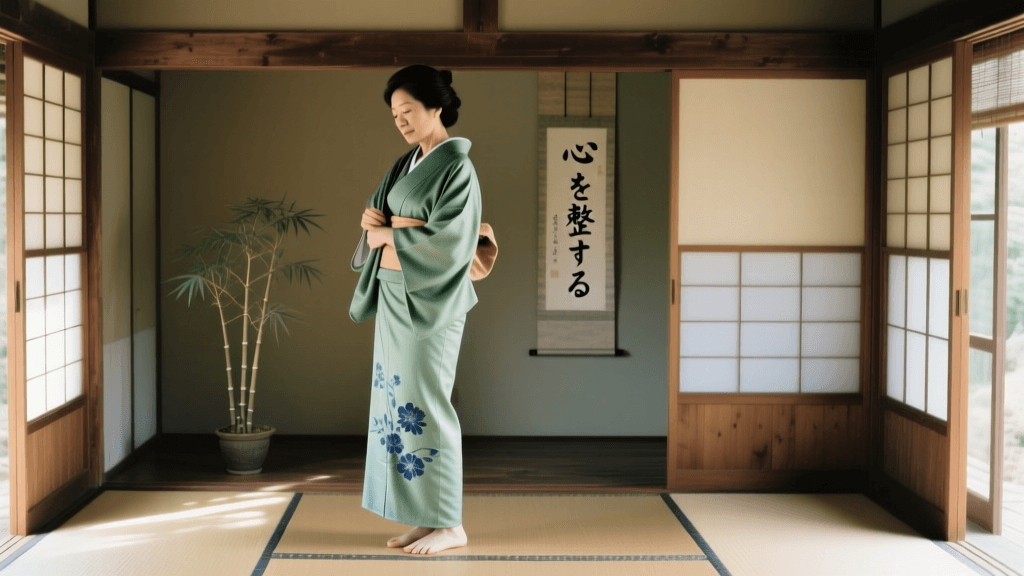
To practice kitsuke as a wellness ritual, your environment must transition from a hurried bedroom to a dedicated sanctuary. In 2026, interior design trends heavily favor biophilic and sensory-rich spaces for mental health. Here is how to prepare your space:
- Flooring: If traditional tatami is unavailable, opt for sustainably sourced cork or woven rush mats to provide a firm, grounding surface.
- Lighting: Harsh overhead LEDs disrupt circadian rhythms. Use diffused, warm-temperature smart lighting (set to 2700K) to mimic the soft glow of traditional shoji screens.
- Olfactory Anchors: Scent is deeply tied to memory and relaxation. Diffuse authentic Hinoki (Japanese cypress) or Kuromoji essential oil to signal to your brain that it is time to slow down.
- The Mirror: A full-length, floor-standing mirror is essential. Position it where natural morning light can reach it, allowing you to observe your posture and the drape of the silk without harsh shadows.
The Step-by-Step Meditative Dressing Routine
Treat the act of dressing not as a chore, but as a choreographed sequence of breath and movement. Allocate at least 45 minutes for this practice.
Step 1: The Juban (Undergarment) and Centering
Begin by slipping on the juban. As you smooth the fabric over your shoulders, take three deep, diaphragmatic breaths. Feel the texture of the cotton or silk against your skin. This is your grounding phase, separating your internal state from the external demands of the day.
Step 2: The Kimono and Posture Alignment
Drape the main kimono. The back seam must align perfectly with your spine. This requirement forces you to stand tall, engaging your core and correcting the tech-neck posture prevalent in our digital age. As you adjust the o-hashori (the fold at the waist), move slowly, synchronizing your arm movements with your exhales.
Step 3: The Datejime (Binding) and Breath Control
Wrap the datejime (the thin sash) around your waist. It should be snug but not restrictive. In kitsuke, the tension of the sash is a physical reminder to maintain upright posture and engage in shallow, controlled chest breathing—a technique proven to lower heart rates and induce calm.
Step 4: The Obi (Sash) and Focus
Tying the obi is the most complex step. Whether you are tying a simple bunko (bow) or a more intricate knot, this stage requires intense, singular focus. If your mind wanders to your daily to-do list, gently bring your attention back to the friction of the silk and the geometry of the fold.
Sourcing Mindful Garments: The Slow Fashion Ethos
True wellness cannot exist in a vacuum; it must extend to how we treat the planet. The slow fashion movement of 2026 heavily critiques the environmental toll of fast fashion, advocating for circularity and heritage preservation. Purchasing newly manufactured, mass-produced synthetic kimonos contradicts the mindful ethos. Instead, embrace the secondary market. Japan’s vintage kimono markets, both physical and digital, are treasure troves of upcycled, high-quality silk. By purchasing a vintage kimono, you are rescuing a garment from a landfill and honoring the artisans who spent hundreds of hours weaving and dyeing the fabric decades ago. The UN Alliance for Sustainable Fashion emphasizes that extending the life of existing garments is one of the most impactful ways to reduce the fashion industry's carbon footprint. When you wear a vintage kimono, you are participating in a profound act of ecological mindfulness.
Wellness Benefits Backed by Science
The intersection of traditional garment wearing and modern psychology is a growing field of study. The tactile experience of handling natural fibers like silk, hemp, and cotton stimulates the somatosensory cortex, promoting neural grounding. Furthermore, the restrictive nature of the obi naturally limits slouching and encourages mindful movement; you cannot rush or move erratically when properly dressed in a kimono. According to Harvard Health Publishing, mindfulness practices that incorporate physical movement and sensory awareness are highly effective in reducing symptoms of generalized anxiety and depression.
| Aspect | Fast Fashion Morning Routine | Mindful Kitsuke Routine (2026) |
|---|---|---|
| Time Allocation | 5-10 minutes (rushed) | 45-60 minutes (deliberate) |
| Mental State | Multi-tasking, high cortisol | Flow state, lowered heart rate |
| Material Connection | Synthetic, disposable, microplastics | Natural vintage silk, tactile grounding |
| Posture Impact | Slouching, tech-neck | Spinal alignment, core engagement |
| Environmental Impact | High (supports linear consumption) | Low (circular, upcycled heritage) |
The Global Rise of Kimono Wellness Retreats
Recognizing these profound benefits, luxury wellness retreats across Asia and Europe have begun integrating kitsuke into their 2026 programming. In Kyoto, several high-end ryokans now offer Silent Kitsuke mornings, where guests are guided through the dressing process in total silence, followed by a traditional matcha ceremony. This immersive experience allows participants to internalize the philosophy of ichigo ichie (one time, one meeting), fostering a deep appreciation for the present moment. The Victoria and Albert Museum's extensive kimono archives highlight how the garment has always been a reflection of cultural and personal identity; today, it is being reclaimed as a tool for personal healing and psychological resilience.
Conclusion: Wrapping Yourself in Intention
In 2026, true luxury is not defined by the newest, most expensive fast-fashion drop, but by the time and intention we invest in our daily rituals. Kitsuke offers a sanctuary from the relentless speed of modern life. By wrapping yourself in the layers of a vintage kimono, you are not just putting on clothes; you are donning a mindset. You are choosing to move slower, breathe deeper, and honor the intricate beauty of Asian textile traditions. As you smooth the final fold of your obi, you carry that stillness with you, transforming the simple act of getting dressed into a profound daily meditation.