Kitsuke Mindfulness: Kimono Dressing For Wellness In 2026
The Rise of Somatic Styling in 2026
In 2026, the global wellness conversation has shifted dramatically from purely digital detoxes to embodied, tactile practices. As screen fatigue reaches unprecedented levels, psychologists and wellness experts are championing "somatic styling"—the practice of using the physical act of dressing to regulate the nervous system. At the intersection of this movement and slow fashion lies kitsuke, the traditional Japanese art of kimono dressing. Far from being a mere sartorial choice, kitsuke is emerging as a profound mindfulness ritual, offering a deliberate, grounding antidote to the hyper-accelerated pace of modern life.
Unlike the rushed, thoughtless act of pulling on fast-fashion garments, kitsuke demands presence. It is a multi-step process of wrapping, folding, and tying that requires deep breathing, postural awareness, and tactile engagement. According to Harvard Health Publishing, mindfulness practices that incorporate physical movement and sensory awareness are highly effective in reducing cortisol levels and anchoring the mind in the present moment. When applied to the kimono, this ancient tradition transforms a daily routine into a moving meditation.
The Anatomy of a Mindful Ritual
To understand why kitsuke functions as a somatic meditation, one must look at the physical mechanics of the garment. The kimono is essentially a series of flat, rectangular panels that only take their final three-dimensional shape when they interact with the human body. This transformation requires the wearer to be acutely aware of their physical boundaries and breath.
Posture and the Core
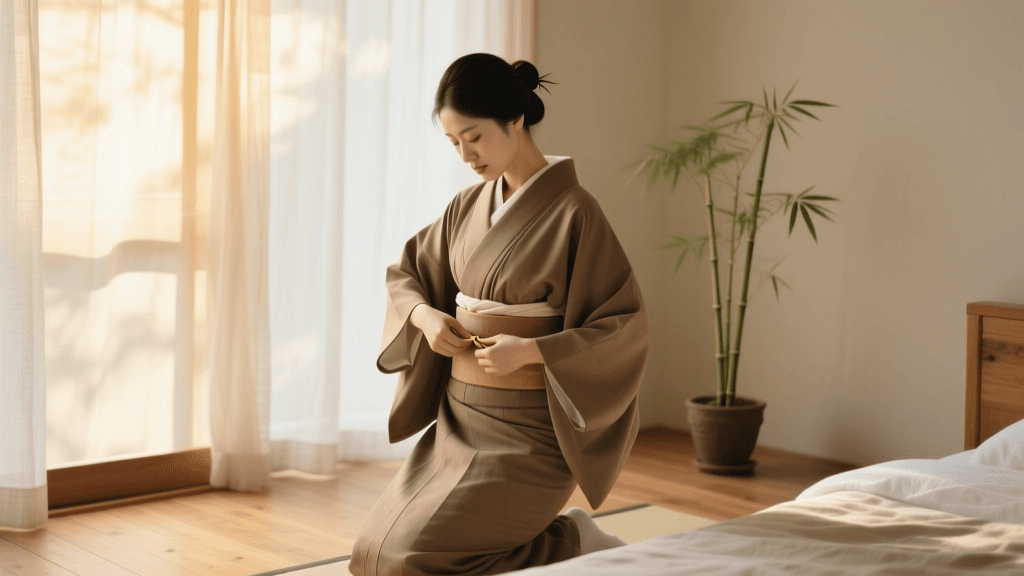
The foundation of kitsuke is posture. Before the silk even touches the skin, the practitioner must align their spine, roll their shoulders back, and engage their core. The tying of the datejime (the thin under-sash) requires a deep, controlled exhalation to ensure the sash is snug but allows for comfortable breathing. This intentional breathwork mirrors the pranayama techniques found in yoga, signaling to the parasympathetic nervous system that it is time to rest and focus.
The Tactile Feedback of Heritage Textiles
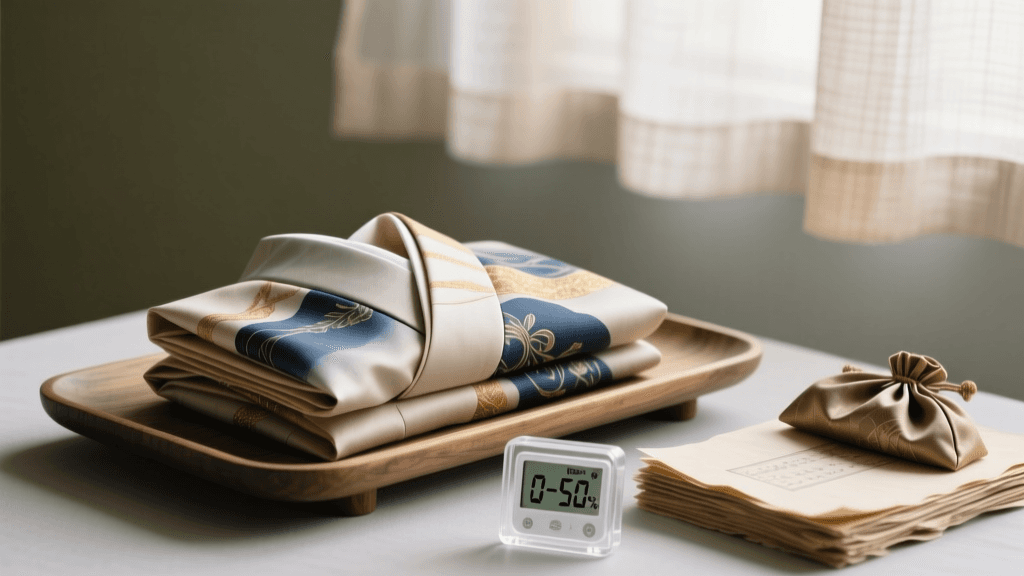
The sensory experience of handling traditional textiles is a core component of this wellness practice. In an era dominated by synthetic blends, the feeling of authentic chirimen (silk crepe) or the crisp rustle of ro (summer gauze) provides intense tactile grounding. The Victoria and Albert Museum's Kimono collection highlights the extraordinary craftsmanship and textural diversity of these garments, noting how the physical weight and drape of the silk dictate the wearer's movements, naturally slowing down their pace and encouraging deliberate, graceful gestures.
Slow Fashion as an Antidote to Burnout
The mindfulness of kitsuke extends beyond the physical act of dressing; it is deeply tied to the ethos of slow fashion. In 2026, consumers are increasingly rejecting the environmental and psychological toll of micro-trends. Organizations like Fashion Revolution have long advocated for a systemic shift toward valuing garments, emphasizing that when we understand the labor and materials behind our clothing, our relationship with it becomes more meaningful and sustainable.
A kimono is inherently modular, size-inclusive, and designed to be disassembled, cleaned, and re-tailored across generations. Choosing to wear a vintage or upcycled kimono is an act of environmental stewardship and historical reverence. It shifts the mindset from "consuming" an outfit to "stewarding" a piece of art, which fosters a sense of gratitude and continuity—key psychological pillars for long-term wellbeing.
Fast Fashion vs. Mindful Kitsuke: A 2026 Comparison
How does the traditional practice of kitsuke compare to the modern standard of getting dressed? The table below illustrates the profound differences in mental and environmental impact.
| Metric | Fast Fashion Routine | Mindful Kitsuke Ritual |
|---|---|---|
| Time Investment | 3–5 minutes (rushed) | 20–30 minutes (deliberate) |
| Mental State | Distracted, task-oriented | Grounded, meditative, present |
| Physical Engagement | Minimal, repetitive motions | High, requires core and breathwork |
| Tactile Feedback | Low (synthetics, uniform textures) | High (silk, linen, varied weaves) |
| Environmental Impact | High (microplastics, landfill waste) | Low (vintage, upcycled, biodegradable) |
Your 25-Minute Morning Kitsuke Routine
Integrating kitsuke into your 2026 wellness routine does not require a formal ceremony or expensive new garments. Here is a practical, actionable 25-minute morning routine designed to center your mind before the day begins.
Minutes 0–5: Selection and Centering
Begin with a cup of warm tea. Approach your kimono wardrobe not by asking "What is trendy?" but "What texture does my body need today?" If you feel scattered, choose a heavier, grounded fabric like a vintage Oshima Tsumugi (woven silk). If you feel sluggish, opt for a crisp, lightweight cotton yukata or linen blend. Spend two minutes simply feeling the fabric and practicing box breathing (inhale for 4 seconds, hold for 4, exhale for 4, hold for 4).
Minutes 5–15: The Foundation and Juban
Put on your hadajuban (undergarment) and susoyoke (half-slip). As you tie the koshihimo (tying cords) around your waist, focus on the sensation of the cotton against your skin. Ensure the cords are tied firmly enough to hold the garment, but loose enough that your diaphragm can expand fully. This is a practice in finding the balance between support and restriction.
Minutes 15–22: The Kimono and Ohashori
Drape the kimono over your shoulders. Align the back seam perfectly with the center of your spine—a physical cue for mental alignment. As you bring the front panels together, overlap the left over the right. Create the ohashori (the waist fold) with deliberate, smooth hand movements. The repetition of smoothing the silk from the center outward acts as a physical metaphor for smoothing out mental clutter.
Minutes 22–25: The Obi and Final Reflection
Wrap your obi (sash). For a daily mindfulness practice, a simple hanhaba obi (half-width sash) tied in a bunko (bow) knot is ideal. It requires less physical strain than a formal fukuro obi but still demands focus and bilateral coordination. Once tied, stand before the mirror, take three deep breaths, and set a single, clear intention for the day.
Building a Wellness Kimono Wardrobe in 2026
You do not need to spend thousands of dollars to begin this practice. The 2026 secondhand and vintage kimono market is thriving, making it easier than ever to source authentic garments sustainably. A high-quality, vintage silk komon (everyday patterned kimono) can typically be found on specialized online markets or local Japanese recycling shops for between $45 and $150.
When building your wellness wardrobe, prioritize natural fibers. Look for meisen (a durable, slightly textured silk) or asa (ramie or hemp) for summer months. These fabrics offer superior breathability and a rich tactile experience that synthetic modern reproductions simply cannot replicate. Furthermore, purchasing vintage keeps these beautiful textiles out of landfills and honors the artisans who originally wove them.
Conclusion: Wrapping Yourself in Intention
In a world that constantly demands we move faster, produce more, and consume endlessly, the act of slowing down to wrap oneself in a kimono is a radical act of self-care. Kitsuke is not about perfection, historical reenactment, or rigid rules. In 2026, it is about reclaiming your time, your body, and your attention. By treating the art of dressing as a somatic meditation, you transform a mundane daily task into a sanctuary of slow fashion and profound mental wellbeing.