Japanese Bon Odori Costumes: Yukata, Tabi, and Dance Gear Guide
Introduction to Bon Odori and Festival Attire
Bon Odori is a traditional Japanese folk dance performed during the Obon season in mid-summer to honor the spirits of one's ancestors. What began as a solemn Buddhist ritual during the Muromachi period (1336–1573) has evolved into a vibrant, community-wide performance art. Today, whether you are participating in the massive Awa Odori in Tokushima, the all-night Gujo Odori in Gifu, or a local neighborhood shrine festival, the clothing you wear is just as important as the dance steps. According to the Japan Guide's comprehensive overview of Bon Odori, these summer festivals are deeply tied to regional identities, and the costumes reflect both local history and the practical needs of dancing in high heat and humidity.
Unlike formal tea ceremony attire or wedding kimono, Bon Odori costumes are fundamentally performance wear. They must allow for a full range of motion, wick away sweat, and withstand hours of repetitive movement on wooden stages, asphalt streets, and grassy parks. This guide breaks down the essential garments, footwear, and accessories required for Japanese festival dancing, providing actionable advice on sizing, materials, and costs for both beginners and seasoned performers.
The Core Garments: Yukata, Happi, and Jinbei
The foundation of any Bon Odori costume is the main garment. While regional variations exist, three primary garments dominate the festival landscape: the yukata, the happi coat, and the jinbei.
Yukata: The Summer Standard
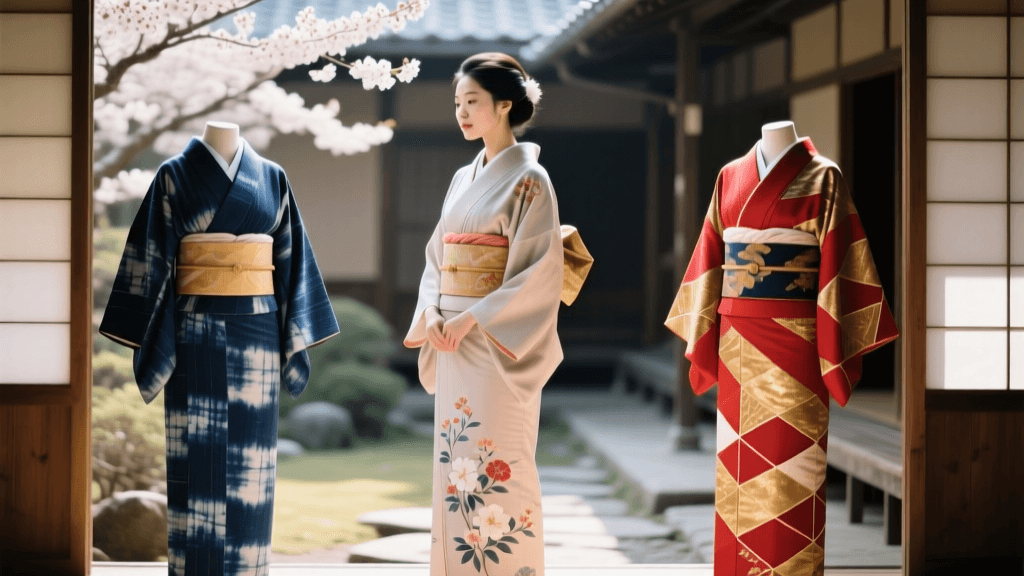
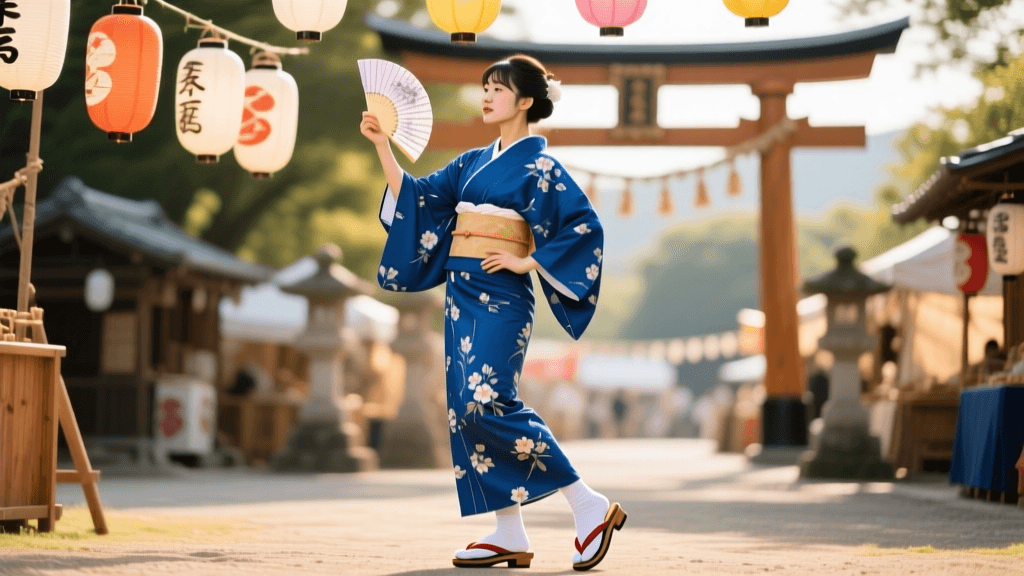
The yukata is a lightweight, unlined cotton kimono originally worn as a bathrobe by the nobility before becoming the standard summer wear for commoners during the Edo period. For dance performances, a performance yukata differs significantly from a modern fashion yukata. Performance yukata feature shorter sleeves (sode) to prevent tangling during arm movements, and the hem is tailored to end at the ankle rather than the floor to prevent tripping. High-quality dance yukata are woven from breathable, crisp cotton such as Oshima Tsumugi cotton blends or feature Edo Chugata indigo-dyed patterns, which are celebrated for their sweat-wicking properties and colorfastness.
Happi and Hapi Coats
The happi is a short, straight-sleeved coat often adorned with a festival crest or kanji on the back. In vigorous dances like the Nebuta Matsuri or certain energetic Bon Odori styles, male dancers frequently wear happi coats open over a bare chest or a mesh juban (undergarment). The wide sleeves allow for maximum airflow, while the short hemline leaves the legs completely free for leaping and stomping.
Jinbei: The Casual Alternative
Consisting of a short-sleeved top and matching shorts, the jinbei is a two-piece garment primarily worn by children or men attending as spectators rather than lead performers. While comfortable, it lacks the sweeping visual elegance required for formal dance troupes.
| Garment | Primary Material | Best For | Mobility Rating | Average Cost (USD) |
|---|---|---|---|---|
| Performance Yukata | 100% Cotton / Hemp | Traditional circle dances, female performers | High | $80 - $250 |
| Happi Coat | Cotton / Sashiko-weave | High-energy dances, male performers, drummers | Very High | $40 - $120 |
| Jinbei | Cotton / Linen blend | Spectators, children, casual participation | Maximum | $25 - $60 |
Footwear: Tabi, Zori, and Geta for Dancers
Footwear can make or break a festival performance. Dancing for four to six hours on hard surfaces requires specialized footwear that provides grip, balance, and shock absorption.
Tabi: The Split-Toe Essential
Tabi are traditional Japanese socks characterized by a separation between the big toe and the other four toes. This design provides superior grip and balance when wearing thonged footwear. For Bon Odori, performers typically choose one of two types:
- Standard Cotton Tabi: Made of heavy-duty bleached or black cotton with a metal kohaze (clasp) closure. These are worn with sandals and are preferred for stage performances where traditional aesthetics are paramount.
- Jika-Tabi: These feature a rubber sole directly attached to the cotton upper. Originally designed for construction workers and farmers, jika-tabi are the secret weapon of street dancers. They provide the aesthetic of traditional tabi with the shock absorption and traction of a sneaker.
Sizing Note: Tabi are sized in centimeters. A standard women's size is 23.5 cm to 24.5 cm, while men's sizes range from 25.5 cm to 28.0 cm. Always measure your foot from heel to the tip of the big toe to ensure a snug fit, as loose tabi cause blisters during pivots.
Zori vs. Geta
While wooden geta (clogs) are iconic summer footwear, they are generally not recommended for prolonged Bon Odori dancing due to their weight and the impact stress they place on the knees and heels. Instead, performers opt for zori. Modern performance zori are often made from EVA foam or tightly woven rush grass with a rubberized bottom. They are lightweight, flexible, and allow the foot to articulate naturally during the suri-ashi (sliding step) fundamental to Japanese folk dance.
Essential Accessories: Tenugui, Obi, and Amigasa
Accessories in Bon Odori are rarely purely decorative; they serve vital functional roles in a performer's kit.
Tenugui (Cotton Hand Towel)
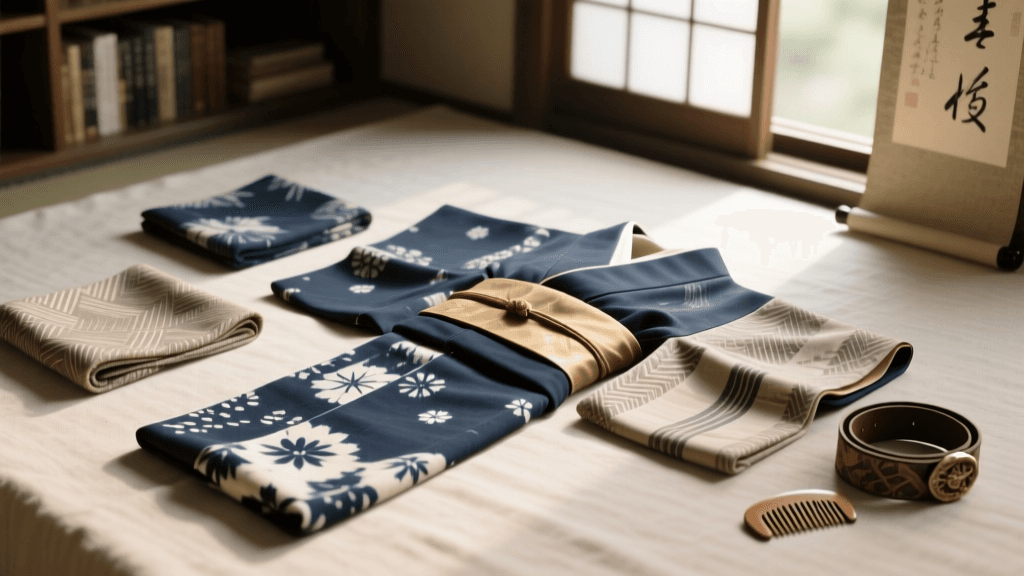
The tenugui is a rectangular piece of thin, printed cotton cloth, typically measuring 35 cm by 90 cm. In a dance context, it is folded and tied around the head as a hachimaki (headband) to absorb sweat and keep hair out of the eyes. It can also be tucked into the obi to wipe the face or used as a prop in certain regional choreographies.
The Koshi-Obi (Half-Width Sash)
To secure the yukata, dancers use a koshi-obi or hanhaba-obi (half-width obi), which is roughly 15 cm wide. The most common knot for dancers is the kai-no-kuchi (clam shell) or a simple flat bow, ensuring the bulk of the knot does not interfere with arm movements or backbends. Dancers often use an obi-jime (decorative cord) to lock the sash in place during vigorous spins.
Amigasa and Sugegasa (Straw Hats)
In specific regional dances, most notably the Awa Odori and certain Kyushu folk dances, performers wear woven straw hats. The amigasa (net hat) obscures the upper face, adding an element of mystery and uniformity to the dance troupe, while also providing shade during daytime parades.
Practical Guide: Sizing, Costs, and Where to Buy
Purchasing authentic performance wear requires understanding traditional Japanese measurements. The Tokyo National Museum archives highlight how historical garments were tailored to the individual's body proportions rather than standard S/M/L sizes.
Key Measurements
- Mitake (Back Length): Measured from the nape of the neck to the desired hemline. For dance, this should hit exactly at the ankle bone (approx. 120-130 cm for average height).
- Yuki (Sleeve Span): Measured from the center of the back of the neck, across the shoulder, down to the wrist. Performance yukata often have a slightly shorter yuki (approx. 60-65 cm) compared to formal kimono to prevent the sleeves from dragging or catching on other dancers.
Cost Breakdown and Sourcing
- Entry-Level (Polyester/Blend): $30 - $50. Available on Amazon or basic souvenir shops. Warning: Polyester does not breathe and will trap sweat, leading to heat exhaustion during summer festivals.
- Mid-Range (Standard Cotton): $80 - $150. Available at specialized kimono retailers like Yamatomo or online Japanese craft stores. Ideal for most amateur dance troupes.
- Artisan/Professional (Hand-Dyed Hemp/Cotton): $250 - $600+. Sourced from regional craft cooperatives or the Japan National Tourism Organization's recommended craft vendors. These feature traditional chusen dyeing techniques where the pattern penetrates the entire fabric, ensuring longevity and superior moisture management.
Dressing for Movement: Securing the Ohashori
The most common wardrobe malfunction during Bon Odori is the collapsing of the ohashori—the waist fold that adjusts the yukata's length. When the ohashori slips, the hem drops to the floor, creating a severe tripping hazard.
Actionable Advice for Performers:
- Use a Kori-Jime: This is an elasticized belt with a plastic clip. Secure the ohashori fold tightly with the kori-jime before tying your obi.
- Apply an Obi-Ita: A stiff board inserted between the obi and the yukata prevents the sash from wrinkling and helps distribute the tension of the knot, keeping the waistline rigid during torso twists.
- The Safety Pin Trick: Modern dance troupes frequently use small, discreet safety pins to anchor the ohashori to the underlying juban (undergarment) or the date-jime (tie belt), ensuring the hemline remains locked at the ankle regardless of the choreography's intensity.
Cultural Significance and Modern Adaptations
Bon Odori costumes are a living archive of Japanese textile history. The indigo-dyed cottons of the Edo period were chosen not just for their beauty, but because indigo possesses natural insect-repellent and deodorizing properties—crucial for humid summer nights. Today, while synthetic blends have entered the market, the most dedicated troupes insist on natural fibers, recognizing that the garment's interaction with the body is part of the performance itself. The swish of a cotton hem and the sharp clap of a straw zori against the wooden yagura (stage) are auditory elements inseparable from the visual spectacle of the dance. Whether you are joining a local community circle in Tokyo or traveling to the rural mountains of Gifu, equipping yourself with the proper yukata, tabi, and accessories ensures you can honor the tradition with both respect and physical endurance.