Japan's Regional Kimono: Oshima, Kaga Yuzen, Bingata
Introduction to Japan's Prefectural Textile Heritage
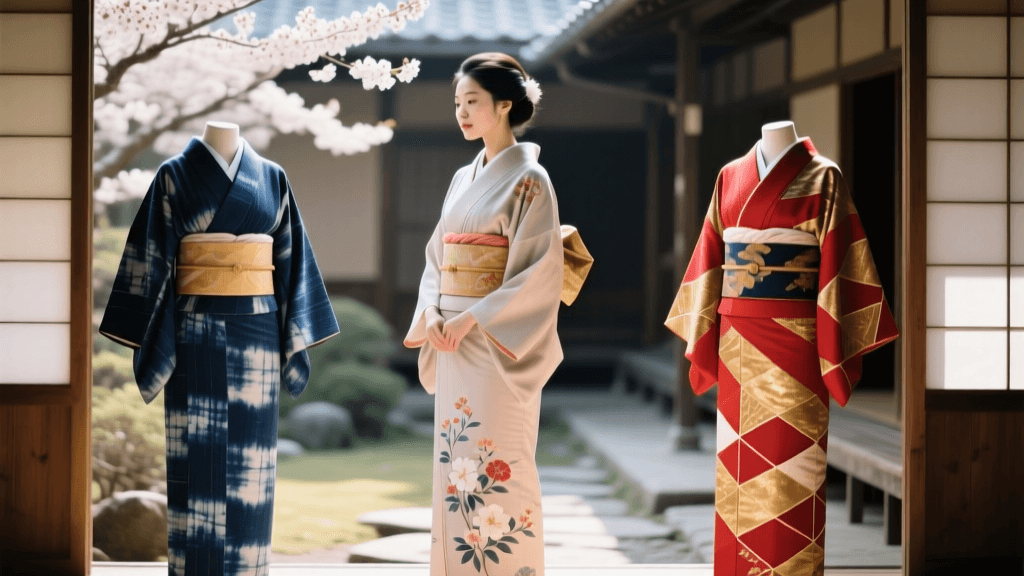
Japan’s traditional garment, the kimono, is far from a monolithic cultural artifact. Because of the country's diverse topography—ranging from the snowy, mountainous north to the subtropical, typhoon-swept southern islands—regional variations in textile production, dyeing techniques, and garment construction are profound. For collectors, practitioners of kitsuke (the art of wearing kimono), and cultural historians, understanding these prefectural distinctions is essential. The climate, local flora, and historical trade routes of each region have birthed entirely unique aesthetic philosophies and manufacturing processes.
This comprehensive guide explores three of Japan’s most celebrated regional textiles: Kagoshima’s Oshima Tsumugi, Ishikawa’s Kaga Yuzen, and Okinawa’s Ryukyuan Bingata. We will delve into their historical contexts, intricate craftsmanship, and provide actionable advice for purchasing, measuring, and maintaining these exquisite garments.
Kagoshima Prefecture: The Resilience of Oshima Tsumugi
Originating in the Amami Islands of Kagoshima Prefecture, Oshima Tsumugi is a highly prized pongee silk textile renowned for its lightweight feel, exceptional durability, and intricate kasuri (splash-pattern) designs. The creation of authentic Honba Amami Oshima Tsumugi is a labor-intensive process that can take up to a year for a single bolt of fabric (tanmono).
The Mud-Dyeing Process
The hallmark of Oshima Tsumugi is its unique mud-dyeing technique. Artisans boil the bark of the techigi (a type of rose family shrub native to Amami) to extract a rich tannin dye. The silk threads are dyed in this tannin and then submerged in iron-rich mud from the island's rice paddies. The chemical reaction between the tannin and the iron creates a deep, lustrous brownish-black color that is entirely unique to the region. This process is repeated dozens of times to achieve the desired depth of color.
Collector's Tip: When purchasing vintage or new Oshima Tsumugi, always look for the official "Honba Amami Oshima Tsumugi" certification label. According to the Ministry of Economy, Trade and Industry (METI), this label guarantees the textile was woven using traditional hand-tied kasuri techniques and mud-dyed specifically within the Amami region.
Purchasing and Pricing
- Retail Cost: Authentic Oshima Tsumugi is an investment. A standard, un-tailored bolt (tanmono) typically ranges from ¥400,000 to ¥800,000. Highly complex, fully patterned pieces can exceed ¥1,500,000.
- Authentication: Examine the kasuri intersections under a magnifying glass. True hand-woven Amami Oshima features microscopic precision at the cross-threads, a hallmark of its painstaking shime-bata weaving process.
- Best Season: Because it is a lightweight, breathable silk, Oshima Tsumugi is ideal for awase (lined) kimono worn in the spring and autumn, or as unlined hitoe in early summer.
Ishikawa Prefecture: The Naturalistic Elegance of Kaga Yuzen
While Kyoto is famous for its Kyo Yuzen, Ishikawa Prefecture (specifically the Kanazawa region) is the birthplace of Kaga Yuzen. Developed over 500 years ago, Kaga Yuzen is a resist-dyeing technique celebrated for its hyper-realistic, nature-inspired motifs and subtle, elegant color palettes.
The Kaga Gosai and Aesthetic Philosophy
Kaga Yuzen is defined by the Kaga Gosai (the five colors of Kaga): indigo, crimson, yellow-green, earth yellow, and deep purple. Unlike the flamboyant, gold-leaf-heavy Kyo Yuzen of Kyoto, Kaga Yuzen embraces a more grounded, samurai-class aesthetic influenced by the wabi-sabi philosophy.
A defining characteristic of Kaga Yuzen is the soto-bokashi (outside shading) technique, where colors fade from dark on the outside of a motif to light on the inside. Furthermore, artisans frequently incorporate mushikui (insect-eaten leaves) into their floral designs, reflecting the Japanese appreciation for the transient, imperfect beauty of nature.
Commissioning a Bespoke Piece
The Ishikawa Prefecture Tourism Alliance highlights that Kanazawa remains the epicenter for master Yuzen dyers. If you wish to commission a bespoke Kaga Yuzen kimono, be prepared for a significant timeline.
- Timing: A custom, hand-painted Kaga Yuzen kimono requires 4 to 8 months to complete, as the resist-dyeing, steaming, and washing processes must be done in precise stages.
- Cost: Bespoke Kaga Yuzen garments generally start at ¥800,000 and can reach well over ¥3,000,000 depending on the master artisan's prestige and the density of the pattern.
- Occasion: Due to its refined elegance, Kaga Yuzen is highly appropriate for formal and semi-formal events, such as tea ceremonies, weddings (as a guest), and high-end cultural gatherings.
Okinawa Prefecture: The Vibrant Spirit of Ryukyuan Bingata
Moving south to the subtropical islands of Okinawa, we encounter Ryukyuan Bingata. Developed during the Ryukyu Kingdom era (15th–19th centuries), Bingata is a stencil-dyeing technique that reflects Okinawa's historical role as a bustling maritime trade hub connecting Japan, China, and Southeast Asia.
Stencil Dyeing and Tropical Pigments
Unlike Yuzen, which uses dyes that penetrate the fiber, Bingata utilizes thick, opaque pigments (often mixed with soybean milk as a binder) applied through intricate paper stencils. The motifs are distinctly tropical and auspicious, featuring peonies, hibiscus, palm trees, koi fish, and dragons. The color palette is famously vibrant, utilizing bright vermilion, royal blue, and vivid yellows that mirror the Okinawan landscape.
As documented by the Okinawa Tourism Board, Bingata was historically restricted to royalty and the warrior class, with specific colors and motifs denoting rank. Today, it is a celebrated symbol of Okinawan cultural resilience and identity.
Buying and Wearing Bingata
- Material: While silk is used for formal pieces, Bingata is frequently applied to high-quality cotton, hemp, or bashofu (banana fiber cloth), making it incredibly comfortable for hot, humid climates.
- Cost: A high-quality, ready-to-wear Bingata summer kimono or yukata typically costs between ¥150,000 and ¥400,000.
- Styling: Bingata is best worn as an unlined hitoe or yukata during the summer months. Pair it with a contrasting, solid-colored obi (such as deep indigo or black) to allow the vibrant stencil patterns to take center stage.
Comparison Chart: Regional Textile Variations
| Feature | Oshima Tsumugi (Kagoshima) | Kaga Yuzen (Ishikawa) | Ryukyuan Bingata (Okinawa) |
|---|---|---|---|
| Primary Technique | Mud-dyeing & Kasuri weaving | Resist-dyeing & hand-painting | Stencil-dyeing with pigments |
| Aesthetic Motifs | Geometric, intricate micro-patterns | Realistic flora, insect-eaten leaves | Tropical fauna, dragons, peonies |
| Color Palette | Deep earthy browns, blacks, indigo | Kaga Gosai (subdued, natural tones) | Vibrant vermilion, yellow, green, blue |
| Price Range (Tanmono) | ¥400,000 - ¥1,500,000+ | ¥800,000 - ¥3,000,000+ | ¥150,000 - ¥500,000 |
| Ideal Season | Spring, Autumn, early Summer | Year-round (depending on lining) | Summer (unlined / hitoe) |
Practical Guide: Measurements, Timing, and Care
Purchasing a traditional Japanese garment, whether off-the-rack or bespoke, requires an understanding of standard kimono measurements and maintenance protocols. Unlike Western clothing, kimono are constructed from straight bolts of fabric and tailored to the wearer's specific proportions.
Essential Measurements for Bespoke Orders
If you are ordering a custom Kaga Yuzen or Oshima Tsumugi kimono, you will need to provide the following measurements to the shitateya (tailor):
- Yuki (Sleeve Length): Measured from the center of the back of the neck, across the shoulder, and down to the wrist bone. This is the most critical measurement for ensuring the sleeves drape correctly.
- Mitake (Back Length): Calculated by measuring from the base of the neck to the ankle. A standard rule of thumb for modern kitsuke is: Height (in cm) x 0.42. For example, a person who is 160 cm tall will require a mitake of approximately 67 cm.
- Maehaba & Ushirohaba (Front and Back Widths): These dictate how the kimono wraps around the body. They are calculated based on the wearer's hip circumference to ensure adequate overlap (okumi) when tied.
Timing Your Purchase
The Japanese textile market is highly seasonal. To secure the best prices on high-end regional garments:
- Spring (March-May): Department stores and specialty boutiques in Tokyo and Kyoto hold end-of-season sales on winter and lined silk kimono. This is the optimal time to purchase Oshima Tsumugi at a 20-30% discount.
- Autumn (September-November): New collections of summer textiles, including Okinawan Bingata and ro/sha (gauze) silks, are heavily discounted as retailers clear inventory for the winter season.
Maintenance and Care
Regional textiles require specific care to preserve their dyes and structural integrity.
- Maruarai (Professional Washing): Do not attempt to wash silk Oshima Tsumugi or Kaga Yuzen at home. Take them to a specialized kimono cleaner for maruarai (a full-disassembly and hand-washing process). Expect to pay between ¥5,000 and ¥8,000 per garment, with a turnaround time of 3 to 4 weeks.
- Airing Out: After wearing, hang the kimono on a wide, specialized kimono hanger (emono-kake) in a shaded, well-ventilated area for 24 hours to allow sweat and moisture to evaporate before folding it back into its tatoushi (paper storage sleeve).
- Bingata Care: Because Bingata uses surface pigments rather than penetrating dyes, aggressive rubbing or improper washing can cause the colors to flake or fade. Always inform your cleaner that the garment features stencil pigments so they can adjust their chemical solvents accordingly.
Conclusion
The regional variations of the Japanese kimono offer a fascinating lens through which to view the country's geography, history, and cultural values. From the mud-dyed resilience of Kagoshima's Oshima Tsumugi and the naturalistic, samurai-inspired elegance of Ishikawa's Kaga Yuzen, to the vibrant, trade-influenced stencils of Okinawa's Ryukyuan Bingata, each prefecture tells a unique story through its threads. By understanding these distinctions, buyers and wearers can not only make informed, investment-grade purchasing decisions but also participate in the ongoing preservation of Japan's extraordinary textile heritage.