Kitsuke Mindfulness 2026: Kimono Dressing For Slow Fashion Wellness
The Intersection of Traditional Garments and Mental Health
In 2026, the global wellness industry has experienced a profound paradigm shift, moving away from hyper-optimized, tech-driven biohacking and returning to embodied, analog practices. At the forefront of this movement is the revival of kitsuke—the traditional Japanese art of kimono dressing. No longer viewed merely as a formal requirement for weddings or tea ceremonies, kitsuke is now widely recognized by wellness practitioners and slow fashion advocates as a powerful form of moving meditation. By engaging the senses, demanding focused attention, and connecting the wearer to centuries of textile heritage, the ritual of putting on a kimono offers a profound antidote to the digital burnout and wardrobe fatigue that characterize modern life.
The concept of slow fashion has evolved significantly over the last few years. It is no longer just about buying less; it is about forging a deep, tactile relationship with the garments we own. According to UNEP's sustainable fashion initiatives, extending the emotional and physical lifespan of a garment is one of the most effective ways to reduce the fashion industry's carbon footprint. The kimono, with its intricate construction and requirement for mindful maintenance, perfectly embodies this 2026 ethos of intentional living.
The Psychology of Kitsuke: Dressing as a Moving Meditation
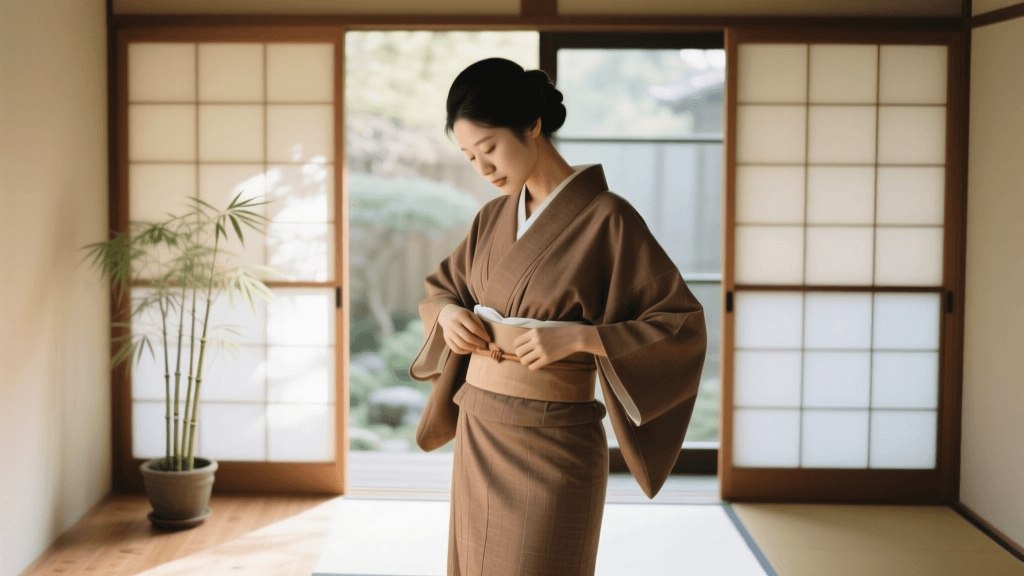
Unlike Western clothing, which often relies on zippers, buttons, and elastic to quickly conform to the body, the kimono is a flat, T-shaped garment that requires the wearer to actively sculpt it to their form. This process cannot be rushed. It demands a sequence of precise folds, ties, and adjustments that naturally slows down the heart rate and anchors the mind in the present moment.
Psychologists specializing in somatic therapy note that complex, repetitive physical tasks can induce a state of 'flow,' effectively lowering cortisol levels. When you engage in kitsuke, you are practicing tactile grounding. The sensation of cool silk against the skin, the firm pressure of the koshihimo (waist ties), and the structured embrace of the obi (sash) provide deep proprioceptive input. This sensory feedback loop signals the parasympathetic nervous system to relax, transforming a daily chore into a restorative mental health practice.
Slow Fashion in 2026: The Antidote to Wardrobe Fatigue
The modern consumer in 2026 is increasingly disillusioned by the ephemeral nature of micro-trends. The kimono offers a masterclass in longevity. A well-cared-for kimono can easily span multiple generations, often being passed down and resized. This inherent sustainability aligns perfectly with the core tenets of the slow fashion movement. As highlighted by the Fashion Revolution, true sustainability requires a systemic shift in how we value our clothing, moving from a model of disposable consumption to one of stewardship and appreciation.
Owning a kimono forces a departure from the 'wear once and discard' mentality. Because the garment is an investment—both financially and emotionally—the wearer is incentivized to learn the arts of garment care, repair, and styling. This fosters a sense of agency and creativity that mass-produced, trend-driven fashion simply cannot provide.
A 20-Minute Kitsuke Mindfulness Routine
To integrate kitsuke into your 2026 wellness routine, you do not need to be a certified kitsuke master. The goal is mindful engagement, not flawless execution. Here is a structured, 20-minute morning routine designed to center your mind for the day ahead.
Step 1: Preparation and Breath (Minutes 1-3)
Begin in a quiet, uncluttered space. Lay out your nagajuban (undergarment), kimono, ties, and obi. Sit in seiza (kneeling position) or cross-legged, and take ten deep, diaphragmatic breaths. Acknowledge the artisans who wove, dyed, and sewed the textiles you are about to wear. This practice of gratitude immediately shifts the brain from a state of scarcity to one of abundance.
Step 2: The Foundation and Alignment (Minutes 4-10)
Put on the nagajuban. As you adjust the collar to sit perfectly at the base of the throat, focus on your posture. The kimono naturally encourages an upright spine and relaxed shoulders. Slide into the kimono, aligning the back seam precisely with the center of your spine. This physical alignment serves as a metaphor for mental alignment—centering your intentions for the day.
Step 3: The Binding of Intentions (Minutes 11-18)
Use the koshihimo to tie the kimono securely at the waist. As you pull the cotton or silk tie taut, visualize binding your focus and letting go of external distractions. The firm pressure around the core is deeply grounding, similar to the effect of a weighted blanket. Finally, wrap the obi. Whether you are tying a simple bunko (bow) or a sleek otaiko, the complex folding requires your complete, undivided attention, leaving no mental space for anxiety or rumination.
Step 4: The Final Reflection (Minutes 19-20)
Stand before a mirror. Adjust the eri (collar) to ensure the traditional 'V' shape at the nape of the neck. Bow slightly to your reflection, acknowledging the time you have dedicated to yourself and your heritage.
Material Comparison for Sensory Wellness
The textile you choose for your kitsuke practice deeply influences the sensory experience. In 2026, wellness-focused practitioners select materials not just for aesthetics, but for their neurological and dermatological benefits.
| Textile Type | Sensory Profile | Best Season | Wellness & Mindfulness Benefit |
|---|---|---|---|
| Habotai Silk | Smooth, cool, fluid, lightweight | Spring / Autumn | Reduces sensory friction; the cool touch helps regulate body temperature and calm an overactive nervous system. |
| Tsumugi (Pongee Silk) | Textured, nubby, structured, warm | Winter / Cool Days | Provides rich tactile feedback; the slight resistance of the fabric keeps the mind anchored in the physical folding process. |
| Asa (Hemp/Ramie) | Crisp, breathable, earthy, stiff | Summer | Highly breathable and antimicrobial; connects the wearer to nature and agricultural cycles, promoting an earthy, grounded mindset. |
| Ro or Sha (Woven Silk) | Sheer, airy, delicate, whispering | High Summer | The visual transparency and auditory 'swish' of the fabric encourage a light, unburdened mental state, ideal for releasing stress. |
The V&A Perspective on Kimono Longevity and Care
The mindfulness of kitsuke extends beyond the act of dressing; it encompasses the lifelong care of the garment. The Victoria and Albert Museum notes that the kimono's flat, straight-line construction is a marvel of zero-waste design and longevity. Because it is not cut to fit a specific body shape, it can be endlessly unpicked, cleaned, re-dyed, and resewn.
Incorporating garment care into your wellness routine is a powerful act of slow living. The practice of shinshitsu—unpicking the seams of a kimono to wash the fabric as a flat bolt before restitching it—is a masterclass in patience. While you may not do this daily, the routine of gently brushing your kimono with a soft-bristled shoji brush after wearing, and airing it in the shade to release moisture and odors, serves as a gentle, meditative closing ritual to your day. It teaches the practitioner that true value is maintained through consistent, loving attention.
Embracing the Analog in a Digital World
As we navigate the hyper-connected landscape of 2026, the need for 'analog mornings' has never been more critical. By dedicating twenty minutes to the intricate, screen-free, and deeply physical art of kitsuke, you are reclaiming your cognitive space. You are choosing to engage with a garment that demands your presence, respects your time, and connects you to a lineage of artisans who valued beauty, durability, and harmony above all else.
Ultimately, the kimono is not just a piece of clothing; it is a wearable sanctuary. Through the mindful practice of kitsuke, we find that the slow fashion movement is not merely about saving the planet—it is about saving ourselves, one intentional fold at a time.