Preserving Vintage Silk Kimono & Hanbok: 2026 Storage Guide
The Unique Vulnerabilities of Asian Silk Garments
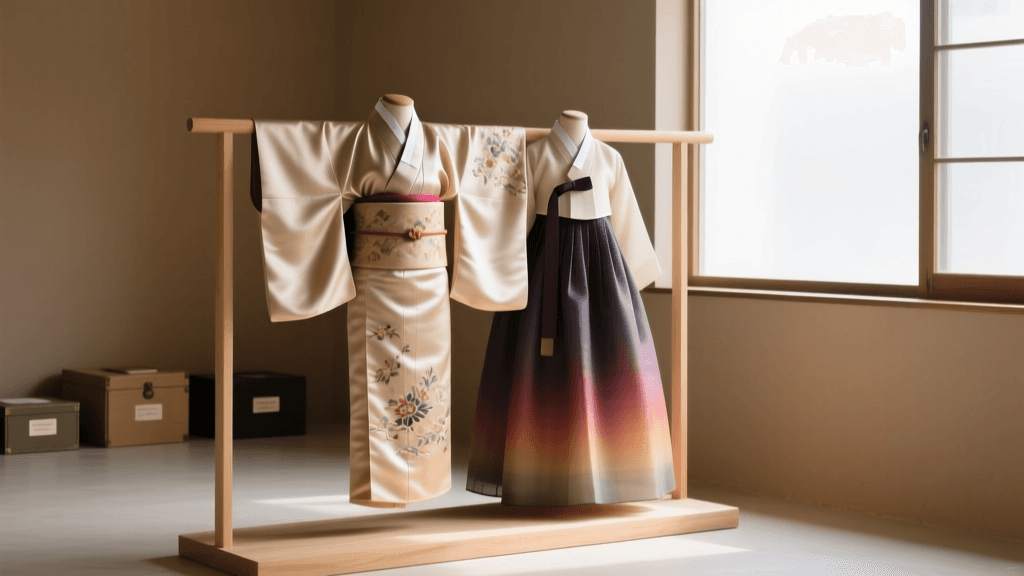
Traditional Asian garments, particularly the Japanese kimono and Korean hanbok, represent centuries of textile mastery, structural engineering, and cultural heritage. However, the primary material used in these garments—silk—is a natural protein fiber that is inherently vulnerable to environmental fluctuations. Unlike modern synthetic blends, vintage silk degrades when exposed to improper humidity, direct ultraviolet (UV) light, and acidic storage materials. For home collectors and cultural preservationists in 2026, understanding the specific degradation patterns of these garments is the first step toward effective preservation.
In kimono, the continuous straight-line cutting from a single bolt of fabric (tanmono) means that garments are folded rather than hung. This folding creates structural stress points. Over time, improper storage leads to shigaki (crease damage), where the silk fibers literally snap along the fold lines due to dry rot or metallic salt weighting used in vintage dyeing processes. Similarly, the voluminous skirts (chima) and stiffened collars of traditional hanbok require specialized support to maintain their architectural silhouettes without crushing the delicate silk weaves or metallic embroidery.
Precision Climate Control: 2026 Smart Monitoring
The cornerstone of textile preservation is strict climate control. According to the Canadian Conservation Institute, the ideal relative humidity (RH) for storing silk textiles is between 45% and 55%, with a stable temperature around 18°C (64°F). Fluctuations outside this range cause the protein fibers to expand and contract, leading to micro-tears and accelerated embrittlement.
In 2026, home collectors no longer need to rely on bulky, analog hygrometers. The integration of Matter-compatible smart home sensors has revolutionized archival monitoring. Devices like the SensorPush HT.w and the latest SwitchBot Temperature & Humidity monitors now offer laboratory-grade accuracy with real-time cloud logging. By placing these discreet sensors directly inside your storage chests or archival boxes, you can set automated alerts on your smartphone if the RH drops below 45% or spikes above 55%. For collectors living in highly humid climates, pairing these sensors with smart dehumidifiers ensures that your storage environment remains perfectly stabilized year-round, preventing the catastrophic growth of mold spores which can permanently stain silk within 48 hours.
Archival Storage: Traditional Wisdom Meets Modern Science
Historically, kimono were stored in tansu (chests) made of kiri (Paulownia wood). Paulownia is naturally lightweight, resistant to warping, and possesses unique hygroscopic properties—it absorbs ambient moisture when the environment is humid and releases it when the air is dry, creating a natural microclimate. In 2026, authentic kiri chests remain the gold standard for serious collectors. However, they must be lined with modern archival materials to prevent the wood's natural tannins from migrating into the silk.
The Smithsonian Institution emphasizes that all materials touching historical textiles must be chemically stable and acid-free. While traditional tatoushi (paper wrappers) were historically used, modern conservationists recommend unbuffered, acid-free tissue paper for wrapping silk. Buffered tissue (which contains calcium carbonate) is excellent for plant-based fibers like cotton and linen, but it can cause chemical reactions that degrade protein fibers like silk and wool over time.
Comparison of 2026 Archival Storage Materials
| Storage Material | Pros | Cons | Best Use Case |
|---|---|---|---|
| Paulownia (Kiri) Wood Chest | Natural humidity buffering; pest resistant; traditional aesthetic. | Expensive; requires interior lining to prevent tannin transfer. | Long-term storage of high-value vintage kimono and hanbok. |
| Unbuffered Acid-Free Tissue | Chemically inert; prevents crease stress when used as padding. | Must be replaced every 3-5 years as it absorbs ambient acids. | Wrapping individual garments and padding fold lines. |
| Unbleached Muslin Cloth | Breathable; washable; protects against dust and light. | Does not buffer humidity; requires regular laundering. | Outer protective covers for rolled hanbok skirts and obi sashes. |
| Archival Polyethylene Bins | Inert plastic; blocks dust and pests; affordable. | Traps moisture if sealed; lacks breathability. | Secondary outer containment in climate-controlled rooms. |
The Art of Folding: Hon-Datami and Hanbok Chima Care
How you fold and rest your garments is just as critical as the materials you use. Kimono are traditionally folded using the hon-datami method, a precise geometric folding technique that aligns the seams and distributes the stress of the folds evenly across the fabric. To prevent shigaki (crease damage), conservationists in 2026 advocate for the use of loosely rolled 'sausages' of unbuffered acid-free tissue placed inside the fold lines. This creates a gentle curve rather than a hard crease, significantly reducing fiber breakage.
Hanbok requires a different approach, particularly for the chima (skirt). Because the chima features deep, structured pleats and a high waistband, folding it flat can crush the pleats and stress the gathering threads. Instead, the modern preservation standard is to gently roll the chima around an archival-grade, acid-free cardboard tube padded with unbleached cotton. The rolled skirt is then wrapped in a muslin cover and stored horizontally on a shelf, ensuring the weight of the fabric does not crush the delicate silk organza or ramie underlayers.
Non-Toxic Pest Management
Silk is highly attractive to protein-eating pests, specifically the larvae of carpet beetles and webbing clothes moths. Historically, collectors relied on naphthalene or paradichlorobenzene mothballs. In 2026, these toxic chemicals are strictly avoided in professional conservation; they not only pose severe health risks but also release acidic gases that yellow and degrade silk fibers.
Modern pest management relies on integrated, non-toxic strategies. Japanese cedar (sugi) blocks and lavender sachets provide mild, natural deterrents that do not off-gas harmful chemicals. More importantly, collectors should utilize pheromone-baited sticky traps placed in the corners of the storage room. These traps monitor and intercept male moths before they can mate, providing an early warning system without exposing your precious hanbok or kimono to toxic residues. Regular vacuuming of the storage room's baseboards and ensuring garments are completely free of organic stains (like sweat or food oils) before storage are the most effective ways to eliminate the food sources that attract these pests.
Light Exposure and UV Degradation
Silk is notoriously susceptible to photo-oxidation. Prolonged exposure to both natural sunlight and standard artificial lighting causes the amino acids in the silk to break down, resulting in irreversible yellowing and extreme brittleness. When displaying or airing out your garments, ensure the room is fitted with UV-filtering window films and LED lighting that emits zero ultraviolet radiation. Display periods should be strictly limited; a vintage silk kimono should never be left on a display stand for more than three to six months before being rotated back into dark, archival storage.
When to Seek Professional Arai-Hari Restoration
Despite meticulous home care, vintage garments may eventually require professional intervention. If a kimono develops deep-set stains, structural warping, or widespread odor, it is time to seek out a master of arai-hari. This traditional Japanese restoration technique involves completely unsewing the kimono into its original flat fabric panels. The panels are then washed, stretched, and treated with natural starches to restore the silk's original luster and structural integrity before being meticulously re-sewn by hand. While arai-hari is an investment, it is the only safe method for deep-cleaning vintage silk without subjecting the delicate seams to the mechanical stress of modern washing machines or the harsh solvents of standard dry cleaning.
Preserving Asian traditional garments in 2026 is a harmonious blend of honoring historical craftsmanship and utilizing cutting-edge environmental science. By maintaining strict climate control, utilizing chemically inert archival materials, and practicing mindful folding techniques, collectors can ensure that these magnificent silk masterpieces survive to tell their cultural stories for generations to come.