Kabuki, Noh & Bunraku Kimono Costumes: 2026 Guide
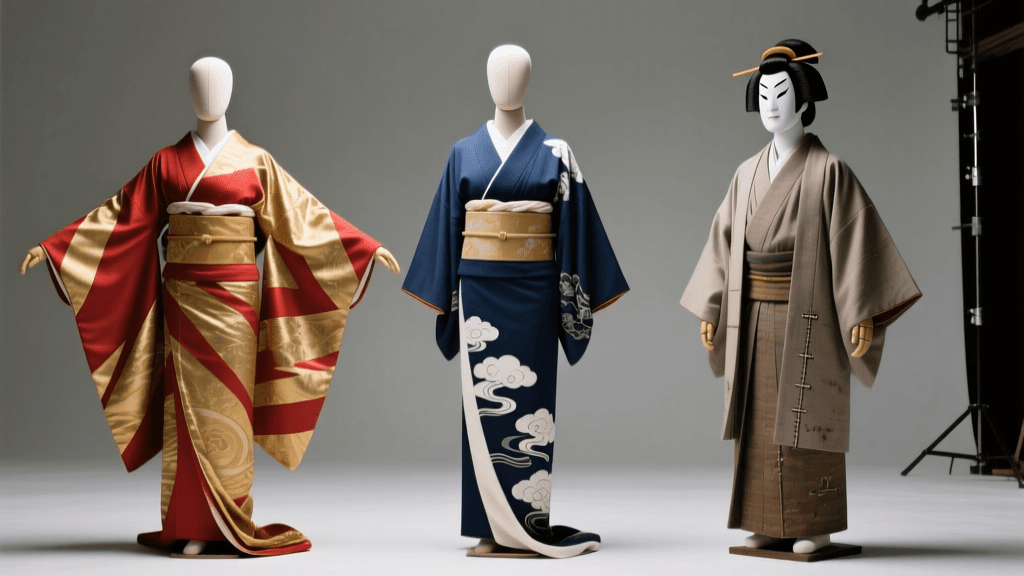
The Architecture of Theatrical Garments in 2026
When we discuss traditional Japanese clothing, the everyday kimono often takes center stage. However, the true zenith of Japanese textile artistry is found in isho—theatrical costumes. As of 2026, the kimono utilized in Kabuki, Noh, and Bunraku theaters remain masterclasses in engineering, symbolism, and textile manipulation. These garments are not merely clothing; they are architectural structures, narrative devices, and mechanical tools designed to manipulate light, shadow, and audience perception. Recognized globally as vital cultural treasures, with forms like Kabuki inscribed on the UNESCO Representative List of the Intangible Cultural Heritage of Humanity, these theatrical traditions continue to evolve while strictly preserving their sartorial foundations.
For textile enthusiasts, cultural historians, and travelers planning a 2026 itinerary to Japan, understanding the distinct differences between the kimono of these three major theater forms is essential. Each tradition demands entirely different weaving techniques, weights, and structural adaptations from the master artisans of Kyoto’s Nishijin district.
Kabuki: The Spectacle of Hikinuki and Oshikuma
Kabuki is the theater of the people, characterized by bold drama, exaggerated movements, and visual spectacle. The kimono used in Kabuki must withstand rigorous acrobatics while projecting immense visual power to the back rows of the Kabukiza Theatre. In 2026, the weight and opulence of Kabuki costumes remain unmatched, with some lead actor garments weighing up to 20 kilograms.
The Hikinuki Quick-Change Technique
One of the most thrilling aspects of Kabuki is the hikinuki, a rapid on-stage costume change. A kimono is stitched together with specialized basting threads. At a dramatic climax, stage assistants (kuroko) pull these threads, causing the outer kimono to instantly fall away or transform, revealing a completely different garment underneath. This requires the kimono to be constructed with precise tension points, ensuring the silk brocade tears away flawlessly without damaging the priceless Nishijin-ori textiles.
Oshikuma and Villainous Proportions
For villainous roles, actors wear the oshikuma, a heavily padded kimono that artificially broadens the shoulders and chest, creating a menacing, demonic silhouette. The textiles chosen for these roles often feature high-contrast geometric patterns or jagged motifs in stark blacks, deep purples, and metallic golds, designed to catch the stage lighting during dramatic mie (poses).
Noh: The Spiritual Weight of Karaori and Surihaku
If Kabuki is a roaring fire, Noh is a smoldering ember. Noh theater is deeply rooted in Zen Buddhism and Shinto ritual, prioritizing yugen—a profound, mysterious sense of beauty. The costumes, managed by institutions like the Japan Arts Council, reflect this subtlety through exquisite, understated craftsmanship that reveals its brilliance only upon close inspection or through slow, deliberate movement.
Karaori and the Illusion of Emotion
The karaori is a stiff, heavily brocaded kimono worn by female characters (played by masked male actors). Unlike the fluid silks of everyday wear, the karaori is woven with thick, metallic threads that cause the garment to stand away from the body. This creates a triangular, bell-like silhouette that grounds the actor. As the actor tilts their head, the heavy brocade shifts, altering the way light hits the gold leaf and changing the perceived expression of the carved cypress mask.
Surihaku: Gold Leaf Mastery
The surihaku is an under-robe featuring intricate patterns applied directly to the silk using gold or silver leaf, rather than woven threads. Because Noh stages are traditionally lit by natural sunlight or soft, warm modern equivalents in 2026, the surihaku provides a muted, ethereal glow that complements the slow, sliding footwork (hakobi) of the performers.
Bunraku: Engineering Kimono for the Puppet Stage
Bunraku, or ningyo joruri, is a highly complex form of puppet theater where a single puppet is operated by three puppeteers. The kimono in Bunraku face a unique challenge: they must look entirely natural while accommodating the physical bodies and hands of the puppeteers manipulating them.
Proportional Scaling and Split Seams
Bunraku puppets are roughly one-half to two-thirds the size of a human. Therefore, the kimono are custom-tailored to these specific proportions. More importantly, the garments are engineered with hidden splits at the shoulders, waist, and sleeves. The lead puppeteer (omozukai) operates the head and right arm, inserting his arm through a specialized opening in the kimono's right shoulder. The silk must be lightweight—often using fine chirimen (crepe silk)—so that it drapes naturally and responds to the subtle micro-movements of the puppeteers' fingers without bunching or resisting.
Comparative Analysis: Theatrical Kimono Textiles and Mechanics
To fully appreciate the diversity of Japanese theatrical garments, it is helpful to compare their structural and textile properties side-by-side.
| Feature | Kabuki | Noh | Bunraku |
|---|---|---|---|
| Primary Silk Type | Heavy Brocade, Rinzu (satin) | Karaori, Surihaku (gold leaf) | Lightweight Crepe, Chirimen |
| Visual Motif | Bold, high-contrast, dramatic | Subtle, symbolic, seasonal | Proportional, scaled for 1/2 size |
| Stage Mechanic | Hikinuki (quick change threads) | Layering for slow reveals | Split seams for puppeteer access |
| Garment Weight | Extremely heavy (up to 20kg) | Moderate, highly structured | Lightweight, highly flexible |
| Collar Adjustment | Fixed for dramatic silhouette | Manipulated to alter mask angle | Fixed to puppet wooden neck |
Nishijin-ori: The Weaving Hub of Theatrical Mastery
All three theater forms rely heavily on the master weavers of Kyoto’s Nishijin district. In 2026, the integration of digital Jacquard looms alongside traditional hand-weaving has allowed Nishijin artisans to recreate lost historical patterns for revival performances. However, the highest grade of theatrical kimono, particularly the gold-wrapped threads (kinran) used in Noh and Kabuki, are still woven on traditional handlooms. The process of wrapping lacquered paper with pure gold leaf and cutting it into micro-threads remains a fiercely guarded artisanal secret, ensuring the stage garments possess a luminescence that synthetic modern threads cannot replicate.
How to Read Theatrical Kimono Motifs
When attending a performance in 2026, look closely at the motifs woven into the kimono. They serve as a visual script for the audience:
- Pine Trees (Matsu): Often worn by gods or characters of high virtue, symbolizing longevity and unwavering resolve.
- Cherry Blossoms (Sakura): Worn by tragic heroines or young lovers, representing the fleeting, beautiful nature of life.
- Water and Waves (Seigaiha): Used in scenes of travel or spiritual purification, often indicating a character's journey across the sea to the afterlife.
- Clan Crests (Kamon): In historical plays (jidaimono), accurate clan crests are woven into the garments to instantly identify historical allegiances to educated audience members.
2026 Theater Viewing Guide & Ticketing
Experiencing these magnificent garments in person is a cornerstone of any Asian traditions travel itinerary. Here is what you need to know for booking in 2026:
Kabukiza Theatre (Tokyo)
For those short on time, the Kabukiza offers hitomaku-mi (single-act) tickets. Priced around 2,000 JPY in 2026, these same-day tickets allow you to watch a single act, perfect for observing a specific hikinuki costume change. For the full spectacle, full-show tickets range from 4,000 to 20,000 JPY. The official Kabuki portal provides updated English audio guide rentals, which are highly recommended for understanding the narrative context of the costumes.
National Noh Theatre (Tokyo)
Located in Sendagaya, the National Noh Theatre offers an intimate setting where the subtle shifts in the karaori brocade are visible. Tickets for regular performances range from 3,000 to 12,000 JPY. Arrive early to view the lobby exhibitions, which frequently rotate displays of antique Noh masks and surihaku robes.
National Bunraku Theatre (Osaka)
Located in Nippombashi, Osaka, this is the premier destination for puppet theater. Single-act tickets are available, but a full performance (often lasting 3 to 4 hours) is recommended to appreciate the endurance of the puppeteers and the durability of the split-seam kimono. English headsets are available and provide excellent commentary on the costume mechanics.
Conclusion
The kimono of Kabuki, Noh, and Bunraku are far more than historical relics; they are living, breathing components of Japan's theatrical soul. Whether it is the explosive transformation of a Kabuki hikinuki, the spiritual stillness of a Noh karaori, or the mechanical ingenuity of a Bunraku puppet's robe, these garments represent the absolute pinnacle of Asian textile tradition. As we move through 2026, the dedication of the artisans who weave, dye, and construct these masterpieces ensures that the magic of the Japanese stage remains as vibrant and awe-inspiring as it was centuries ago.