2026 Kimono Collection Management & Storage Preservation
The Evolution of Kimono Preservation in 2026
As we navigate the environmental and climatic shifts of 2026, the preservation of traditional Japanese garments requires a more meticulous approach than ever before. Extreme weather fluctuations and varying indoor humidity levels pose significant threats to organic fibers like silk, hemp, and ramie. For serious collectors, museum curators, and heritage enthusiasts, kimono storage preservation is no longer just about keeping garments clean; it is a rigorous science of collection management, climate control, and archival material utilization.
Unlike Western historical garments that are often stored on padded hangers, traditional Japanese clothing is designed to be folded. This fundamental difference dictates a unique preservation methodology. In 2026, the integration of time-honored Japanese storage techniques with modern digital cataloging and environmental monitoring has become the gold standard for protecting these wearable artworks. Whether you are safeguarding a single family heirloom or managing a vast collection of Edo-period textiles, understanding the intersection of traditional wisdom and modern conservation science is essential.
Essential Archival Materials for Kimono Storage
Kiri-Tansu (Paulownia Wood Chests)
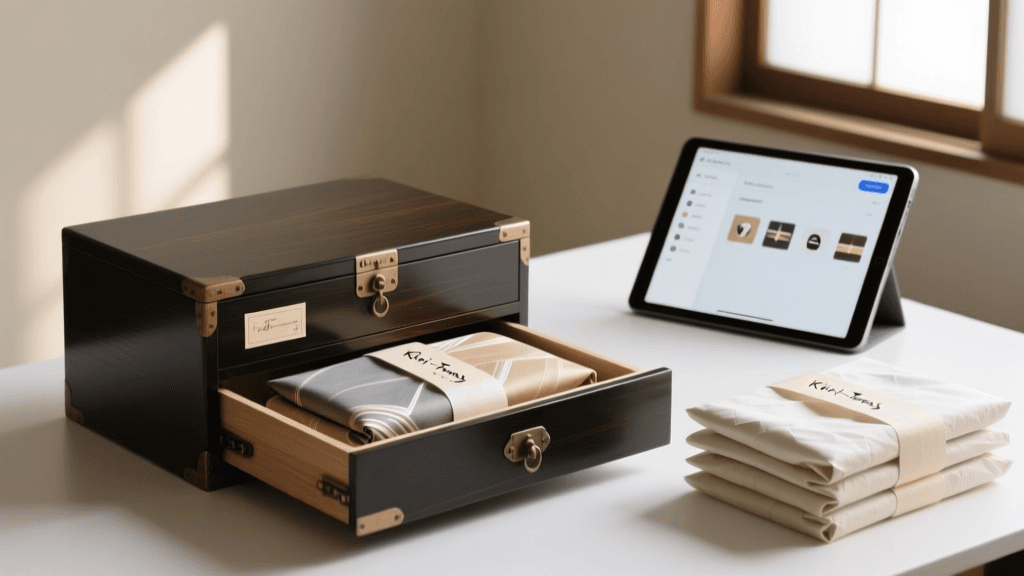
The cornerstone of any serious kimono collection remains the kiri-tansu, a traditional chest crafted from paulownia wood. In 2026, despite the availability of advanced synthetic archival plastics, paulownia remains unmatched due to its unique cellular structure. The wood is exceptionally lightweight, resistant to warping, and possesses natural hygroscopic properties—meaning it absorbs excess moisture when humidity rises and releases it when the air is dry. Furthermore, paulownia contains natural tannins that deter pests and resist fire.
When sourcing a kiri-tansu in 2026, collectors should be aware of current market dynamics. A professionally restored antique chest from the Taisho or early Showa era typically ranges from $1,800 to $3,500, depending on the joinery and hardware. Modern, sustainably harvested paulownia chests crafted by contemporary artisans in Kyoto or Niigata offer excellent alternatives, often featuring improved internal sealing to combat the aggressive HVAC systems found in modern smart homes.
Tatogami (Acid-Free Washi Paper)
Never store a silk kimono bare inside a drawer, and never use standard commercial tissue paper, which often contains acidic lignins that will yellow and degrade silk fibers over time. Instead, garments must be wrapped in tatogami—traditional, acid-free washi paper. In 2026, conservation-grade tatogami is manufactured with strict pH neutrality (around 7.0 to 8.0) and buffered with calcium carbonate to neutralize any future acidic off-gassing from the garments themselves.
When wrapping a kimono, the folding technique is critical to prevent permanent crease stress on the silk threads. The garment should be folded along its original seam lines to avoid breaking the warp and weft fibers. Once folded, the tatogami should be wrapped snugly but not tightly, and secured with a flat, unbleached cotton tie or a specialized archival paper band. Avoid using any adhesives, tapes, or synthetic ribbons that could off-gas volatile organic compounds (VOCs) onto the textile.
Climate Control and Pest Management
According to guidelines established by leading conservation authorities like the Canadian Conservation Institute, maintaining a stable microclimate is the single most important factor in textile preservation. Fluctuations in temperature and relative humidity (RH) cause fibers to expand and contract, leading to structural fatigue and the flaking of metallic threads or applied dyes.
2026 Optimal Kimono Storage Environmental Metrics
| Metric | Optimal Range (2026 Standards) | Preservation Notes |
|---|---|---|
| Temperature | 18°C - 20°C (64°F - 68°F) | Avoid fluctuations greater than 2°C within a 24-hour period. |
| Relative Humidity (RH) | 45% - 55% | Below 40% causes silk to become brittle; above 60% invites mold. |
| Light Exposure (Lux) | 0 Lux (in storage) | Silk is highly susceptible to photo-oxidation. Total darkness is mandatory. |
| Air Quality | Low VOC / Filtered | Use activated carbon filters near storage areas to trap airborne pollutants. |
Natural vs. Chemical Pest Deterrents
Textile pests, particularly the webbing clothes moth (Tineola bisselliella) and carpet beetles, remain a persistent threat to protein-based fibers like silk and wool. In 2026, the use of traditional naphthalene mothballs and paradichlorobenzene (PDB) crystals is strongly discouraged and heavily restricted in many regions due to their toxicity and the severe chemical damage they cause to synthetic dyes and metallic threads.
Instead, modern preservation relies on natural deterrents and integrated pest management (IPM). Natural camphor (shono) derived from the camphor tree is the traditional Japanese standard and remains highly effective. Additionally, storing garments in airtight kiri-tansu drawers, combined with regular HEPA vacuuming of the storage room and the use of pheromone traps to monitor for insect activity, provides a safe, non-toxic defense system for your collection.
Digital Collection Management for Modern Collectors
As collections grow, relying on memory or physical ledger books becomes a liability. In 2026, digital collection management is an indispensable tool for kimono preservation. Platforms like Airtable, Notion, or specialized museum CMS software (such as CollectiveAccess) allow collectors to build comprehensive databases of their garments.
A robust digital catalog should include the following metadata fields for each item:
- Accession Number: A unique identifier for tracking.
- Provenance & Era: Historical context, previous owners, and estimated date of creation.
- Material & Technique: e.g., Rinzu silk, Yuzen dyeing, Shibori, metallic thread couching.
- Condition Report: High-resolution macro photos of any stains, weak seams, or fading, updated annually.
- Storage Location: Exact chest, drawer, and position within the drawer.
- Maintenance Schedule: Automated alerts for the next seasonal airing (mushiboshi) and inspection.
By digitizing your collection, you not only track the physical health of your garments but also contribute to the broader academic understanding of textile history by maintaining meticulous, shareable records.
The Seasonal Airing Ritual (Mushiboshi)
Even with perfect storage, kimono must be removed from their drawers and aired out at least once or twice a year. This traditional practice, known as mushiboshi (literally 'insect airing'), allows trapped moisture to evaporate and gives the collector an opportunity to inspect the garments for early signs of mold or pest damage.
In 2026, urban collectors living in high-rise apartments must adapt mushiboshi to modern environments. You do not need direct sunlight—in fact, direct UV exposure will fade delicate Yuzen dyes in minutes. Instead, choose a dry, breezy day in late autumn or early winter when outdoor humidity is low. Set up padded, wide-screen drying racks in a shaded, well-ventilated room. Unfold the kimono carefully, allowing air to circulate through the silk layers for two to four hours. Use this time to gently brush the fabric with a soft, natural-bristle garment brush to remove microscopic dust particles that can attract moisture and pests.
Handling and Inspection Protocols
The oils, salts, and acids present on human hands can cause irreversible staining and degradation to antique silk. When handling your collection for cataloging or airing, always wash and thoroughly dry your hands, or better yet, wear clean, lint-free cotton or nitrile gloves. The Victoria and Albert Museum emphasizes that while clean hands are acceptable for some robust textiles, barrier protection is highly recommended for fragile, weighted silks from the late 19th and early 20th centuries, which are prone to shattering.
During your annual inspection, pay close attention to the fold lines. Silk is most vulnerable where it is repeatedly creased. To mitigate this, advanced collectors practice 'fold shifting'—slightly altering the exact placement of the folds each time the garment is repacked, ensuring that no single set of fibers bears the permanent stress of a sharp crease.
Conclusion
Kimono storage preservation in 2026 is a harmonious blend of ancestral Japanese wisdom and contemporary conservation science. By investing in proper kiri-tansu, utilizing acid-free tatogami, strictly monitoring your microclimate, and embracing digital cataloging, you ensure that these magnificent textiles survive not just as static artifacts, but as vibrant, enduring testaments to Asian cultural heritage. Proper collection management is an act of stewardship, guaranteeing that the artistry of the past remains intact for the generations of the future.