2026 Hanfu Milestone Rites: Coming Of Age & Wedding Guide
The Evolution of Hanfu Milestone Ceremonies in 2026
In 2026, the Hanfu movement has matured from a niche internet subculture into a deeply integrated aspect of modern life milestone celebrations. Across Asia and within global diaspora communities, individuals are increasingly turning to historically accurate traditional Chinese garments to mark their most significant life transitions. Whether it is a coming-of-age ceremony, a university graduation, or a traditional wedding, Hanfu offers a profound connection to ancestral heritage while allowing for personalized, contemporary expression. This comprehensive guide explores the specific garments, rites, and 2026 market realities for staging authentic Hanfu milestone ceremonies.
The Coming-of-Age Rites: Guan Li and Ji Li
Historically, the transition from childhood to adulthood was marked by elaborate ceremonies that conferred new social responsibilities and rights. Today, these rites are experiencing a massive revival, often timed to coincide with a teenager's 18th birthday or high school graduation.
Guan Li: The Capping Ceremony
The Guan Li is the traditional coming-of-age ceremony for young men. According to historical texts detailing the traditional Guan Li capping rites, the ceremony revolves around the "San Jia" (Three Additions), where the youth is crowned with three progressively more formal caps, each accompanied by a change of clothing.
- First Addition (Chu Jia): The youth is given a Zhubian (cloth cap) and dons a Zhuzi Shenyi (a deep robe with black and red trim). This symbolizes the abandonment of childhood playfulness and the beginning of scholarly or moral cultivation.
- Second Addition (Zai Jia): A Pibian (leather cap) is added, paired with military or official-style attire. This represents the duty to protect the family and serve the community.
- Third Addition (San Jia): The final addition is the Juebian (formal ceremonial cap), worn with formal sacrificial garments. This signifies full adult status and the right to participate in ancestral worship and civic duties.
In 2026, modern families often adapt the San Jia by utilizing high-quality Ming Dynasty Daoshan (robe) or Song Dynasty Lanshan (scholar's robe) to represent the scholarly and civic ideals of the ceremony, prioritizing breathable linen and silk-blend fabrics suitable for modern event venues.
Ji Li: The Hairpin Ceremony
The Ji Li is the equivalent coming-of-age rite for young women, traditionally held at age 15. The central act involves a respected female elder (the Zhengbin) washing the young woman's hair, styling it into an adult updo, and securing it with a Ji (hairpin). For 2026 ceremonies, the most popular garment choices are the Song Dynasty Beizi (a long, open-front jacket) paired with a pleated skirt, or the elegant Ming Dynasty Aoqun (jacket and skirt ensemble). The hairpins used in modern ceremonies are often heirloom pieces or custom-crafted jade and gold-plated silver accessories sourced from specialized artisans in Hangzhou.
Dynasty-Specific Hanfu Weddings
The traditional Chinese wedding in 2026 sees couples moving decisively away from generic, mass-produced costumes, opting instead for historically accurate, dynasty-specific Hanfu that reflects their aesthetic preferences and philosophical values.
The Ming Dynasty: Feng Guan Xia Pei
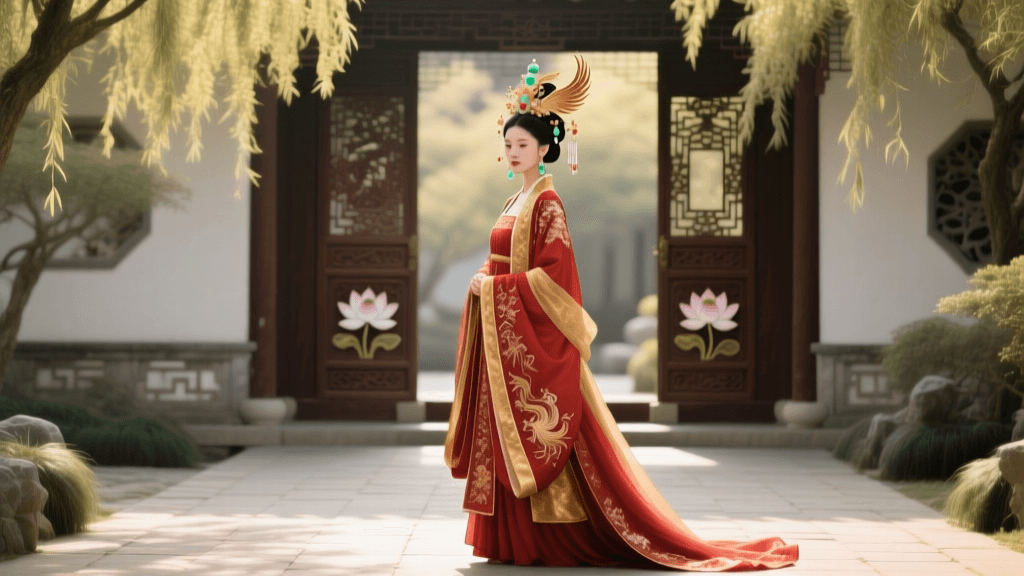
The Ming Dynasty wedding aesthetic remains the undisputed favorite for 2026 brides due to its breathtaking opulence. The core of this ensemble is the Feng Guan (Phoenix Crown), an elaborate headdress adorned with kingfisher feather inlay (or modern ethical silk-thread alternatives), gold dragons, and pearl pendants. The bride wears a richly embroidered Da Hong Pao (great red robe) or a green Yuanlingpao (round-collar robe), complemented by the Xia Pei—a heavy, ornate stole that drapes around the neck and hangs down the front, weighted with jade pendants. Grooms typically wear a 9th-rank official's robe, featuring a Buzi (rank badge) of a mandarin duck, symbolizing marital fidelity. This practice of "usurping" official rank for the wedding day is a beloved historical tradition that grants commoners the dignity of nobility on their wedding day.
The Zhou Dynasty: Solemnity and Contrast
For couples seeking a minimalist, deeply solemn, and historically profound ceremony, the Zhou Dynasty aesthetic is trending heavily in 2026. Unlike the bright reds of later dynasties, Zhou wedding attire features striking contrasts of black and deep crimson (Xuan and Xun). The groom wears the Xuan Duan, a formal black robe with crimson lower hems, while the bride wears a layered Que Di robe. The aesthetic is austere, focusing on the silhouette, the drape of the heavy silk, and the profound spiritual weight of the ancestral vows rather than flashy embroidery.
The 2026 Graduation Milestone: Mamianqun Meets Academia
One of the most vibrant milestone trends of 2026 is the integration of Hanfu into university graduation ceremonies. Rather than hiding traditional garments beneath Western academic gowns, graduates are proudly styling the Mamianqun (horse-face skirt) as the centerpiece of their graduation attire. The structural integrity of the historical Mamianqun structures provides a magnificent, structured silhouette that pairs perfectly with modern tailored blazers or the flowing lines of academic regalia.
For summer graduations, the 2026 market offers lightweight, 120g/m² jacquard-woven Mamianqun featuring subtle, tone-on-tone motifs like bamboo or orchids, which photograph beautifully in bright outdoor lighting without causing overheating. Graduates are also incorporating the Xin Zhongshi (New Chinese Style) movement by pairing traditional skirts with modern, mandarin-collared cropped blouses, creating a bridge between ancient academic reverence and modern professional readiness.
2026 Sourcing, Tailoring, and Budgeting
Planning a Hanfu milestone ceremony requires significant lead time. The era of cheap, mass-produced synthetic costumes is being replaced by a demand for museum-quality tailoring. According to textile conservationists and exhibitions at the China National Silk Museum, the revival of traditional weaving techniques like Zhuanghua (brocade) and Kesi (silk tapestry) has elevated the quality of modern Hanfu to heirloom status.
Below is a comprehensive breakdown of the costs, fabrics, and lead times for milestone Hanfu in the 2026 market.
| Milestone & Style | Primary Garments | 2026 Average Cost (USD) | Fabric & Material | Tailoring Lead Time |
|---|---|---|---|---|
| Guan Li (Coming of Age) | Song Lanshan + Zhubian Cap | $250 - $450 | Raw linen, silk-blend trim | 4 - 6 weeks |
| Ji Li (Hairpin) | Ming Aoqun + Jade Ji Pin | $350 - $600 | Heavy silk satin, brocade | 6 - 8 weeks |
| Ming Wedding (Bride) | Feng Guan, Da Hong Pao, Xia Pei | $1,800 - $4,500+ | Kesi silk, gold thread, ethical feathers | 4 - 8 months |
| Zhou Wedding (Couple) | Xuan Duan & Que Di layered robes | $900 - $1,500 | Heavy mulberry silk, hemp weaves | 2 - 3 months |
| Graduation | Mamianqun + Xin Zhongshi Top | $150 - $300 | Lightweight jacquard, breathable cotton | 2 - 4 weeks (Ready-to-wear) |
Tips for a Flawless 2026 Ceremony
- Book Artisans Early: Independent studios specializing in Ming Dynasty replication (such as those based in Nanjing and Suzhou) often close their custom order books six months in advance for wedding seasons. If you are planning a 2026 autumn wedding, you must finalize your measurements and fabric choices by early spring.
- Invest in Proper Undergarments: The drape of a Shenyi or the volume of a Mamianqun relies heavily on the correct under-layers. Do not neglect the Zhongyi (inner garments) and Chenqun (underskirts), which provide the necessary friction and structure to keep outer layers perfectly aligned during long ceremonies.
- Hire a Specialized Stylist: Traditional Hanfu hair styling is a distinct skill from modern bridal hair. For a Ji Li or a Ming wedding, hire a stylist who understands the structural mechanics of using wooden or bone hairpins to support heavy, multi-layered updos without relying on modern hairspray or damaging tension.
Conclusion
As we navigate through 2026, the choice to wear Hanfu for life's greatest milestones is more than a fashion statement; it is a profound reclamation of cultural continuity. Whether you are capping a young scholar, pinning the hair of a young woman entering adulthood, walking down the aisle in the crimson silk of the Ming Dynasty, or crossing the graduation stage in a meticulously pleated Mamianqun, these garments carry the weight and beauty of centuries. By understanding the historical context, investing in quality craftsmanship, and respecting the rites, you ensure that your milestone ceremony is not just a fleeting trend, but a timeless memory woven into the fabric of your family's history.