Mulberry vs Tussar Silk Kanjeevaram Saris 2026 Guide
The Evolution of Kanjeevaram Textiles in 2026
The landscape of South Asian traditional fashion is experiencing a profound shift in 2026, particularly within the realm of heritage weaves. For centuries, the Kanjeevaram (or Kanchipuram) sari has been the undisputed queen of Indian bridal and ceremonial wear, revered for its vibrant colors, contrasting borders, and intricate zari work. However, as modern consumers prioritize comfort, sustainability, and versatile styling, the textile choices underlying these magnificent garments have expanded. Today, the most prominent debate among weavers, designers, and collectors is the choice between classic Mulberry silk and the increasingly popular Tussar silk for Kanjeevaram-inspired drapes.
Understanding the nuances between these two natural fibers is essential for anyone looking to invest in traditional Asian garments this year. While Mulberry silk remains the gold standard for heavy, opulent wedding ensembles, Tussar silk has carved out a massive niche for daytime events, summer weddings, and contemporary fusion styling. In this comprehensive 2026 guide, we break down the origins, textures, market pricing, and care requirements of Mulberry versus Tussar silk to help you make an informed textile choice.
Mulberry Silk: The Undisputed Classic
Mulberry silk is produced by the domesticated silkworm, Bombyx mori, which feeds exclusively on the leaves of the Mulberry plant. This controlled diet and careful sericulture process result in a fiber that is incredibly fine, uniform, and naturally brilliant white. This pristine base allows weavers to dye the yarn in the vivid, saturated hues that Kanjeevaram saris are famous for—from deep temple reds and royal blues to vibrant magentas and emerald greens.
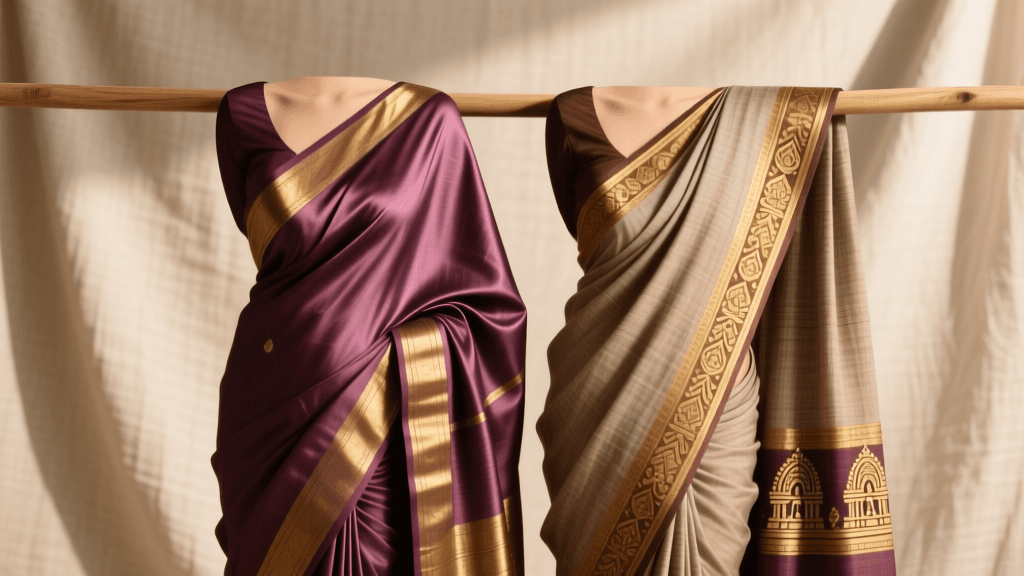
In 2026, authentic Kanjeevaram mulberry silk saris are still woven using the traditional pitloom technique, often employing a 3-ply warp and 2-ply weft structure. This dense interlocking of threads is what gives the garment its signature weight, durability, and structured drape. A pure mulberry Kanjeevaram sari typically weighs between 600 and 900 grams, making it a substantial garment that holds heavy pure gold and silver zari work without sagging. The luster of mulberry silk is highly reflective, catching the light beautifully in indoor, air-conditioned banquet halls and evening receptions.
Tussar Silk: The Textured Challenger
Tussar silk, also known as Kosa silk, is a type of wild silk produced by the Antheraea mylitta silkworm, which feeds on the leaves of wild forest trees like Sal and Arjun. Unlike the uniform white of mulberry silk, raw tussar yarn has a natural, earthy beige or pale gold undertone. This inherent color gives tussar fabrics a rich, organic aesthetic that has become highly sought after in 2026 for minimalist and bohemian-traditional styling.
The texture of tussar silk is distinctly different from mulberry. It is more porous, slightly coarse to the touch, and possesses a beautiful, irregular slub that adds character to the weave. While traditional Kanjeevaram weavers historically stuck to mulberry, the 2026 market has seen a surge in 'Tussar Kanjeevarams'—garments that utilize the traditional Kanchipuram motif structures (such as the petni and korvai border interlocking techniques) but execute them on a lighter, more breathable tussar base. Weighing in at a mere 350 to 550 grams, tussar silk saris are a revelation for outdoor daytime weddings and humid climates, offering the grandeur of heritage motifs without the physical burden of heavy mulberry silk.
Head-to-Head Comparison: Mulberry vs. Tussar
To help you visualize the differences, here is a detailed comparison table outlining the core characteristics of both textiles as they apply to traditional South Asian garments in the current market.
| Feature | Mulberry Silk | Tussar Silk |
|---|---|---|
| Origin | Domesticated (Bombyx mori) | Wild (Antheraea mylitta) |
| Texture | Smooth, uniform, exceptionally fine | Textured, porous, slightly coarse with natural slubs |
| Luster | High shine, highly reflective | Matte finish, natural dull gold sheen |
| Weight (Average Sari) | 600g - 900g | 350g - 550g |
| 2026 Avg. Price (Pure) | ₹18,000 - ₹150,000+ | ₹8,000 - ₹45,000 |
| Breathability | Moderate (better for AC environments) | High (excellent for outdoor/summer wear) |
| Zari Compatibility | Heavy pure gold/silver zari | Half-fine zari, silver zari, or thread work |
Zari Pairings and Embellishments
The choice of silk directly dictates the type of zari (metallic thread) a weaver can use. Mulberry silk's high tensile strength and tight weave can support 'Pure Zari', which consists of a silk core wrapped in flattened silver wire and electroplated with real gold. This combination is the hallmark of a bridal Kanjeevaram and is a major factor in its premium pricing.
Tussar silk, being more delicate and porous, cannot always bear the immense weight of pure zari without risking fabric distortion or tearing along the border joints. Therefore, in 2026, artisans predominantly pair tussar bases with 'Tested Zari' (copper or synthetic cores with metallic polishing) or intricate half-fine silver zari. This not only preserves the structural integrity of the lightweight tussar drape but also aligns with the modern consumer's preference for understated, matte-finish elegance over heavy, ostentatious shine.
2026 Pricing and Market Availability
The economic landscape of silk weaving has evolved significantly. According to data monitored by the Ministry of Textiles, Government of India, the import costs of high-grade bivoltine mulberry silk yarn have fluctuated, keeping the baseline price of pure mulberry Kanjeevaram saris at a premium. In 2026, a genuine, pure mulberry Kanjeevaram with pure zari will rarely be found for less than ₹18,000, with intricate bridal pieces easily exceeding ₹150,000.
Conversely, Tussar silk is indigenous to the forested regions of Jharkhand, Odisha, and Chhattisgarh. The push for indigenous, sustainable textile sourcing has stabilized tussar yarn prices, making it a highly accessible luxury. A beautifully woven tussar sari featuring traditional Kanjeevaram-inspired gopuram (temple) borders and peacock motifs typically ranges from ₹8,000 to ₹45,000, depending on the complexity of the jacquard or handloom interlocking work. This price point has made tussar the preferred choice for bridesmaids, festive gifting, and secondary wedding events like the Haldi or Mehendi ceremonies.
Sustainable and Ethical Considerations
Sustainability is a primary driver of textile choices in 2026. Mulberry sericulture, while highly efficient, requires vast monoculture plantations and significant water resources. Furthermore, the traditional extraction of mulberry silk involves boiling the cocoon with the pupa inside, which has led to a rise in demand for Ahimsa (peace) silk alternatives.
Tussar silk, particularly when harvested as Ahimsa Tussar, is celebrated for its eco-friendly profile. The wild silkworms are allowed to complete their life cycle and leave the cocoon before the empty shells are harvested and spun into yarn. The Craft Council of India has been instrumental in promoting these wild-harvested textiles, ensuring that indigenous tribal communities receive fair compensation while preserving forest biodiversity. For the eco-conscious consumer in 2026, an Ahimsa Tussar sari offers a compelling narrative of environmental stewardship intertwined with ancient weaving traditions.
When shopping for either textile, authentication is crucial to avoid synthetic blends or artificial silk (art silk) masquerading as the real thing. The Silk Mark Organisation of India provides a vital certification service. Always look for the Silk Mark label and verify the QR code on the tag to ensure the garment is 100% natural silk, whether mulberry or tussar.
Care, Maintenance, and Storage
The structural differences between mulberry and tussar silk necessitate slightly different care regimens to ensure these heirloom garments last for generations.
- Cleaning: Mulberry silk should always be dry-cleaned, especially if it features heavy pure zari work which can tarnish or blacken when exposed to water and harsh chemicals. Tussar silk, while also best maintained via dry cleaning, is slightly more forgiving. Lightly worn tussar saris without heavy metallic work can be gently hand-washed in cold water using pH-neutral, eco-friendly detergents specifically formulated for natural protein fibers.
- Storage: Both fabrics must be stored away from direct sunlight to prevent the dyes from fading. Wrap your mulberry saris in clean, unbleached muslin cloth to allow the fibers to breathe while protecting them from dust. Tussar saris should also be wrapped in muslin or acid-free tissue paper.
- Pest Control: Avoid traditional naphthalene balls, as their harsh chemical fumes can degrade the silk proteins and tarnish the zari. Instead, use natural alternatives like cedar blocks, dried neem leaves, or lavender sachets placed in the corners of your storage wardrobe.
- Ironing: Always iron silk garments on a low-to-medium heat setting, and never iron directly on the fabric or the zari. Use a cotton pressing cloth between the iron and the sari to prevent scorch marks and preserve the natural luster of the mulberry or the textured matte finish of the tussar.
Conclusion: Choosing Your 2026 Drape
The choice between Mulberry and Tussar silk for Kanjeevaram and traditional South Asian garments ultimately depends on the occasion, the climate, and your personal styling preferences. If you are seeking a heavyweight, brilliantly lustrous heirloom piece for a grand evening wedding that will be passed down through generations, pure Mulberry silk remains the unparalleled champion. Its ability to hold pure gold zari and its rich, saturated dye absorption make it a timeless investment.
However, if you value breathability, understated elegance, and sustainable wild-harvested textiles, Tussar silk is the definitive choice for 2026. Its earthy texture, lightweight drape, and compatibility with contemporary fusion blouses make it an incredibly versatile addition to any traditional wardrobe. By understanding the unique properties of these magnificent Asian textiles, you can curate a collection that honors ancient weaving traditions while perfectly suiting the demands of modern life.