The Ultimate Hanfu Care Guide: Washing, Storing, and Pleat Maintenance
Introduction to Hanfu Maintenance and Longevity
The global resurgence of Hanfu has introduced millions to the breathtaking beauty of traditional Chinese garments. From the flowing sleeves of the ruqun to the structured elegance of the mamianqun (horse-face skirt), these pieces are wearable art. However, investing in high-quality traditional clothing requires an equal investment in proper garment care. Unlike modern fast fashion, traditional Hanfu often utilizes delicate natural fibers, intricate embroidery, and complex structural pleating that demand specialized maintenance. Whether you own a budget-friendly polyester blend or a museum-grade mulberry silk piece, understanding the nuances of textile conservation is essential to preserve the drape, color, and structural integrity of your garments for decades.
Fabric Identification: The First Step in Garment Care
Before introducing any water or detergent to your Hanfu, you must accurately identify the fabric composition. The care protocol for a natural protein fiber differs vastly from that of a synthetic weave. Modern Hanfu generally falls into three categories:
- Mulberry Silk (Sang蚕丝): Including silk charmeuse, silk crepe, and the highly prized xiangyunsha (gambiered silk). Silk is a protein fiber that is highly sensitive to alkaline substances, heat, and friction.
- Plant-Based Cellulosics: Such as linen, cotton, and ramie (xia bu). These are more durable but prone to severe wrinkling and shrinkage if exposed to high heat.
- Synthetic Blends: Polyester and chiffon blends are ubiquitous in entry-level Hanfu. While highly durable and colorfast, they are susceptible to permanent heat damage and oil-based staining.
Washing Protocols: Hand vs. Machine
Caring for Silk and Delicate Natural Fibers
Silk Hanfu should ideally be dry-cleaned, especially if it features metallic embroidery or structural lining. However, if you must wash it at home, hand-washing is the only safe method. According to guidelines from the Canadian Conservation Institute, protein-based fibers like silk require pH-neutral environments to prevent the breakdown of the fibroin protein. Use a specialized delicate wash, such as Eucalan (approx. $15 for 16oz) or The Laundress Delicate Wash ($25). Fill a clean basin with cold water—strictly below 30°C (86°F). Submerge the garment and gently agitate for no more than three to five minutes. Never twist, wring, or scrub silk, as wet silk fibers lose up to 20% of their tensile strength and can easily tear or permanently distort.
Washing Synthetic Blends and Cottons
Polyester and cotton Hanfu can often withstand machine washing, but precautions are necessary. Always turn the garment inside out to protect embroidered motifs from friction against the washing machine drum. Place the Hanfu in a fine mesh laundry bag to prevent the long sleeves and sashes from tangling. Use the 'delicate' or 'hand-wash' cycle with cold water and a mild, dye-free liquid detergent. Avoid fabric softeners entirely; they leave a chemical residue that degrades the breathability of natural fibers and attracts dust to synthetics.
The Mamianqun Challenge: Preserving Knife Pleats
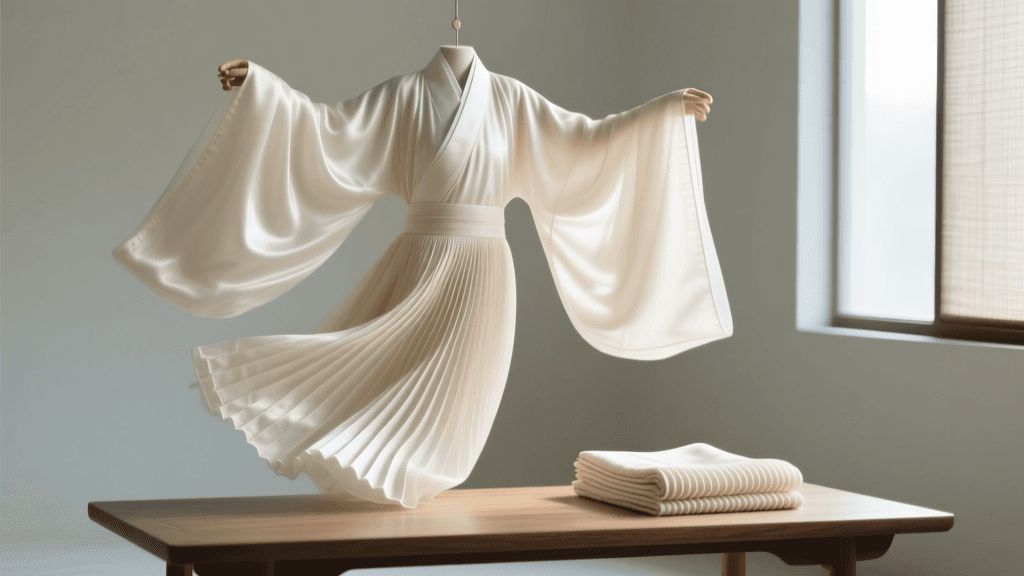
The mamianqun, characterized by its flat front and back panels (guangmian) and intricate side knife pleats, is a staple of the Ming Dynasty aesthetic and modern Hanfu wardrobes. Preserving these sharp pleats is the most challenging aspect of Hanfu care.
Pre-Wash Pleat Securing: Before washing a mamianqun, use stainless steel binder clips or specialized fabric pleat clips to secure the pleats in place along the hem and the waist. This prevents the pleats from blooming and tangling in the water. Wash the skirt flat or in a large mesh bag, avoiding any twisting motions.
Drying and Ironing: Never hang a wet mamianqun by the waistband, as the weight of the water will stretch the fabric and pull the pleats out of alignment. Instead, lay it flat on a clean, dry towel and roll the towel up to gently press out excess moisture. Unroll and lay the skirt flat on a drying rack. When ironing, use a low heat setting (maximum 110°C / 230°F for silk, slightly higher for polyester) and always use a cotton press cloth between the iron and the skirt. Steam is your best ally; a handheld garment steamer can relax wrinkles without applying direct, crushing heat to the delicate pleat folds.
Comprehensive Hanfu Fabric Care Chart
| Fabric Type | Wash Method | Max Water Temp | Ironing Temp | Drying Method |
|---|---|---|---|---|
| Mulberry Silk | Hand wash / Dry clean | 30°C (86°F) | 110°C (230°F) with press cloth | Flat dry, away from direct sun |
| Xiangyunsha | Hand wash only (no soaking) | 25°C (77°F) | Do not iron; steam only | Flat dry in shade |
| Ramie / Linen | Hand or gentle machine | 40°C (104°F) | 150°C (300°F) while damp | Hang or flat dry |
| Polyester Chiffon | Machine (in mesh bag) | 30°C (86°F) | 110°C (230°F) synthetic setting | Hang dry |
| Cotton Blends | Machine (gentle cycle) | 40°C (104°F) | 150°C (300°F) | Hang or tumble dry low |
Stain Removal and Emergency Spot Treatment
Accidents happen, especially during festivals and tea ceremonies. Quick, targeted action is vital. For sweat stains on silk collars, apply a small amount of enzymatic cleaner specifically formulated for delicates, letting it sit for five minutes before rinsing with cold water. For tea or wine spills, blot—do not rub—the area with a clean, white microfiber cloth. A solution of one part white vinegar to three parts cold water can help lift tannin-based stains like tea. For makeup stains on the inner collar, apply a drop of micellar water to a cotton swab and gently dab the stain until it transfers to the cotton. Always test any spot treatment on an inconspicuous area, such as the inside hem, before applying it to visible panels.
Long-Term Storage and Archival Practices
How you store your Hanfu between wears is just as critical as how you wash it. The Smithsonian Museum Conservation Institute emphasizes that improper storage materials and environmental factors are the leading causes of textile degradation. Wire hangers are the enemy of traditional garments; they cause permanent 'shoulder bumps' and distort the cut of the ru (jackets and tops). Invest in wide, padded satin hangers (approx. $25 for a set of six) to support the shoulders evenly.
For heavy, heavily embroidered mamianqun or ceremonial robes, hanging can cause stress on the waistband threads over time. The Victoria and Albert Museum recommends storing heavy historic textiles flat or rolled. If you must fold your Hanfu for drawer storage, pad the folds with acid-free archival tissue paper ($20 per pack) to prevent hard creases from forming and breaking the fibers over time. Never store silk or natural fibers in plastic dry-cleaning bags, which trap moisture and off-gas chemicals that cause yellowing. Instead, use breathable cotton canvas garment bags.
Pest Prevention for Natural Fibers
Silk and wool are highly attractive to clothes moths and carpet beetles. Avoid chemical mothballs, which leave a toxic, nearly impossible-to-remove odor and can chemically react with natural dyes. Instead, use natural Eastern red cedar blocks or sachets of dried lavender. Sand the cedar blocks lightly every six months to refresh their natural pest-repelling oils. Ensure your storage area maintains a stable relative humidity of around 50%; excessive humidity invites mold, while extreme dryness makes silk brittle.
Budgeting for Proper Garment Care
Maintaining a Hanfu wardrobe requires a modest upfront investment in care supplies. Expect to spend approximately $60 to $100 to build a proper care kit. This includes a pH-neutral delicate wash ($15-$25), a set of padded hangers ($25), a cotton press cloth and mesh laundry bags ($15), and acid-free tissue paper for seasonal storage ($20). Considering that a high-quality silk Hanfu set can cost anywhere from $150 to over $800, this minimal investment in archival-grade care ensures your garments remain vibrant, structurally sound, and ready to be passed down as modern heirlooms.
Proper textile conservation is not merely about cleaning; it is about managing the environment, light, and physical stress to slow the natural aging process of the fibers.
By treating your Hanfu with the respect and specialized care that traditional textiles demand, you honor the centuries of weaving, dyeing, and tailoring heritage embedded in every thread. Whether you are stepping out for a spring flower viewing or carefully archiving your collection for the winter, these meticulous care practices will ensure your traditional garments remain as breathtaking as the day you first tied the sash.