Hanfu Etiquette: Greeting Rituals and Dress Code Rules
The Resurgence of Hanfu and the Importance of Etiquette
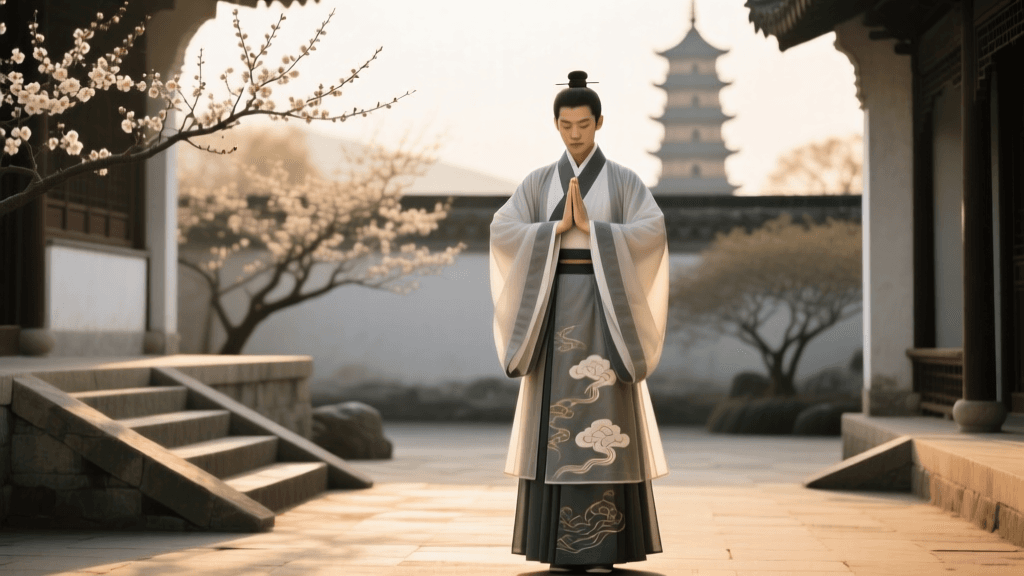
The modern Hanfu movement has transcended mere fashion, evolving into a profound cultural renaissance among Chinese youth and global diaspora communities. However, wearing the traditional garments of the Han ethnic group is only half the practice; the other half is embodying the etiquette, or Li (礼), that historically accompanied these textiles. In traditional Chinese philosophy, clothing and etiquette are inextricably linked. The garments dictate the posture, the movement, and the social interactions of the wearer. To wear Hanfu without understanding its accompanying rituals is to treat a sacred cultural artifact as mere costume. This guide provides actionable, detailed instruction on Hanfu greeting rituals, structural dress codes, and the etiquette required for modern practitioners attending festivals, tea ceremonies, and formal rites.
The Philosophy of Li in Hanfu Culture
Rooted deeply in Confucianism, Li translates roughly to propriety, etiquette, or ritual. It governs the harmonious interaction between individuals and their environment. Historically, the cut and drape of Hanfu were specifically designed to enforce Li. The wide sleeves, the crossed collars, and the flowing skirts naturally restrict hasty, erratic movements, compelling the wearer to move with deliberate grace and mindfulness. Institutions dedicated to the preservation of Asian heritage, such as the Metropolitan Museum of Art's Asian Art Department, house centuries of these garments, showcasing how deeply intertwined dress, social hierarchy, and philosophical order were in historical China. When you don a set of Hanfu today, you are stepping into a physical framework designed to cultivate inner tranquility and outward respect.
Traditional Hanfu Greeting Rituals
Unlike the modern Western handshake or the casual wave, traditional Chinese greetings are highly structured and convey deep respect, social standing, and situational awareness. Mastering these gestures is essential for any Hanfu enthusiast.
The Gongshou (Cupped Hands) Salute
The Gongshou (拱手) is the most common and versatile greeting in Hanfu culture, suitable for daily interactions, meeting peers, and showing general respect. To perform the Gongshou correctly:
- Hand Placement: Form a fist with one hand and cup it with the palm of the other. For men, the left hand (representing Yang, life, and respect) must cover the right fist (representing Yin, martial arts, and aggression). For women, this is traditionally reversed in daily life, with the right hand covering the left fist, though many modern female practitioners adopt the male standard for simplicity.
- Arm Position: Raise your cupped hands to chest level. Your elbows should be naturally dropped, not flared outward, forming a gentle, rounded arc.
- The Movement: Push your hands slightly forward while bowing your head and upper body. The standard daily bow is a slight 15-degree inclination. Hold the position for one second before returning to a neutral stance.
The Zuoyi (Deep Bow) and Xingli
For formal occasions, such as greeting elders, teachers, or participating in ancestral rites, the Zuoyi (作揖) or deep bow is required. This involves a more pronounced physical commitment.
- Execution: Begin with the Gongshou hand position. Raise your hands higher, roughly to the level of your forehead or eyebrows, to signify greater reverence.
- The Bow: Hinge strictly at the hips, keeping your back entirely straight. Do not bend your neck or slouch your shoulders. For respected elders, a 45-degree bow is appropriate. For ancestral worship or profound apologies, a 90-degree bow is mandated.
- Timing: The descent should take two seconds, hold for two seconds, and the ascent should take two seconds. Rushing a formal bow is considered highly disrespectful.
Pro Tip for Practitioners: Practice your bows in front of a full-length mirror while wearing your Hanfu. The weight of the garments, particularly the outer robes (Beizi or Pifeng), will shift during the bow. Learning to control the fabric so it drapes elegantly rather than pooling awkwardly on the floor is a hallmark of a seasoned practitioner.
Hanfu Dress Code Rules: Layering and Occasions
Hanfu is not a single garment but a complex system of layering. The dress code is dictated by the season, the formality of the event, and the wearer's age and marital status. The most critical, non-negotiable rule of Hanfu structural layering is Jiaoling Youren (交领右衽).
The Rule of Right over Left
In Hanfu, the left side of the collar must always cross over the right side, resting on the wearer's right shoulder. This symbolizes the triumph of life, culture, and the civilized world. Reversing this—right over left (Zuoren)—is strictly reserved for dressing the deceased for burial or is historically associated with mourning and barbarian tribes. Wearing a collar right-over-left in a living context is a severe faux pas that will immediately draw negative attention at any Hanfu gathering.
Dress Code Matrix by Occasion
Choosing the correct silhouette and fabric is vital. Below is a practical guide to dressing appropriately for various events.
| Occasion | Primary Garment Type | Recommended Fabric | Accessories & Footwear |
|---|---|---|---|
| Casual / Daily (Streetwear, casual meetups) | Ruqun (blouse and skirt), Beizi (light outer jacket) | Cotton, Linen, Cotton-linen blends | Simple wooden hairpins, cloth shoes, minimal jewelry |
| Semi-Formal (Festivals, tea ceremonies, museum visits) | Aoqun (lined jacket and skirt), Yuanlingpao (round-collar robe) | Silk blends, Jacquard, lightweight Brocade | Jade pendants, floral velvet hairpins, cloud-toe shoes |
| Formal (Weddings, coming-of-age rites, ancestral worship) | Shenyi (deep robe), Daofu (Taoist-style robe), Mianfu | Heavy Mulberry Silk, Zhuanghua Brocade, Xiangyunsha | Full hair crowns (Guan), elaborate hairpins, ceremonial boots |
For formal events, the use of authentic silk is highly encouraged. The cultivation and weaving of these textiles are not merely manufacturing processes but profound cultural practices. As recognized by UNESCO's Intangible Cultural Heritage list for Chinese sericulture and silk craftsmanship, the traditional techniques of silk production carry the historical weight of Chinese civilization. Wearing authentic silk at a formal rite honors the artisans and the heritage embedded in the threads.
Practical Guide: Attending a Modern Hanfu Ceremony
If you are attending a formal Hanfu event, such as a traditional tea ceremony or a Hanfu parade, logistical preparation is just as important as sartorial choices.
- Timing and Dressing: Allocate at least 45 minutes to dress. Formal Hanfu involves multiple layers: the inner garment (Zhongyi), the main skirt or robe, the waistband, and the outer robe. Rushing will result in uneven hems and loose collars.
- Budgeting: An entry-level, historically informed casual set costs between $50 and $150. However, formal sets utilizing genuine brocade or hand-embroidered silk can range from $300 to over $1,200. Invest in a high-quality waistband first, as it anchors the entire silhouette.
- Footwear: Modern sneakers break the visual continuity of the garments. Invest in traditional cloud-toe shoes (Yuntou Xie) or plain, unadorned cloth boots. If you must wear modern shoes for comfort, choose plain, pointed-toe flats in neutral colors and ensure they are completely hidden beneath a floor-length skirt.
Common Etiquette Mistakes to Avoid
Even well-meaning enthusiasts can stumble over historical nuances. Avoid these common pitfalls to ensure your presentation is respectful and accurate:
- Anachronistic Styling: Avoid pairing Hanfu with modern, overtly flashy makeup or contemporary plastic accessories. Study historical portraiture to understand the subtlety of traditional aesthetics. The Victoria and Albert Museum's Asian Collections serve as an excellent, authoritative resource for studying historical textile accuracy, color palettes, and accessory pairing to avoid anachronistic styling mistakes.
- Improper Skirt Lengths: In traditional Hanfu, skirts should generally graze the floor or rest exactly at the ankle bone. Skirts that end awkwardly at the mid-calf are historically inaccurate and disrupt the flowing lines of the garment.
- Mourning Colors at Joyous Events: Pure white and unadorned hemp colors are traditionally associated with mourning in Chinese culture. Avoid wearing all-white, unembroidered sets to weddings or joyous festivals; instead, opt for auspicious colors like crimson, deep blue, or jade green.
Conclusion
Hanfu is a living, breathing testament to the aesthetic and philosophical depths of Chinese history. By mastering the greeting rituals of Gongshou and Zuoyi, adhering to the structural rules of Jiaoling Youren, and respecting the dress codes of various occasions, practitioners elevate their experience from simple cosplay to genuine cultural preservation. Etiquette is the invisible thread that binds the garments to the ancestors who wore them, ensuring that the beauty of Hanfu is matched only by the grace of the person wearing it.