Kimono Fabric Sound & Sensory Texture Experience 2026
The Hidden Language of Kimono Textures
When we think of the traditional Japanese kimono, our minds immediately gravitate toward the visual: the vibrant dyes, the intricate embroidery, and the sweeping silhouettes. However, to truly understand the depth of Japanese garment culture, one must look beyond the visual and engage with the auditory and tactile dimensions of the fabric. In 2026, as digital fatigue reaches an all-time high, a global "Sensory Heritage" movement has brought the physical experience of wearing traditional garments back into the spotlight. The kimono is not merely a piece of clothing to be seen; it is an acoustic instrument and a tactile landscape that responds to the wearer's every movement.
According to historical textile archives documented by the Metropolitan Museum of Art, the creation of Japanese textiles has always involved a meticulous consideration of how the fabric interacts with the human body and the surrounding environment. Today, experiencing the sound and feel of a kimono offers a profound grounding practice, connecting the wearer to centuries of Zen mindfulness and artisanal mastery.
Kinu-Zure: The Signature Sound of Silk
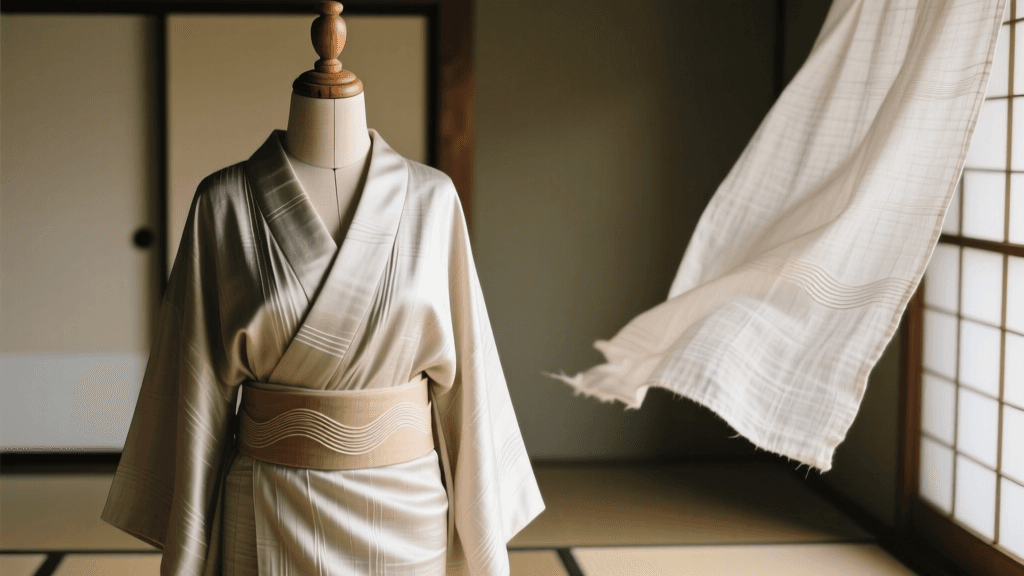
At the heart of the kimono's sensory profile is kinu-zure (衣擦れ), a poetic Japanese term that translates literally to "the sound of silk rubbing." This distinct, soft rustling noise is produced when layers of silk kimono and undergarments (nagajuban) glide against one another as the wearer walks. Unlike the silent swish of modern synthetic blends or the harsh squeak of polyester, kinu-zure is a complex, multi-layered acoustic phenomenon.
The Physics of the Rustle
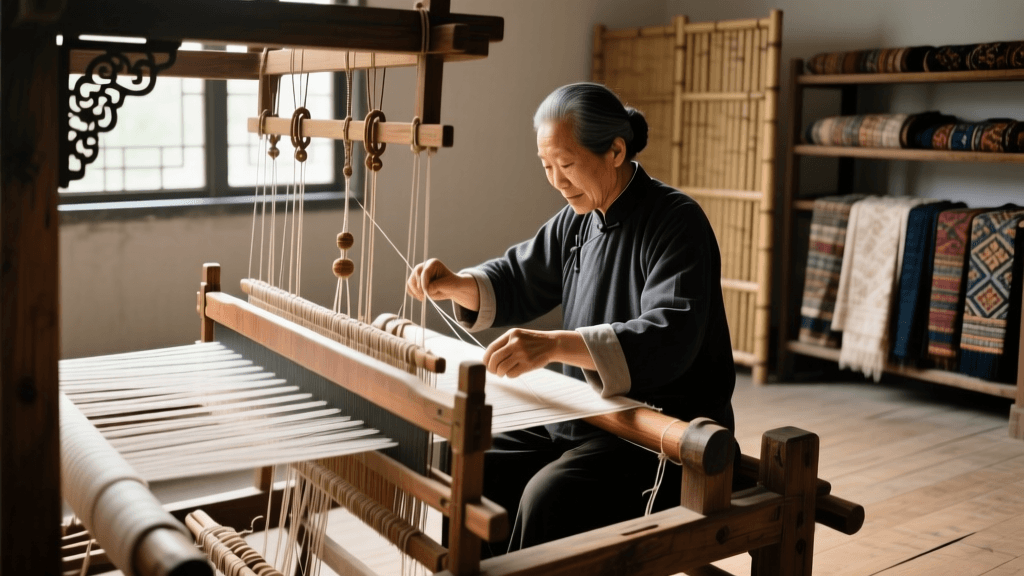
The sound is generated by the friction of tightly woven, degummed silk threads. During the degumming process, the natural sericin coating is removed from the silk fibers, leaving behind the pure fibroin core. This core has a microscopic triangular prism-like structure that refracts light and creates a slightly textured surface. When these fibers rub together, they produce a high-frequency, whispering sound that traditionalists compare to the rustling of autumn leaves or the gentle flow of a shallow stream. In 2026, acoustic engineers and traditional weavers in Kyoto have collaborated to measure the exact decibel levels of Edo-period silk, ensuring that modern reproductions maintain this authentic acoustic signature.
Tactile Profiles: From Crisp Ramie to Heavy Brocade
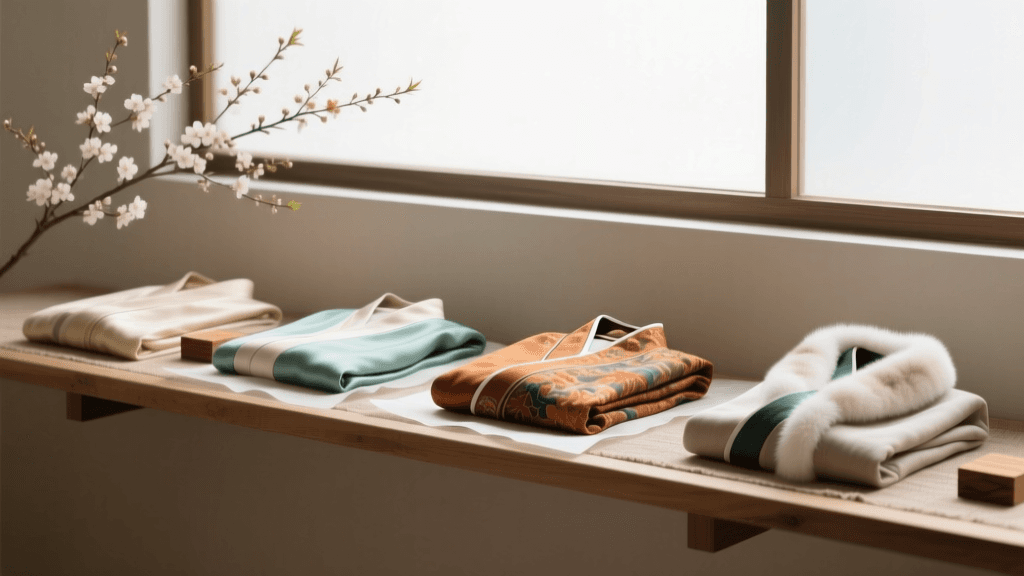
The tactile experience of a kimono varies drastically depending on the season, the material, and the weaving technique. The Victoria and Albert Museum highlights how Japanese textiles are engineered not just for durability, but for specific sensory feedback against the skin.
Chirimen (Silk Crepe)
Chirimen is characterized by its pebbled, bumpy texture. This is achieved by over-twisting the weft threads before weaving, which causes the fabric to shrink and pucker. Tactilely, it feels slightly dry and textured against the skin, providing excellent breathability. Acoustically, Chirimen produces a softer, more muted rustle compared to flat weaves, making it a favorite for everyday wear and subtle sensory grounding.
Jofu (High-Quality Ramie)
Worn exclusively in the sweltering heights of summer, Jofu is woven from ramie fibers. It is exceptionally crisp, cool to the touch, and slightly stiff. When a wearer moves in a Jofu kimono, the fabric does not glide; it snaps and swishes with a sharp, papery sound. This crispness creates a physical barrier between the garment and the skin, allowing air to circulate and providing a profound psychological sensation of coolness.
Nishijin-ori (Brocade)
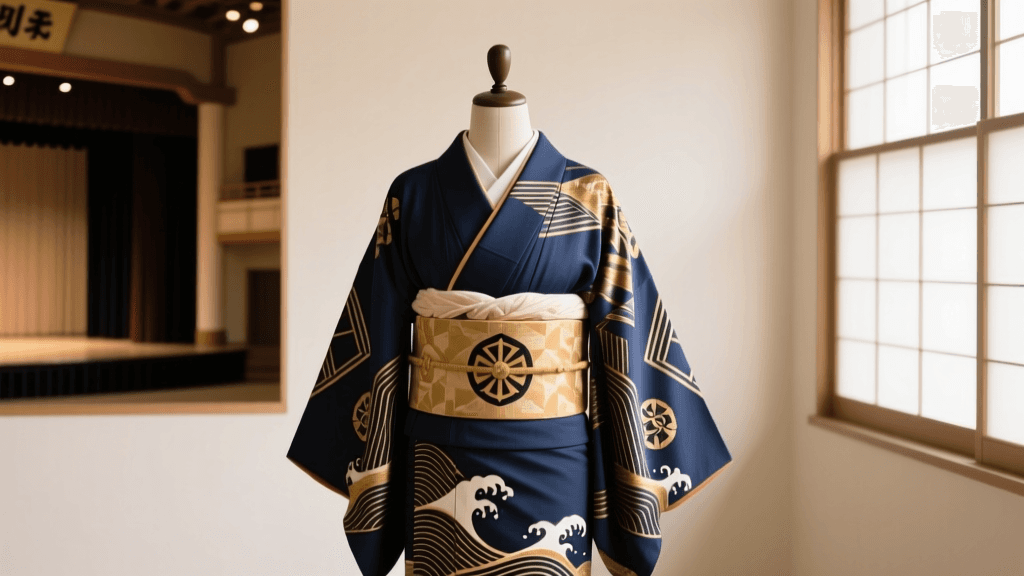
Originating from the Nishijin district of Kyoto, this heavily brocaded fabric is woven with metallic threads and thick, dyed silk. It is heavy, stiff, and structurally rigid. Tactilely, it feels substantial and armor-like. Acoustically, the dense weave absorbs high-frequency rustling, replacing it with a deep, resonant thud and a heavy swish that commands attention and dictates a slower, more deliberate pace for the wearer.
2026 Sensory Kimono Trends: Acoustic Weaves and Mindfulness
As of early 2026, the "Sensory Heritage" initiative, supported by organizations like the Japan Foundation, has sparked a renaissance in acoustic weaving. Master weavers in Kiryu and Kyoto are now offering "acoustic-tuned" bolts of silk. By adjusting the tension of the loom and the twist of the thread by mere fractions of a millimeter, they can customize the pitch of the kinu-zure to the wearer's preference. Authentic acoustic-tuned Chirimen bolts in 2026 typically range from ¥85,000 to ¥120,000, reflecting the intense labor and specialized knowledge required.
This trend aligns perfectly with the modern revival of Zen mindfulness practices. Putting on a kimono in 2026 is increasingly viewed not as a mere fashion statement, but as a somatic meditation. The weight of the obi, the restriction of the hem, and the constant auditory feedback of the silk force the wearer to slow down, breathe deeply, and remain entirely present in their physical body.
Comparison Chart: Fabric Sound and Texture Profiles
| Fabric Type | Primary Material | Tactile Sensation | Acoustic Profile (Sound) | Best Season |
|---|---|---|---|---|
| Habutae | Degummed Silk | Smooth, fluid, cool | High-pitched, continuous whisper | Spring / Autumn |
| Chirimen | Twisted Silk Crepe | Pebbled, dry, textured | Soft, muted, muffled rustle | Autumn / Winter |
| Jofu | Ramie / Hemp | Crisp, stiff, cool | Sharp, papery snap and swish | Summer |
| Nishijin-ori | Silk / Metallic Threads | Heavy, rigid, substantial | Deep, resonant thud, low swish | Winter / Formal |
| Ro / Sha | Leno-weave Silk | Lightweight, airy, sheer | Faint, breathy flutter | High Summer |
How to Cultivate a Mindful Sensory Practice
To truly experience the auditory and tactile magic of the kimono, one must adjust their physical movements. The garment demands a specific type of physical engagement that modern Western clothing simply does not require. Here is how you can cultivate a mindful sensory practice when wearing traditional Japanese garments in 2026:
- Master Suriashi (The Sliding Walk): To maximize the beautiful sound of kinu-zure and prevent the hem from fraying, practice suriashi. This involves keeping your feet close to the ground and sliding them forward rather than lifting and striking the floor. This gliding motion creates a continuous, soothing acoustic wave of silk friction and naturally aligns your posture.
- Engage the Core for Obi Awareness: The obi (sash) acts as a physical reminder of your center of gravity. Use the tactile pressure of the obi against your abdomen to remind yourself to engage your core and breathe from your diaphragm. This deep breathing enhances the meditative state induced by the garment.
- Layering for Acoustic Depth: The sound of the kimono relies on layers. Ensure you are wearing a proper nagajuban (under-kimono) and hadajuban (undergarment). The friction between these distinct layers of silk and cotton is what generates the complex, multi-tonal rustle that synthetic single-layer garments cannot replicate.
- Proper Storage for Fiber Memory: To preserve the tactile crispness of summer ramie and the structural integrity of winter brocade, avoid hanging your kimono on modern wire hangers. In 2026, traditional tatou-shi (acid-free Japanese paper) wrapping and flat storage in paulownia wood chests remain the gold standard. This allows the fibers to rest and retain their "memory," ensuring the acoustic properties remain intact for decades.
Conclusion
The kimono is a masterclass in sensory design. By paying attention to the kinu-zure and the diverse tactile landscapes of fabrics like Chirimen and Jofu, we unlock a deeper, more intimate understanding of Japanese culture. In our fast-paced, visually oversaturated modern world, the quiet rustle of silk and the crisp touch of ramie offer a rare and beautiful invitation to slow down, listen, and feel the profound artistry woven into every thread.