2026 Guide to Kabuki, Noh and Bunraku Theater Kimono
The Enduring Legacy of Japanese Theatrical Garments in 2026
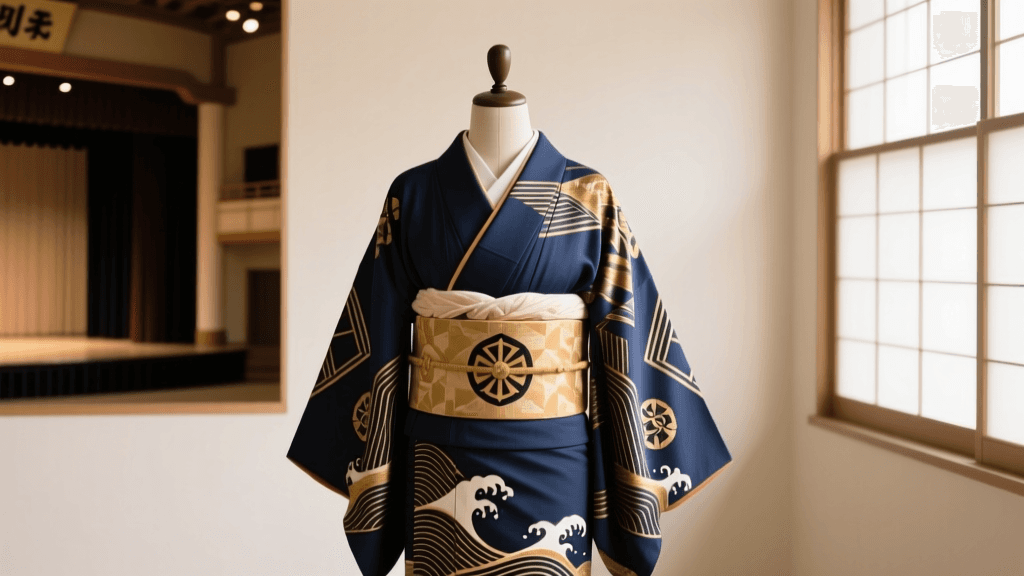
Japanese traditional theater is a masterclass in visual storytelling, where the garment is not merely clothing but a vital extension of the character's soul, social status, and emotional state. As we navigate the cultural landscape of 2026, the intersection of heritage preservation and global collector interest has brought the intricate world of theatrical kimono into sharp focus. For enthusiasts, historians, and textile collectors, understanding the distinct differences between the costumes of Noh, Kabuki, and Bunraku is essential. Each theater form demands unique textile techniques, structural adaptations, and aesthetic philosophies that have been refined over centuries and continue to influence modern haute couture and vintage textile markets today.
Noh Theater: The Subtlety of Shozoku and Yugen
Noh (or Nogaku) is the oldest of the three forms, characterized by its slow, deliberate movements and profound spiritual undertones. The aesthetic principle governing Noh is yugen—a mysterious, profound, and subtle beauty. This philosophy extends directly into the theatrical costumes, collectively known as shozoku. According to the UNESCO Intangible Cultural Heritage archives, Nogaku theater relies heavily on the visual weight and texture of its garments to convey character archetypes, as the carved wooden masks remain largely expressionless.
The most iconic Noh garment is the karaori, a heavily brocaded robe worn by female characters (played by male actors). Despite the name translating to 'Chinese-style robe,' the karaori is a pinnacle of Japanese Nishijin-ori weaving, featuring floating weft threads that create a raised, embroidery-like effect. For male roles, particularly warriors or deities, the atsuita is utilized. This thick, stiff, board-like robe is woven with bold geometric patterns and metallic threads. Another crucial textile is the surihaku, a garment where gold or silver leaf is pressed directly into the silk using a specialized adhesive, creating a breathtaking, light-catching effect on the dimly lit cypress stage. The stiffness of these garments is intentional; the heavy silk forces the actor to move with a gliding, grounded posture (hakobi), essential to the Noh performance.
Kabuki: The Extravagance of Hiki-nuki and Oshiroi
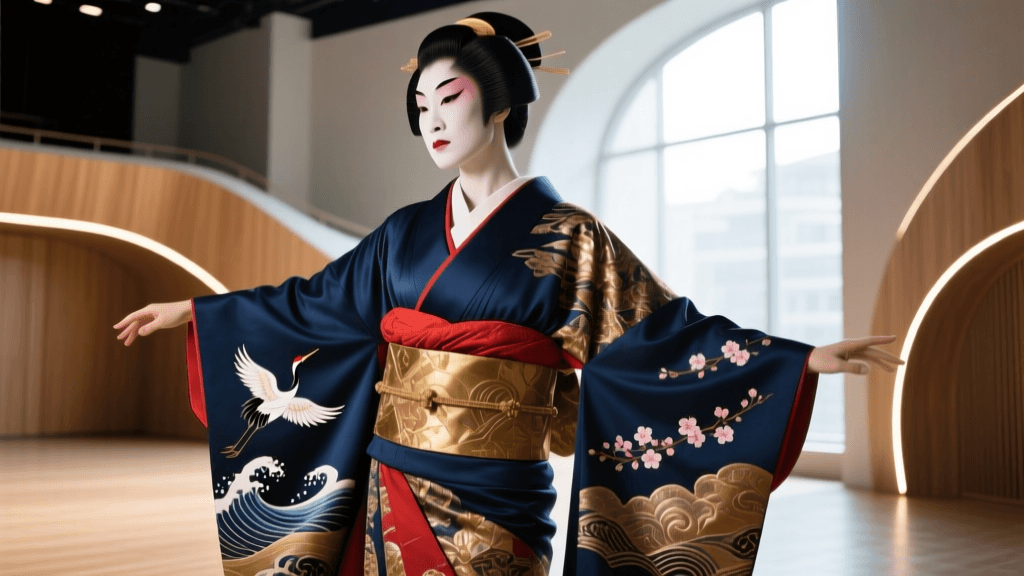
If Noh is a whisper, Kabuki is a shout. Emerging in the Edo period as entertainment for the commoner class, Kabuki is defined by its dynamic movement, dramatic mie (poses), and spectacular visual effects. The Japan Arts Council notes that Kabuki costumes are designed to maximize visual impact from the back of large, multi-tiered theaters, resulting in bold motifs, vibrant colors, and ingenious structural adaptations.
The most famous Kabuki costume technique is hiki-nuki, a rapid on-stage costume change. The kimono is held together by basting threads that are pulled by stage assistants (kurogo) at a climactic moment, causing the outer robe to fall away and instantly reveal a completely different kimono underneath. This requires precise tailoring and specific lightweight silk linings to ensure the fabric drops flawlessly.
Kabuki kimono also vary wildly depending on the acting style. In aragoto (the rough, heroic style popular in Edo/Tokyo), actors wear heavily padded kimono with oversized, dramatic patterns like massive checkered designs (ichimatsu) or fierce animal motifs to exaggerate their physical size. Conversely, wagoto (the soft, romantic style of Kyoto/Osaka) features elegant, subdued yuzen-dyed kosode with delicate floral patterns and multiple layered collars (date-eri) to suggest refined nobility or wealthy merchants.
Bunraku: Puppetry and the Illusion of Scale
Bunraku (Ningyo Joruri) presents a unique challenge in garment construction: the actors are not human, but large, intricately carved wooden puppets operated by three visible puppeteers. The kimono worn by Bunraku puppets must create the illusion of a living, breathing human while accommodating the complex internal rigging and the hands of the puppeteers.
Bunraku costumes are tailored to scale, typically fitting puppets that are one-half to two-thirds the size of an adult human. However, they are not simply scaled-down human garments. The kimono feature strategic cutouts, internal gussets, and hidden ties that allow the primary puppeteer (omo-zukai) to manipulate the head and right arm, the left-hand puppeteer (hidari-zukai) to move the left arm, and the leg puppeteer (ashi-zukai) to operate the lower body without the silk fabric bunching unnaturally. The textiles used are often identical to those in Kabuki—rich brocades and vibrant yuzen silks—but the tailoring is a marvel of specialized theatrical engineering designed to manipulate light and shadow, giving the wooden figures a soft, human-like drape.
Decoding Theatrical Motifs and Textiles
Across all three forms, the motifs woven or dyed into the silk carry deep semiotic weight. In 2026, as vintage theatrical textiles become highly sought after by global collectors, understanding these motifs is crucial for authentication and appraisal.
- Paulownia (Kiri): Reserved for characters of high imperial or shogunal rank. The paulownia crest is a definitive marker of nobility in both Noh and Kabuki.
- Pine, Bamboo, and Plum (Sho-Chiku-Bai): The ultimate auspicious trio, often worn by characters in celebratory scenes or final acts to signify resilience, longevity, and purity.
- Water and Wave Patterns (Seigaiha): Frequently used in Bunraku and Kabuki for characters associated with the sea, fishermen, or scenes of turbulent emotional conflict.
- Spiderwebs and Butterflies: Often utilized in Kabuki for complex female characters, such as courtesans or spirits, symbolizing entrapment, transformation, and ephemeral beauty.
Comparison Chart: Noh vs. Kabuki vs. Bunraku Kimono
| Feature | Noh (Nogaku) | Kabuki | Bunraku |
|---|---|---|---|
| Primary Aesthetic | Yugen (subtle, mysterious, spiritual) | Spectacle, drama, and bold visual impact | Realism, illusion of human life, scale |
| Key Garment | Karaori, Atsuita, Surihaku | Hiki-nuki robes, Padded Aragoto kimono | Scaled Kosode with internal rigging |
| Textile Technique | Nishijin brocade, gold-leaf pressing | Yuzen dyeing, heavy embroidery, padding | Standard silks with specialized tailoring |
| Movement Adaptation | Stiff, heavy silk to enforce gliding steps | Quick-release threads, wide sleeves for poses | Cutouts and gussets for puppeteer hands |
Sourcing and Preserving Theatrical Kimono in 2026
The market for antique and vintage Japanese theatrical garments has evolved significantly by 2026. While authentic Edo-period stage-worn garments are largely confined to museums or the archives of prominent acting families (like the Ichikawa or Onoe lines in Kabuki), Meiji and Taisho-era theatrical textiles are increasingly available through specialized Asian art auction houses and curated vintage dealers in Kyoto and Tokyo.
For collectors acquiring these pieces, preservation is paramount. The heavy metallic threads in Noh surihaku and the dense embroidery of Kabuki date-eri are highly susceptible to environmental degradation. Conservation guidelines from the Victoria and Albert Museum's Asian Collections emphasize that theatrical silks must be stored flat whenever possible. Hanging heavy brocade theatrical garments causes irreversible stress on the warp threads, leading to tearing at the shoulders.
In 2026, serious collectors utilize smart-climate storage wardrobes that maintain a strict relative humidity of 45% to 55% and a temperature of around 18°C (64°F). Garments should be interleaved with acid-free, unbuffered tatou paper to prevent the metallic threads from oxidizing and staining the adjacent silk. Furthermore, exposure to UV light must be entirely eliminated, as the natural dyes used in historical yuzen techniques will fade rapidly under modern LED or sunlight exposure.
Conclusion
The kimono of Kabuki, Noh, and Bunraku are far more than stage props; they are masterpieces of Japanese textile engineering, steeped in centuries of cultural semiotics and artistic philosophy. Whether you are studying the subtle gold-leaf application of a Noh robe, marveling at the mechanical genius of a Bunraku puppet's tailored silk, or tracing the vibrant yuzen dyes of a Kabuki quick-change garment, these textiles offer a profound window into Japan's artistic heritage. As preservation techniques and digital archiving continue to advance in 2026, the legacy of these magnificent theatrical garments remains securely woven into the fabric of global art history.