Master Your Kimono Wardrobe: Seasonal Rotation & Storage
The Art and Science of Kimono Preservation
Owning a traditional Japanese kimono is an investment in both art and history. Unlike Western garments that are casually hung in a closet, kimono require meticulous care, specific environmental conditions, and a disciplined approach to seasonal rotation. The delicate silk, intricate dyeing techniques like yuzen and shibori, and the structural integrity of the garment demand a specialized storage system. According to The Metropolitan Museum of Art, the historical evolution of the kimono transformed it into a canvas for exquisite textile arts, making the preservation of these fibers a matter of cultural importance. Improper storage can lead to irreversible damage, including silk shattering, dye transfer, and mold growth. This comprehensive guide will walk you through the exact measurements, materials, and schedules required to master your kimono wardrobe organization and seasonal rotation.
Proper kimono storage is not merely about putting clothes away; it is an active practice of preservation that connects the modern wearer to centuries of Japanese textile tradition.
Essential Storage Materials: Kiri Tansu and Tatoushi
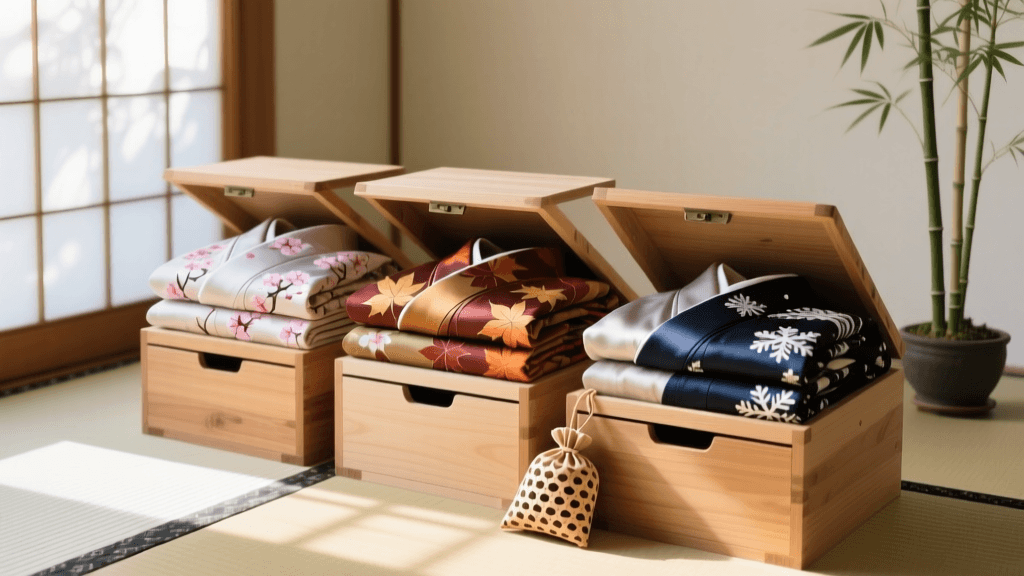
The foundation of any serious kimono collection is the kiri tansu, a traditional chest made from paulownia wood. Paulownia is uniquely suited for textile preservation because it is lightweight, naturally fire-resistant, and possesses a cellular structure that expands and contracts with humidity changes. When humidity rises, the wood swells to seal the drawers and prevent moisture from entering; when the air is dry, it contracts to allow the garments to breathe. This natural regulation prevents the mold and mildew that can rapidly destroy silk.
Inside the tansu, kimono should never touch the bare wood or each other directly. They must be wrapped in tatoushi, specialized envelopes made from washi (traditional Japanese paper). Tatoushi are breathable, acid-free, and wick away residual moisture. For highly delicate antique pieces or those with raised metallic embroidery, the Canadian Conservation Institute recommends using unbuffered, acid-free tissue paper to cushion the folds. Buffered tissue (which contains an alkaline reserve) should be avoided for silk, as the alkalinity can degrade protein fibers over time.
The Seasonal Rotation Schedule: Mushiboshi
In Japan, the practice of airing out garments is known as mushiboshi (literally 'insect airing'). This is a critical bi-annual ritual designed to inspect the garments for pests, air out stale odors, and reset the moisture levels within the fabric. Because kimono are folded into strict rectangular shapes, leaving them undisturbed for years can cause permanent crease lines that weaken the silk fibers, leading to tears along the folds.
Timing is everything. You must choose dry, breezy days in late autumn and late spring. Never air out your kimono on humid, rainy, or overly sunny days, as UV rays will fade the natural dyes and high humidity will trap moisture inside the folds.
| Season | Months | Action Required | Target Humidity |
|---|---|---|---|
| Spring | April - May | Air out winter garments, inspect for pests, rotate to summer storage | 45% - 55% |
| Autumn | October - November | Air out summer garments, inspect for mold, prepare for winter storage | 45% - 55% |
During mushiboshi, open all drawers and lay the wrapped kimono out in a shaded, well-ventilated room. Unwrap them and gently refold them along slightly different lines to prevent permanent fiber stress. This is also the time to check for any dropped threads or stains that require professional arakimono (kimono dry cleaning) before long-term storage.
Step-by-Step Folding and Wrapping
Folding a kimono is an exact geometric exercise. The Victoria and Albert Museum notes that the straight-line construction of the kimono allows it to be folded into a uniform rectangle, making it highly efficient for stacking in shallow drawers. Here is the standard hon-datami (main folding) method:
- Preparation: Lay the kimono flat on a clean, dry surface, face down. Ensure your hands are clean and free of oils or lotions.
- The First Fold: Fold the right side of the body inward along the back seam. Then, fold the left side over it, aligning the front edges.
- The Sleeves: Fold the sleeves back over the body of the garment. The sleeve edges should align neatly with the body folds.
- The Length: Fold the bottom hem up to meet the collar. Depending on the length of the kimono and the depth of your tansu drawer (standard depths are 6 inches or 15 cm), you may need to fold it in thirds rather than halves.
- Padding: Place small rolls of acid-free unbuffered tissue paper inside the major folds to prevent hard creases and protect any raised embroidery from being crushed.
- Wrapping: Place the folded kimono inside the tatoushi. Fold the paper envelope tightly and secure it with the attached paper tie. Never use tape or adhesive.
Climate Control and Pest Management
Silk is a protein fiber, making it highly attractive to pests like carpet beetles and clothes moths. However, the chemical solutions used in Western closets can be disastrous for Japanese garments. Traditional mothballs containing naphthalene or paradichlorobenzene release gases that can melt synthetic threads, react with metallic dyes, and leave a pervasive, nearly impossible-to-remove odor in the silk.
Instead, use shounou (natural camphor) or specialized Japanese anti-pest papers designed specifically for silk. Place one small camphor block or anti-pest sheet in the corner of the tansu drawer, ensuring it does not touch the tatoushi directly. Camphor sublimates into a gas that repels insects without chemically altering the silk dyes.
Climate control is equally vital. The ideal storage environment for silk is a stable temperature of 65°F to 70°F (18°C to 21°C) with a relative humidity (RH) of 45% to 55%. Fluctuations in humidity cause the silk fibers to expand and contract, leading to structural fatigue. If you live in a highly humid climate, consider placing silica gel desiccant packs in the bottom of the tansu drawers, but monitor them closely and replace them before they become saturated and release moisture back into the wood.
Cost Breakdown for a Complete Storage Setup
Building a proper kimono wardrobe requires an initial investment, but it protects garments that can be worth thousands of dollars. Below is an estimated cost breakdown for setting up a dedicated storage system for a collection of 10 to 15 kimono.
| Item | Purpose | Estimated Cost (USD) |
|---|---|---|
| Kiri Tansu (Paulownia Chest) | Primary breathable storage (2-3 drawers) | $800 - $2,500+ |
| Tatoushi (Washi Wrappers) | Moisture-wicking inner wrapping | $15 - $30 each |
| Shounou (Natural Camphor) | Organic pest deterrent | $10 - $20 per box |
| Acid-Free Unbuffered Tissue | Padding for folds and embroidery | $25 for a pack of 100 |
| Digital Hygrometer | Monitoring drawer humidity levels | $15 - $30 |
For collectors on a budget, vintage kiri tansu can often be found at Japanese antique markets or online auction sites for a fraction of the cost of new ones. Just ensure the wood is free of active pest infestations and mold before bringing it into your home. Alternatively, archival-grade plastic storage bins can be used as a temporary measure, provided they are lined with washed, unbleached cotton sheets and include silica desiccants, though they lack the breathable moisture-regulation of paulownia wood.
Conclusion
Mastering kimono wardrobe organization and seasonal rotation is a rewarding discipline that ensures these magnificent garments survive for future generations. By investing in the right materials like kiri tansu and tatoushi, adhering to the bi-annual mushiboshi schedule, and avoiding harsh chemical pest deterrents, you create a sanctuary for your textiles. Whether you are preserving a family heirloom or a recently acquired vintage piece, treating your kimono with the respect and scientific care they demand will keep the silk vibrant, the dyes true, and the history alive.