Kimono Undergarments and Layering: A Complete Basics Guide
Introduction to the Art of Kitsuke
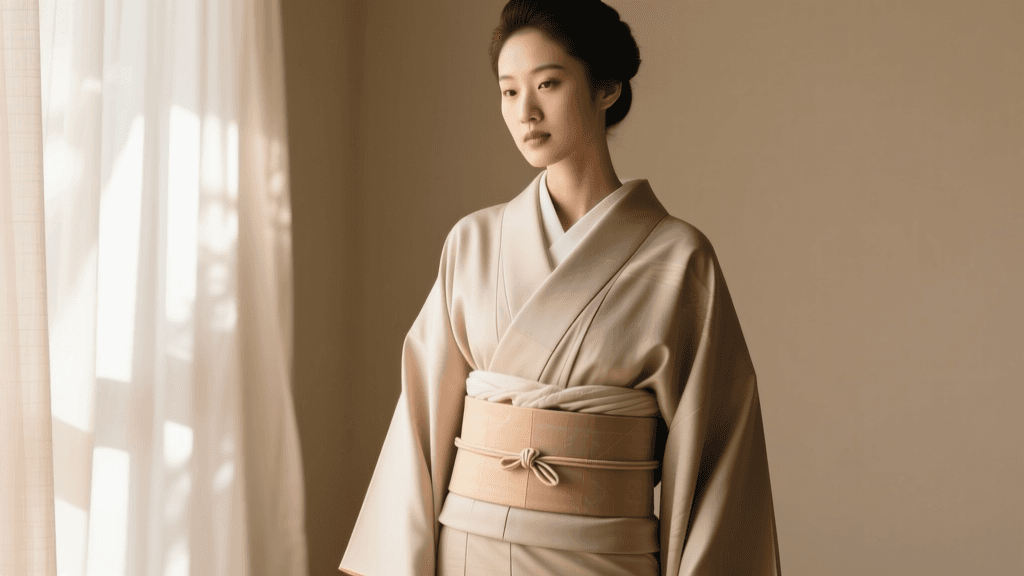
The kimono is an enduring icon of Japanese culture, recognized globally for its stunning textiles, intricate motifs, and elegant drape. However, the true secret to a flawless kimono silhouette does not lie in the outer garment itself, but in the meticulous foundation built beneath it. In the traditional art of kitsuke (kimono dressing), undergarments and layering basics are absolutely paramount. They serve to protect delicate silks from body oils, absorb moisture, and most importantly, create the iconic cylindrical, straight-line silhouette that defines traditional Japanese aesthetics.
Unlike Western tailoring, which cuts fabric to accentuate the natural curves of the human body, traditional Japanese garments are cut in straight lines from single bolts of fabric known as tanmono. As noted by the National Museum of Asian Art at the Smithsonian, the straight-line construction of the kimono requires the wearer to temporarily reshape their body into a smooth, uniform cylinder to ensure the fabric hangs correctly without wrinkling or pulling. This is achieved through strategic padding and precise layering. Understanding this philosophy is the first step in mastering kimono undergarments.
The Core Undergarments (Shitagi)
The foundation of kimono dressing begins with the shitagi, or basic undergarments. These layers are worn directly against the skin or just above it, serving as the primary barrier between the body and the expensive outer garments.
Hadajuban (Skin Undergarment)
The hadajuban is the innermost layer, worn directly against the skin. Typically made of breathable cotton, bamboo, or lightweight linen, its primary purpose is to absorb sweat and body oils. A standard hadajuban features a short, wrap-style front that crosses over the chest, and wide, short sleeves. Because it touches the skin directly, it must be washed frequently. Modern versions often come in a one-piece slip style (hadagi) for convenience, though traditional two-piece sets are preferred by purists. Average Cost: $20 to $45 USD.
Susoyoke (Wrap Skirt)
Worn over the hadajuban and tied securely at the waist, the susoyoke is a half-slip that prevents the outer kimono from clinging to the legs during movement. It is usually made of cotton or a cotton-polyester blend, providing a smooth surface for the outer layers to glide over. For modern convenience, many wearers opt for dedicated kimono undershorts (steteco) or a combined camisole-and-slip set. Average Cost: $25 to $50 USD.
Padding and Silhouette Correction
To achieve the necessary cylindrical shape, wearers must fill in the natural dips of the body, particularly the lower back and the waist. This is done using himotaba (small padded towels) or specialized foam hip pads. By tying these pads around the waist with a thin cord, the wearer creates a perfectly straight line from the ribs to the hips, ensuring the outer obi (sash) sits flat and secure.
The Nagajuban: The Inner Kimono
The nagajuban (long undergarment) is the crucial middle layer that bridges the basic cotton undergarments and the outer silk kimono. It resembles a lighter, simpler kimono and serves several vital structural and aesthetic functions.
The Collar (Eri and Han-eri)
The most visible part of the nagajuban is the collar, which peeks out just below the outer kimono’s neckline at the nape of the neck. Because this area touches the skin, hair, and makeup, a han-eri (half-collar) is basted onto the nagajuban's main collar. The han-eri is easily removable for washing and can be swapped out to match the season, formality, or color palette of the outfit. For formal wear, a crisp white silk or synthetic crepe han-eri is mandatory, while casual wear allows for embroidered or patterned collars.
Sleeve Visibility and Depth
The nagajuban’s sleeves are designed to be slightly visible through the armhole (sodeguchi) of the outer kimono. This adds a subtle layer of depth and color coordination to the ensemble. The Victoria and Albert Museum's Asian textile collections highlight the importance of these inner layers in historical garments, noting that the interplay of colors between the nagajuban and the outer kimono was a key indicator of a wearer's refined taste and understanding of seasonal color palettes (kasane no irome).
Essential Tying Tools (Himo and Datejime)
You cannot secure a kimono with pins or zippers; the entire structure relies on tension and friction. The following tools are non-negotiable for proper layering:
- Koshihimo: Long, thin tying cords (approximately 110cm x 5cm) made of cotton or silk. You will need at least three to five koshihimo to secure the various layers at the waist and chest. They must be tied tightly enough to hold the garment, but not so tight as to restrict breathing.
- Datejime: A wider, stiffer sash tied over the koshihimo to flatten the front of the kimono and secure the nagajuban. Traditional datejime are woven silk (like Hakata-ori), while modern versions often feature elastic and Velcro for ease of use.
- Korin Belt: A modern, elasticized clip tool that hooks onto the nagajuban’s collars. It pulls them into a perfect V-shape at the nape of the neck and keeps them securely in place while you tie the outer layers, preventing the collar from slipping backward.
- Itajime: A small, rigid plastic or cardboard board placed inside the front overlap of the nagajuban to prevent the fabric from wrinkling and to ensure a perfectly flat front panel.
Seasonal Layering Guide
The number and material of your layers must change according to the season. According to Japan Guide's comprehensive overview of traditional Japanese clothing, adapting your layers to the weather is a fundamental rule of kimono etiquette. Below is a comparison of layering requirements across different seasons.
| Season | Outer Garment | Nagajuban Material | Collar Style (Han-eri) | Layering Notes |
|---|---|---|---|---|
| Summer (Jul-Aug) | Yukata (Cotton) or Ro/Sha (Sheer Silk) | d>Ro (Sheer) or Hadajuban onlySheer mesh, linen, or omitted for Yukata | Minimal layers to prevent heatstroke. A single hadajuban is often worn under a casual yukata. | |
| Spring/Autumn | Awase (Lined Silk Kimono) | Cotton, Silk, or Polyester crepe | Standard silk or synthetic crepe | Standard layering. Use of hip pads and datejime is standard to maintain the cylindrical shape. |
| Winter (Dec-Feb) | Awase (Lined Silk) or Haori jacket | Thick silk, quilted cotton, or wool blend | Embroidered silk, velvet accents | Additional thermal under-layers (like hakkake) can be worn over the susoyoke for warmth. |
Step-by-Step Layering Guide
Mastering the order of operations is critical. Follow these steps to build your foundation:
- Prep the Base: Put on the hadajuban and tie it securely. Wrap the susoyoke around your lower half, ensuring the hem sits just above the ankles. Tie it firmly at the natural waist.
- Apply Padding: Wrap your himotaba (padding) around your waist and lower back to fill in the curve of your spine. Secure it with a thin koshihimo.
- Don the Nagajuban: Slip your arms into the nagajuban. Center the back seam perfectly on your spine. Pull the collars forward and adjust the nape of the neck so that you can fit roughly one to two fists between the collar and your skin.
- Secure the Collar: Attach the Korin belt to the left and right collars to lock the V-shape in place. Ensure the left side overlaps the right side (the right-over-left style is strictly reserved for dressing the deceased).
- Tie the Waist: Take your first koshihimo and tie it tightly just below the bust (for women) or at the hip bones (for men). Tuck the excess fabric over the cord to create a smooth, flat front.
- Flatten and Finish: Wrap the datejime over the koshihimo to flatten the bust and secure the nagajuban. Insert the itajime board into the front overlap if necessary. Your foundation is now complete and ready for the outer kimono.
Sourcing, Care, and Maintenance
Investing in high-quality undergarments extends the life of your entire kimono wardrobe. When sourcing these items, specialized online retailers such as Ichiroya, Yamato Kimono, or dedicated Kyoto-based shops offer authentic options. For beginners, polyester or washable silk-blend nagajuban are highly recommended due to their durability and ease of care.
Care Instructions: The cotton hadajuban and susoyoke should be machine or hand-washed after every wear to prevent sweat stains from transferring to outer layers. The han-eri must be unpicked, washed, and re-basted. The main body of a silk nagajuban should only be dry-cleaned when absolutely necessary; instead, air it out in a shaded, well-ventilated area after wearing. Never store your undergarments folded in plastic, as this traps moisture and invites mold; use breathable tatoushi (traditional paper wrappers) instead.
Conclusion
The beauty of the kimono is inextricably linked to the precision of its foundation. By understanding and respecting the roles of the hadajuban, susoyoke, and nagajuban, you not only protect valuable textiles but also honor the centuries-old aesthetics of Japanese dress. Proper layering transforms the act of wearing a kimono from merely putting on clothes into a disciplined, meditative practice of cultural preservation.