The Complete Guide To Kimono Undergarments & Layers
The Hidden Architecture of Kitsuke
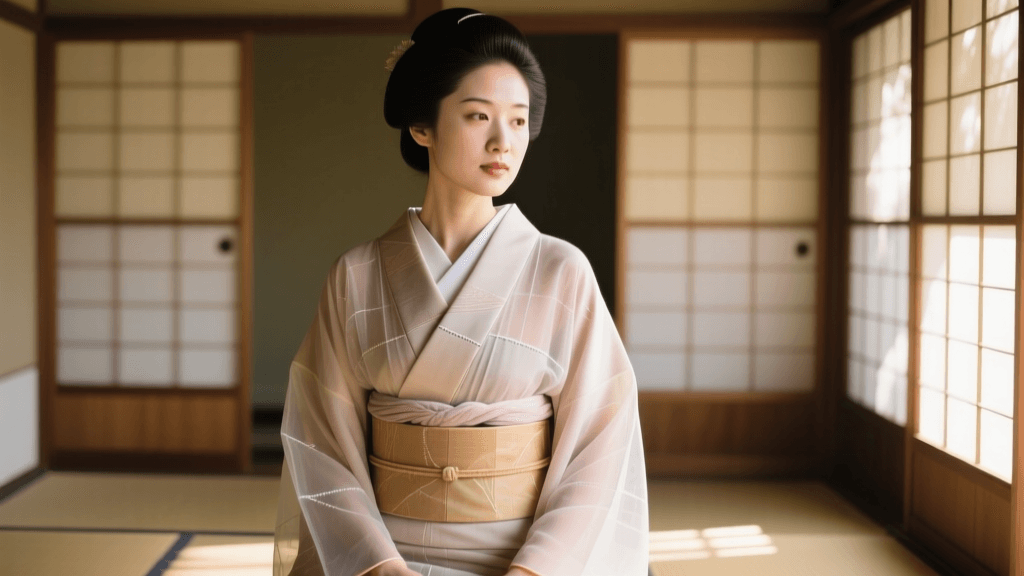
When most people envision traditional Japanese clothing, they picture the vibrant, sweeping silks of the outer kimono. However, the true art of kitsuke (the art of wearing a kimono) lies hidden beneath the surface. A kimono is not merely a single garment wrapped around the body; it is a complex architectural system of undergarments, padding, and ties designed to protect the delicate outer silks, ensure the wearer's comfort, and create the flawless, cylindrical silhouette that defines Japanese aesthetics. Understanding kimono undergarments and layering basics is essential for anyone looking to wear traditional Japanese dress authentically and comfortably.
According to the Victoria and Albert Museum's Japanese Collections, the evolution of Japanese dress has always been deeply tied to the concept of layering, a tradition that dates back to the Heian period (794–1185). While modern kitsuke is far less cumbersome than the historical twelve-layered junihitoe, the foundational philosophy remains the same: the unseen layers are just as critical as the visible ones. This guide will break down the essential undergarments, their specific functions, costs, and the step-by-step layering sequence required for proper kimono dressing.
The Innermost Foundation: Hadajuban and Susoyoke
The layer closest to the skin serves a vital protective function. Traditional outer kimonos are often made of silk, which is difficult to clean and highly susceptible to damage from sweat and body oils. The innermost garments act as a breathable barrier.
Hadajuban (The Undershirt)
The hadajuban is a lightweight, short-sleeved undershirt. It is typically made from absorbent, breathable natural fibers like cotton, hemp, or bamboo. Modern variations may use moisture-wicking synthetics for summer wear. A standard hadajuban costs between $15 and $30. It should fit snugly against the torso without bunching, as any wrinkles will show through the outer layers. For formal wear, a kohada-juban (a longer, hip-length undershirt) might be used to provide extra coverage.
Susoyoke (The Wrap Skirt)
Worn on the lower half, the susoyoke is a wrap skirt that ties at the waist. It prevents the legs from rubbing together, reduces friction against the outer kimono, and makes walking significantly easier. Traditional susoyoke are made of cotton or lightweight silk crepe, costing around $20 to $50. The standard length is approximately 90 cm (35 inches), falling just below the knee. When tying the susoyoke, the hem should be tight around the knees to restrict the stride slightly, which naturally enforces the elegant, gliding walk associated with kimono etiquette.
The Modern Alternative: The One-Piece Slip
For beginners or those seeking convenience, a one-piece kimono slip (often just called a kimono slip or hadagi) combines the hadajuban and susoyoke into a single garment. Priced between $25 and $40, these are usually made of washable polyester or cotton blends and are highly recommended for casual wear and practice.
The Art of Shaping: Creating the Cylindrical Silhouette
Western fashion often emphasizes the natural curves of the body, but traditional Japanese aesthetics favor a straight, cylindrical silhouette known as naoyoshi. To achieve this, strategic padding is required to fill in the body's natural hollows.
- Towels (Tenugui or Hand Towels): The most common and cost-effective padding method involves wrapping small cotton towels around the waist and hips. A towel wrapped around the small of the back fills the lumbar dip, ensuring the obi (sash) sits perfectly flat and preventing the kimono collar from gaping at the back of the neck.
- Hip Pads (Shiragiku): For those with a pronounced waist-to-hip ratio, specialized foam or cotton hip pads ($20 to $40) are tied around the waist to build out the hip area, creating a straight line from the underarm to the hem.
- Bust Binders: To flatten the chest and prevent the kimono collar from bulging, a specialized kimono bustier or sports bra is worn beneath the hadajuban.
The Crucial Middle Layer: Nagajuban and Han-eri
The nagajuban is the under-kimono. It is the only undergarment that is intentionally meant to be seen, peeking out at the collar and the sleeves. The nagajuban protects the outer kimono from the inside while adding structural support.
Materials and Formality
Nagajuban can be made of silk or synthetic fibers. Silk nagajuban ($100 to $300+) are reserved for formal occasions and offer superior breathability, but they require professional dry cleaning. Polyester or washable silk-blend nagajuban ($30 to $80) are the standard for everyday wear, casual events, and beginners, as they can be machine washed on gentle cycles.
The Han-eri (Decorative Collar)
The han-eri is a detachable, decorative collar that is basted or pinned onto the nagajuban. Because the neck area is highly visible and prone to absorbing makeup and sweat, the han-eri acts as a sacrificial, easily replaceable shield. A plain white silk or synthetic han-eri is mandatory for formal wear, while embroidered, beaded, or patterned han-eri ($10 to $100+) are used to express personal style in casual settings. According to resources highlighted by the Kyoto City Official Travel Guide on Traditional Culture, the subtle flash of an embroidered han-eri is a hallmark of modern kimono styling, allowing wearers to customize their look without purchasing multiple expensive outer garments.
Securing the Layers: Koshi-himo and Date-jime
Unlike Western clothing, kimonos do not use buttons, zippers, or snaps. The entire structure is held together by a system of ties.
- Koshi-himo: These are thin, long ties (about 120 cm long) made of cotton or silk. A dresser will need anywhere from three to five koshi-himo to secure the hadajuban, nagajuban, and outer kimono. They cost about $5 to $10 each.
- Date-jime: This is a wide under-sash, typically 8 to 10 cm wide, tied over the koshi-himo on the nagajuban. It flattens the ties beneath it, ensuring a smooth surface for the outer kimono and the heavy obi. Elastic date-jime with Velcro or snap closures ($15 to $30) are incredibly popular for beginners, while traditional woven silk or crepe date-jime are used by advanced practitioners.
Comprehensive Kimono Undergarment Chart
| Garment Name | Position | Primary Material | Est. Cost (USD) | Primary Function |
|---|---|---|---|---|
| Hadajuban | Innermost Top | Cotton, Hemp, Bamboo | $15 - $30 | Absorbs sweat, protects outer layers |
| Susoyoke | Innermost Bottom | Cotton, Silk Crepe | $20 - $50 | Reduces leg friction, aids walking |
| Hip Pad (Shiragiku) | Waist/Hips | Foam, Cotton | $20 - $40 | Creates cylindrical silhouette |
| Nagajuban | Middle Layer | Silk, Polyester | $30 - $300 | Structural base, visible at collar/sleeves |
| Han-eri | Collar | Silk, Synthetic | $10 - $100 | Decorative, protects neck from oils/makeup |
| Koshi-himo | Ties | Cotton, Silk | $5 - $10 (each) | Secures garments in place |
| Date-jime | Under-sash | Silk, Elastic Blend | $15 - $40 | Flattens ties, smooths surface for obi |
The Step-by-Step Layering Sequence
Proper kitsuke requires a specific order of operations. Rushing or skipping steps will result in a lumpy silhouette and a collar that refuses to stay in place.
- Prep and Pad: Put on the hadajuban and susoyoke (or one-piece slip). Wrap towels around the waist and hips to fill in the small of the back and create a straight line from the bust to the hips. Secure the towels with a temporary koshi-himo.
- Don the Nagajuban: Slip your arms into the nagajuban. Center the back seam perfectly on your spine. Cross the left side over the right side (the right-over-left configuration is strictly reserved for dressing the deceased). Pull the collar snugly against the back of your neck, leaving a fist-sized gap (the eri-nuki space) which is considered highly elegant.
- Secure the Nagajuban: Tie a koshi-himo tightly under the bust or at the natural waist, depending on your body type. Smooth out any wrinkles downward. Tie the date-jime over the koshi-himo to flatten the bulk.
- Prepare the Outer Kimono: Before putting on the final silk layer, ensure the sleeves of the nagajuban are neatly folded or pinned so they do not bunch up inside the outer kimono sleeves.
Cultural Context: The Legacy of Kasane
To understand why layering is so deeply ingrained in Japanese dress, one must look to the historical concept of kasane (layering of colors). As noted by the Smithsonian National Museum of Asian Art, the Heian period aristocracy used the layering of silk robes to convey seasonal awareness, poetic sensibilities, and social rank. The colors of the under-layers would peek out at the cuffs, hems, and collars, creating a visual poetry that changed with the seasons. While modern kitsuke is vastly simplified, the han-eri and the subtle flash of the nagajuban sleeve are direct descendants of this ancient aesthetic philosophy, proving that in Japanese fashion, what is partially concealed is often more important than what is fully revealed.
'True elegance in kitsuke is not found in the loudness of the outer silk, but in the subtle, meticulous preparation of the unseen layers beneath.'
Sourcing, Care, and Maintenance
Investing in high-quality undergarments will extend the life of your expensive outer kimonos. When sourcing these items, specialized Japanese kimono retailers (both online and brick-and-mortar) offer the most authentic fits. However, for practice, many beginners successfully adapt Western garments: a tight-fitting cotton V-neck t-shirt can serve as a makeshift hadajuban, and a slip skirt can temporarily replace a susoyoke.
Care depends entirely on the material. Cotton hadajuban and susoyoke should be washed after every wear to prevent body oils from transferring to the nagajuban. Synthetic nagajuban can be hand-washed in cool water with mild detergent and hung to dry. Silk nagajuban and silk han-eri must be carefully spot-cleaned or taken to a professional cleaner who specializes in traditional Japanese garments. Always remove the han-eri before cleaning the nagajuban, and store your undergarments flat or rolled to prevent deep creases that could disrupt the smooth lines of your outer kimono.
Mastering kimono undergarments and layering basics takes time, patience, and practice. However, once you understand the hidden architecture of kitsuke, wearing a kimono transforms from a cumbersome chore into a deeply meditative and culturally resonant experience.