Kimono in Ukiyo-e: Decoding Edo Period Woodblock Art
The Intersection of Art and Apparel in Edo Japan
During the Edo period (1603–1867), Japan experienced an unprecedented cultural and economic boom that gave rise to a vibrant urban merchant class. At the heart of this cultural renaissance was ukiyo-e, or 'pictures of the floating world.' While modern audiences often view these woodblock prints as masterpieces of fine art, to the people of Edo (modern-day Tokyo), they functioned much like contemporary fashion magazines and lifestyle catalogs. Ukiyo-e artists such as Hishikawa Moronobu, Kitagawa Utamaro, and Utagawa Hiroshige meticulously documented the latest kimono trends, textile patterns, and color palettes, creating a visual archive that remains indispensable for historians, collectors, and kimono enthusiasts today.
For modern collectors and practitioners of kitsuke (the art of kimono dressing), studying ukiyo-e is not merely an academic exercise; it is a practical tool. By understanding how garments were depicted, layered, and accessorized in woodblock prints, enthusiasts can authenticate vintage textiles, recreate historical color combinations, and grasp the profound semiotics of Japanese fashion. According to The Metropolitan Museum of Art, ukiyo-e prints were instrumental in disseminating the latest styles from the pleasure quarters of Yoshiwara to the broader public, effectively dictating the sartorial trends of the era.
Reading the Visual Language of Kimono Motifs
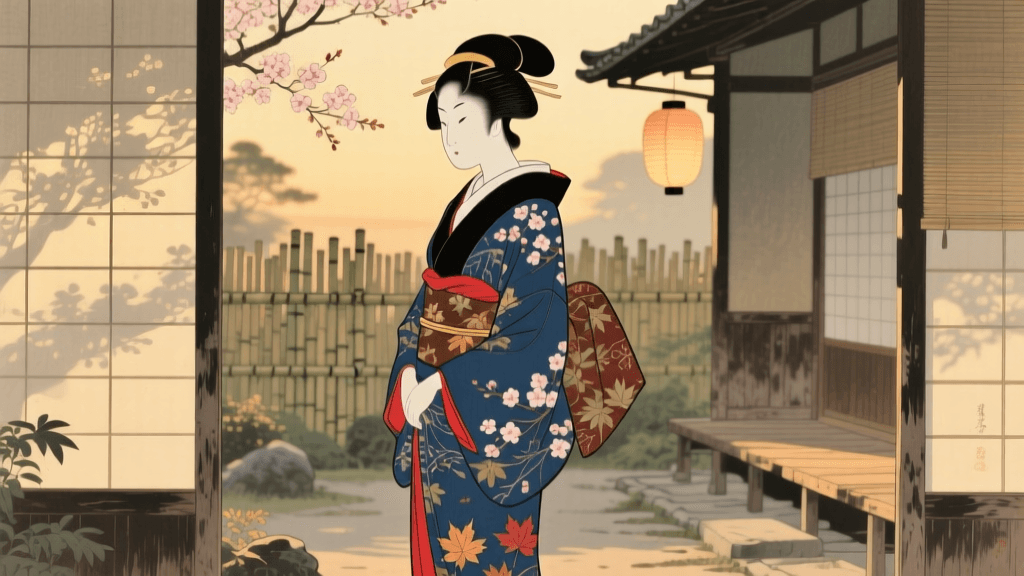
In Edo-period Japan, the motifs adorning a kimono were never purely decorative. They formed a complex visual language that communicated the wearer's age, marital status, social class, and the specific time of year. Woodblock artists rendered these motifs with astonishing precision, often collaborating with textile dyers to ensure the printed patterns accurately reflected the latest yuzen (resist-dyeing) and kata-yuzen (stencil-dyeing) techniques.
For vintage kimono collectors, ukiyo-e serves as a vital authentication reference. When evaluating a purported Edo or early Meiji-era komon (fine-patterned) kimono, collectors can cross-reference the geometric and nature-based motifs found in the textile with those depicted in prints from the same decade. Furthermore, understanding the strict rules of seasonality depicted in ukiyo-e helps modern wearers avoid fashion faux pas. For instance, wearing a garment featuring autumn maple leaves (momiji) in the spring would have been considered deeply unfashionable in the Edo period, a rule that strict traditionalists still observe today.
Ukiyo-e Motif Decoder: Seasonality and Status
The following table outlines common motifs found in ukiyo-e prints, their designated seasons, and the social demographics of the wearers depicted. This data is highly actionable for collectors looking to date and categorize vintage textiles.
| Motif | Season | Primary Wearer Class/Status | Symbolic Meaning & Context |
|---|---|---|---|
| Cherry Blossoms (Sakura) | Early Spring (March-April) | Courtesans, Young Unmarried Women | Ephemeral beauty, youth, and the fleeting nature of life. |
| Wisteria (Fuji) | Late Spring to Early Summer | Aristocracy, High-ranking Geisha | Endurance, love, and high social standing. |
| Morning Glory (Asagao) | Summer (July-August) | Townspeople, Commoner Women | Refreshment, cooling visual effect during humid summers. |
| Chrysanthemum (Kiku) | Autumn (September-November) | Samurai class, Imperial affiliates | Longevity, rejuvenation, and imperial authority. |
| Pine, Bamboo, Plum (Shochikubai) | Winter / New Year | All classes (Formal Wear) | Resilience, prosperity, and auspicious beginnings. |
The Economics of Color: Sumptuary Laws and Subtle Rebellion
One of the most fascinating aspects of kimono in ukiyo-e is the depiction of color, which was heavily regulated by the Tokugawa shogunate's sumptuary laws (ken'yakurei). These laws were designed to maintain strict class distinctions and prevent the wealthy merchant class (chonin) from dressing above their station. Bright colors, luxurious silks, and elaborate tie-dyeing (shibori) were frequently banned for commoners.
In response, the merchant class developed the aesthetic concept of iki—a subtle, understated elegance that signaled wealth and sophistication without overtly breaking the law. This led to the popularization of the shiju-hattai (48 Browns and 100 Greys) palette. Ukiyo-e artists masterfully captured these subdued tones using subtle gradients (bokashi). However, the laws could not dictate the inner linings of garments. Wealthy women would wear plain, muted exteriors but line their kimono with outrageously expensive, vibrant silks dyed with beni (safflower red). When a courtesan in an Utamaro print is depicted adjusting her collar or lifting her hem, the flash of brilliant crimson lining is a deliberate artistic choice highlighting this subtle rebellion.
For modern buyers, authentic Edo-period textiles dyed with natural beni or ai (indigo) are highly prized and command premium prices, often ranging from $500 to over $3,000 depending on condition. Synthetic aniline dyes, introduced in the late Meiji period, lack the depth and organic fading characteristics of natural dyes. Examining the color rendering in high-quality ukiyo-e prints helps collectors train their eyes to recognize the distinct, multi-layered depth of natural safflower red versus the flat, harsh tones of early synthetic alternatives.
Practical Guide: Applying Ukiyo-e Aesthetics to Modern Kitsuke
Translating the two-dimensional beauty of woodblock prints into three-dimensional modern kitsuke requires an understanding of historical layering and proportions. Here is actionable advice for modern kimono wearers looking to incorporate Edo-period aesthetics into their wardrobe:
- Collar Layering (Kasane-eri): In ukiyo-e prints of high-ranking courtesans, multiple collars are visible at the neckline. To replicate this today, use a standard han-eri (detachable collar measuring 110 cm x 20 cm) but layer a secondary, contrasting date-eri (false collar) beneath it. A 2 cm reveal of the under-collar mimics the precise layering seen in Utamaro's bijin-ga (pictures of beautiful women).
- Seasonal Timing for Purchases: Take a cue from the strict seasonality in woodblock art. Purchase winter and New Year motifs (like shochikubai) in October and November. Vintage dealers often discount out-of-season garments, allowing you to acquire high-quality, season-specific textiles at a 20% to 30% lower cost.
- Obi Placement: Notice how women in early Edo prints (pre-1800) often tied their obi in the front or side, whereas later prints show the obi tied exclusively in the back. For a historically authentic Edo merchant-class look during casual summer festivals, tying a lightweight cotton yukata obi in a simple front knot (mae-musubi) is both historically accurate and highly practical for navigating crowded spaces.
- Color Pairing: Emulate the iki aesthetic by pairing a subdued, grey-toned tsumugi (pongee silk) kimono with a vibrantly patterned obi in deep indigo and crimson. This high-contrast pairing reflects the hidden luxury celebrated in woodblock art.
Studying Authentic Textile References in Global Archives
To truly master the nuances of Edo-period textiles, one must study high-resolution archives of original prints. The alignment marks (kento) used by woodblock carvers to ensure perfect color registration mirror the precise alignment required in katagami (paper stencil) textile dyeing. Understanding this shared technical vocabulary deepens one's appreciation for both mediums.
Enthusiasts should utilize the digital archives of major institutions. The Victoria and Albert Museum offers extensive essays and high-resolution images detailing the evolution of the kimono, providing crucial context for the garments seen in woodblock prints. Additionally, the Smithsonian National Museum of Asian Art provides access to thousands of ukiyo-e prints, allowing collectors to zoom in on the microscopic details of fabric patterns, weave structures, and obi knots depicted by masters like Hokusai and Hiroshige.
'The woodblock print was the mirror of the floating world, reflecting not just the faces of its beauties, but the very threads of their ambition, woven into silk and dyed in the colors of rebellion.' — Edo Period Textile Proverb
Ultimately, ukiyo-e woodblock prints are far more than decorative art; they are the definitive historical record of Japanese textile innovation. By learning to decode the motifs, colors, and layering techniques captured in these prints, modern collectors and wearers can engage with the kimono not just as a garment, but as a living, breathing continuation of Edo-period artistry.