Kimono Travel Packing Guide 2026: Transport & Dressing Kits
The Renaissance of Kimono Travel in 2026
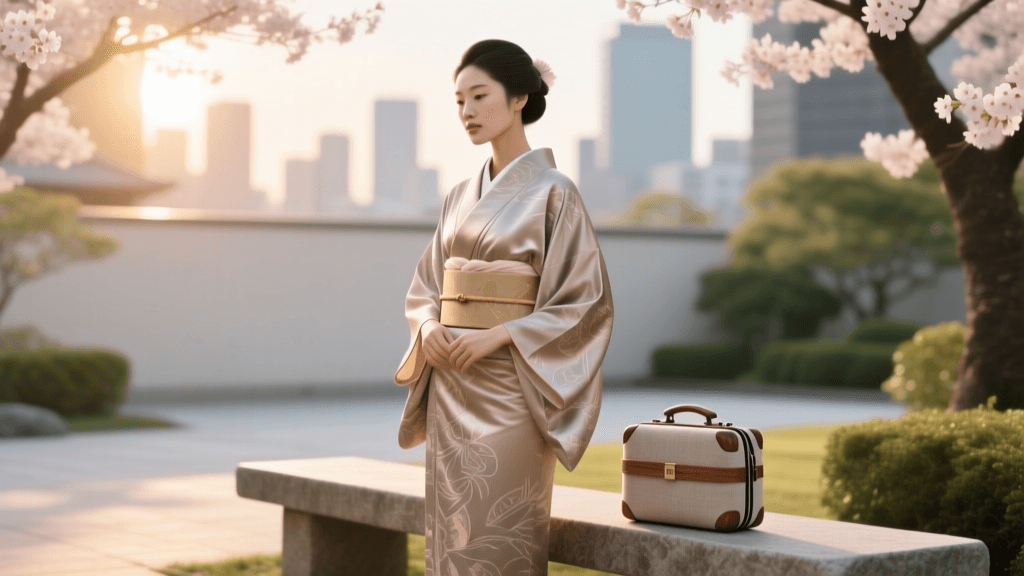
As global tourism embraces slow, culturally immersive travel in 2026, the practice of bringing personal kimono collections on international and domestic trips has seen a massive resurgence. No longer confined to the closets of collectors, traditional Japanese garments are being worn at ryokans in Kyoto, during tea ceremonies in Kanazawa, and even at international cultural summits. However, traveling with silk, linen, and intricate obi sashes presents a unique logistical challenge. The delicate nature of these textiles requires specialized packing techniques to prevent permanent creasing, moisture damage, and transit wrinkles.
According to The Metropolitan Museum of Art, the structural integrity of a kimono relies heavily on its flat, T-shaped construction, which is beautiful when displayed but highly susceptible to hard folds during transit. In 2026, travelers are moving away from standard garment bags and adopting specialized transport ecosystems designed specifically for traditional Asian textiles. This guide will walk you through the most effective, wrinkle-free packing methods, essential on-the-go dressing kits, and modern transit strategies for the traveling kimono enthusiast.
Navigating 2026 Transit Regulations and Luggage Limits
One of the most critical considerations for kimono travel in 2026 is navigating modern transit regulations, particularly Japan's Shinkansen (bullet train) oversized luggage rules. Travelers carrying garment bags or large hard-shell cases that exceed 160 cm in combined dimensions (height + width + depth) must reserve specific oversized baggage seats in advance. Failure to do so results in heavy fines and forced storage in vestibule areas, where delicate silk can be crushed by rolling suitcases.
To bypass these restrictions, modern kimono travelers utilize compact, cylindrical 'Tansu' travel cases and advanced rolling techniques that reduce the garment's footprint while eliminating hard fold lines. Furthermore, the integration of eco-friendly, silk-safe enzymatic wrinkle-release sprays in 2026 has revolutionized on-the-go garment care, allowing travelers to refresh their garments upon arrival without needing a traditional steamer.
Comparison of 2026 Kimono Transport Solutions
| Transport Method | Dimensions | Wrinkle Protection | Best Use Case |
|---|---|---|---|
| Traditional Furoshiki Wrap | Compact (Variable) | Moderate (Requires soft rolling) | Day trips, short train rides, minimal luggage |
| Cylindrical Tansu Case | 50cm x 20cm (Carry-on friendly) | Excellent (Prevents hard folds) | Long-haul flights, Shinkansen, multiple garments |
| Smart-Garment Compression Folder | Standard Carry-on | Poor for Silk (Causes micro-creases) | Cotton Yukata, synthetic blends only |
| Specialized Kimono Garment Bag | Oversized (Requires reservation) | Good (If hung immediately) | Car travel, private transfers, formal events |
The 'Maki' Roll: Step-by-Step Wrinkle-Free Packing
The most revered technique among kimono stylists for travel is the 'Maki' (roll) method. Unlike Western suits that are folded over hangers, a kimono's long panels are prone to snapping and permanent creasing if folded along the same lines repeatedly. The Maki roll distributes tension evenly and mimics the traditional way bolts of fabric (tanmono) are stored.
Step 1: Preparation and Padding
Lay the kimono face down on a clean, flat surface. Smooth out the back panels, ensuring the collar and sleeves are neatly aligned. Place acid-free, unbuffered tissue paper along the natural fold lines of the shoulders and the bottom hem. This tissue acts as a buffer, preventing the silk from creasing sharply against itself.
Step 2: The Sleeve Fold
Fold the sleeves back onto the body of the kimono, aligning them with the central seam. Do not crease the edges; instead, let them rest softly. The goal is to create a long, uniform rectangle that matches the width of your cylindrical case or your furoshiki cloth.
Step 3: The Core and Roll
Place a lightweight, smooth cylinder (such as a specialized foam rolling core or even a clean, wrapped PVC tube) at the bottom hem of the kimono. Begin rolling the garment upward toward the collar. The rolling motion must be firm but gentle, ensuring no air pockets are trapped inside, which can lead to shifting and wrinkling during transit. Once rolled, secure the bundle with a soft cotton tie or a traditional furoshiki cloth.
Building Your On-the-Go Kitsuke (Dressing) Kit
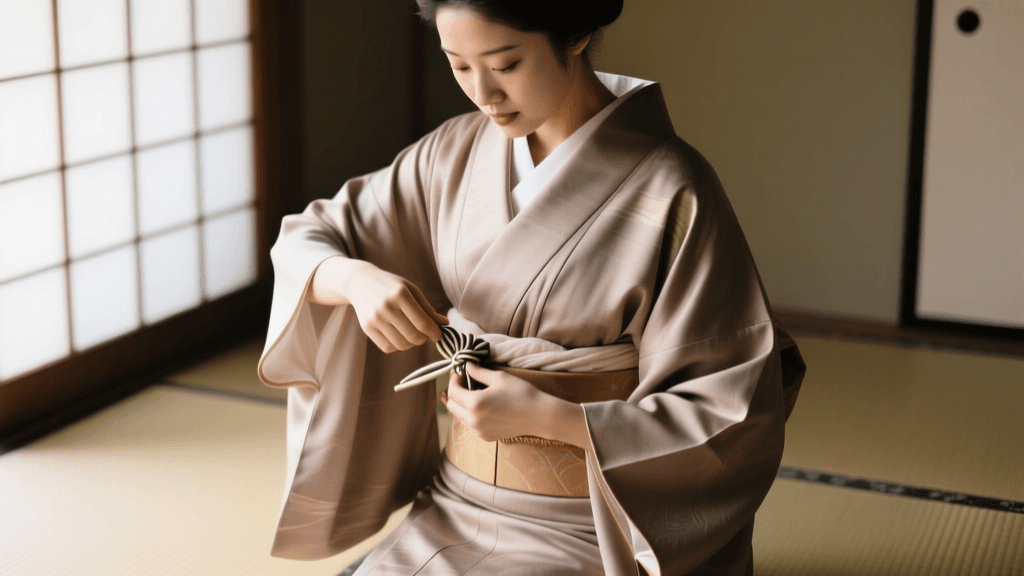
Transporting the kimono is only half the battle; dressing yourself (kitsuke) in a hotel room or ryokan requires a well-organized, portable kit. In 2026, minimalist dressing kits have become a staple for traveling enthusiasts. Here is what you must pack in your carry-on or personal item to ensure a flawless dressing experience anywhere in the world.
- Koshihimo (Waist Ties): Pack at least four. These long, thin cotton or silk ties are the foundation of the kimono, securing it at the waist and chest. Modern 2026 versions often feature subtle elastic cores for better grip without damaging delicate obi fabrics.
- Datejime (Under-Sash): A wider, stiffer tie used to secure the chest area and flatten the collar. A travel-friendly mesh datejime is highly recommended as it prevents bulk and allows the silk to breathe.
- Obi-ita (Obi Board): Essential for keeping the obi sash smooth and flat at the front. Travelers should opt for the flexible, half-length polyurethane boards that can be rolled up and tucked into a toiletry bag.
- Korin Belt: A modern timesaver featuring clips that hold the collar in place perfectly while you secure the waist ties, eliminating the need for an extra pair of hands.
- Portable Mirror and Clip: A lightweight, shatterproof acrylic mirror with a built-in alligator clip. This allows you to attach the mirror to any hotel door handle or shoji screen frame, providing a full-length view while you adjust your hemline.
- Silk-Safe Refresh Spray: A travel-sized bottle of 2026's leading enzymatic textile refresher, designed to relax micro-wrinkles in silk and linen without leaving water spots.
Embracing Takuhaibin for Delicate Garments
For those traveling extensively across Japan, carrying multiple kimono sets on every transit leg is exhausting. The Japan National Tourism Organization (JNTO) highly recommends utilizing 'Takuhaibin' (luggage forwarding services) to send oversized garment bags directly from one hotel to the next. Services like Yamato Transport offer specialized handling for fragile items.
When using Takuhaibin for kimono, it is crucial to pack the garments inside a rigid, hard-shell suitcase or a reinforced garment box rather than a soft cloth bag. Soft bags are tossed and stacked in delivery trucks, which will crush the delicate obi and silk layers. By utilizing a rigid case packed with the Maki roll technique, you can send your wardrobe ahead to your next ryokan, allowing you to explore cities like Kyoto or Tokyo completely hands-free, knowing your garments will arrive safely and wrinkle-free.
Ryokan Etiquette and Humidity Management
Staying in a traditional Japanese ryokan presents unique environmental challenges for silk garments. Traditional tatami rooms can experience fluctuating humidity levels, especially during the rainy season (tsuyu) or the humid peak of summer. High humidity can cause silk to stretch and lose its shape, while excessively dry winter air can generate static that attracts dust to dark fabrics.
Upon arriving at your ryokan, immediately unpack your kimono using the Maki roll method. If you notice slight transit wrinkles, hang the kimono on a specialized wide-shouldered kimono hanger (never a standard Western wire or thin plastic hanger, which will distort the shoulder seams). Place the hanger in the bathroom while you take a hot shower; the ambient, gentle steam will naturally relax the silk fibers. Avoid direct contact with water, and never use a high-heat iron. By mastering these transport and care techniques, the 2026 traveler can seamlessly integrate the elegance of traditional Asian garments into a modern, mobile lifestyle.