Traveling With Kimono in 2026: Ultimate Packing & Transit Guide
The Renaissance of Personal Kimono Travel in 2026
As global tourism embraces slow, culturally immersive experiences in 2026, a distinct trend has emerged among enthusiasts of Japanese fashion: traveling with personal kimono collections. Rather than relying solely on rental shops, seasoned travelers and cultural ambassadors are bringing their own heirloom silks, woven wools, and formal obi to destinations across Japan and beyond. However, transporting these delicate, highly structured garments requires meticulous planning. A kimono is not merely a piece of clothing; it is a complex assembly of layered textiles, delicate dyes, and precise folds that can be easily damaged by improper handling, humidity, or friction. According to the Japan National Tourism Organization (JNTO), cultural heritage tourism has seen a massive surge in 2026, making the preservation of traditional garments during transit more relevant than ever. This comprehensive guide will equip you with the modern techniques, specialized gear, and traditional wisdom required to pack, transport, and maintain your kimono on the go.
The 2026 Kimono Travel Kit: Essentials for the Modern Nomad
Packing a kimono requires more than just a standard garment bag. The structural integrity of the silk and the vibrancy of the dyes demand specialized materials that balance traditional preservation methods with modern travel convenience. Here is the essential kit for the 2026 kimono traveler:
- Tatoshi (Wrapping Paper): Never pack a kimono directly against plastic or synthetic luggage linings. Use acid-free tatoshi paper to wrap the folded garment. This allows the silk to breathe while protecting it from moisture and acidic degradation.
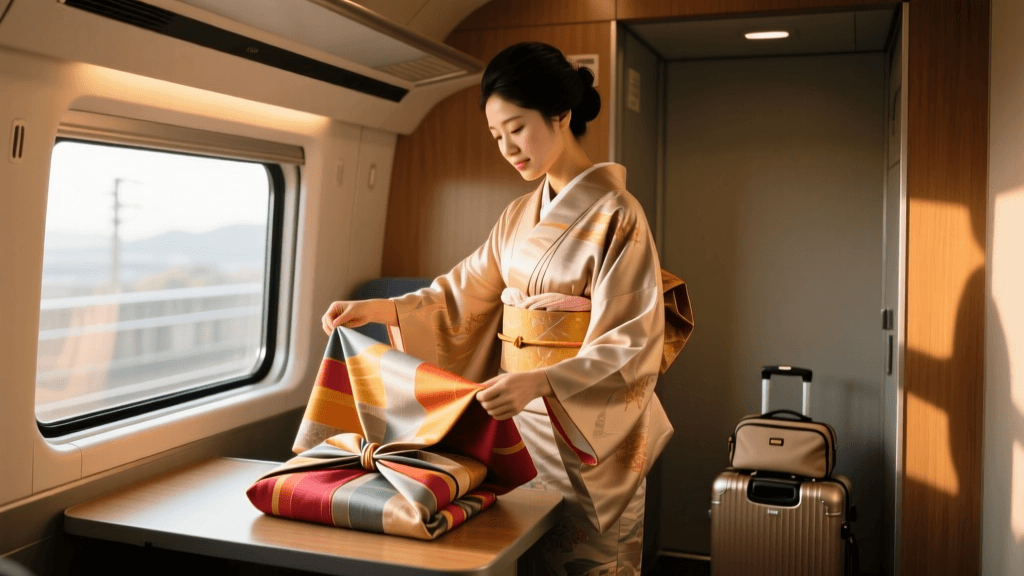
- Furoshiki (Wrapping Cloth): A large, high-density rayon or silk furoshiki is essential for bundling your wrapped kimono, obi, and accessories into a single, secure package that can be easily placed into a carry-on.
- Portable Handheld Steamer: Creases are inevitable during travel. A compact, dual-voltage travel steamer (such as the latest 2026 models from Panasonic or Jiffy) is crucial for gently releasing wrinkles from the silk without applying the damaging direct heat of a traditional iron.
- Collar Shields and Han-Eri Spares: The han-eri (decorative collar) takes the brunt of skin contact and makeup transfer. Pack at least three spare embroidered or plain white collars and modern biodegradable collar shields to maintain hygiene on the road.
- Desiccant Packs: Silica gel packets designed for textile conservation should be tucked into the corners of your tatoshi to regulate humidity, especially when traveling through Japan's humid summer months or transitioning between climate-controlled airplane cabins.
Mastering the Hon-Tatami: Folding for Transit
The way you fold your garment dictates its condition upon arrival. The standard folding method, known as hon-tatami, is designed to align the seams and distribute the fabric's weight evenly, preventing permanent creases in the miyatsukuchi (side openings) and the delicate okumi (front panels).
Step-by-Step Hon-Tatami Guide
- Preparation: Lay the kimono face down on a clean, dry tatami mat or a dedicated cotton folding sheet. Ensure the environment is free of dust and pet hair.
- Folding the Front Panels: Fold the left okumi (front panel) back onto the main body, aligning the outer edge with the center seam. Repeat with the right side, ensuring the collar forms a neat, symmetrical V-shape.
- Sleeve Management: Fold the sleeves inward over the back panel. The tamoto (sleeve pouch) should be flattened carefully to avoid trapping air, which can cause shifting during transit.
- The Final Folds: Fold the bottom hem up to meet the collar, then fold the garment in half or thirds depending on the length of your tatoshi paper. The final package should be a neat, flat rectangle.
For the obi, avoid folding it in half, as this creates a permanent crease in the stiff core. Instead, roll the obi loosely from one end to the other, wrapping it in a separate piece of acid-free paper or a soft cotton cloth to protect the metallic threads and brocade weaves from snagging.
Transit Strategies: From Shinkansen to Long-Haul Flights
Navigating transit networks requires spatial awareness and a strategic approach to luggage storage. The Victoria and Albert Museum's textile conservation guidelines emphasize that minimizing friction and avoiding extreme temperature fluctuations are paramount when moving historical and delicate textiles. Below is a strategic matrix for transporting your kimono across different modes of transit in 2026.
| Transit Mode | Storage Strategy | Key Precaution |
|---|---|---|
| Shinkansen (Bullet Train) | Overhead rack in tatoshi/furoshiki bundle | Never place heavy hard-shell luggage on top of your kimono bundle. Board early to secure rack space. |
| Airplane (Long-Haul) | Carry-on garment folder or front seat | Keep away from direct AC vents to prevent condensation. Use a padded garment folder to prevent crushing. |
| Taxi / Rideshare | Draped over arm or placed on lap | Prevent seatbelt friction on the obi. Avoid placing the bundle on leather seats which can cause color transfer. |
| Local Buses / Subways | Secured in a dedicated canvas tote | Avoid placing the bag on the floor. Keep the bundle elevated and away from wet umbrellas or rainy windows. |
When flying internationally, modern 2026 smart-luggage often features dedicated, padded garment compartments that lay completely flat when the suitcase is opened. Utilizing these compartments, lined with your acid-free tatoshi, provides a rigid shell of protection against the rough handling of checked baggage, though carrying your most valuable heirloom silks in the cabin is always the recommended best practice.
Footwear Transport: Protecting Zori and Tabi
A kimono ensemble is incomplete without its footwear, yet zori (sandals) and tabi (split-toe socks) present their own packing challenges. Traditional lacquered or bamboo-weave zori can easily scratch or warp if crushed. In 2026, specialized footwear inserts and rigid, cylindrical shoe tubes are available specifically for traditional Japanese footwear. Wrap each sandal in a soft flannel bag, place them sole-to-sole to protect the delicate top surfaces, and secure them in a rigid container. For tabi, which are notoriously difficult to keep crisp, use specialized tabi shapers or simply roll them gently with a piece of tissue paper inside the toe split to maintain their structured shape without stretching the cotton or stretch-knit fabric.
On-the-Go Maintenance and Emergency Care
Even with meticulous packing, wearing a kimono on the go exposes it to the elements, culinary mishaps, and environmental pollutants. Building a compact emergency maintenance kit is vital for the traveling enthusiast.
Stain Management
If you spill matcha, soy sauce, or soup broth on your silk kimono, do not rub the stain. Rubbing drives the pigment deeper into the silk fibers and damages the weave. Instead, use a clean, dry microfiber cloth to gently blot the moisture. For oil-based stains, a small vial of traditional benzine (purified petroleum solvent) or a modern, silk-safe enzymatic spot cleaner can be applied sparingly with a cotton swab. Always test any cleaner on an inconspicuous area, such as the inside of the tamoto, first.
Weatherproofing and Rain Gear
Silk and water are a disastrous combination. If rain is in the forecast, traditional amago (kimono raincoats) made from modern, breathable, water-resistant textiles are widely available in 2026 and pack down to the size of a standard smartphone. Additionally, carrying a lightweight, UV-blocking, and water-repellent umbrella serves the dual purpose of protecting your garment from sudden downpours and shielding delicate dyes from harsh, direct sunlight, which can cause rapid fading.
The Mid-Day Refresh
After a long day of walking through Kyoto's historic districts or attending a formal tea ceremony, your kimono will have absorbed ambient moisture and odors. Upon returning to your accommodation, immediately remove the garment and hang it on a specialized, wide-shouldered kimono hanger (emono-kake) in a well-ventilated room. Do not use standard wire or thin wooden hangers, as they will create permanent shoulder bumps. Allow the garment to air out for at least twelve hours before folding it back into its tatoshi for the next leg of your journey.
Embracing the Journey
Traveling with a kimono in 2026 is an exercise in mindfulness and cultural respect. It bridges the gap between historical preservation and modern mobility, allowing you to experience the profound sensory weight and elegance of traditional Japanese fashion wherever your travels take you. By investing in the proper archival packing materials, mastering the hon-tatami fold, and preparing for the rigors of transit, you ensure that your garments remain pristine, ready to be worn and admired for generations to come. The journey of a thousand miles begins with a perfectly folded sleeve.