Kimono Preservation & Archival Storage Guide for 2026
The Foundations of Kimono Preservation in 2026
As we navigate the textile preservation landscape in 2026, the intersection of traditional Japanese wisdom and modern archival science has never been more vital for collectors and museum curators. Kimono, with their intricate silk weaves, metallic threads, and natural dyes, are highly susceptible to environmental fluctuations, light damage, and biological pests. Proper collection management is no longer just about keeping garments clean; it is about creating a holistic, sustainable micro-environment that ensures these masterpieces survive for future generations.
Today's preservation protocols emphasize non-toxic, chemically stable materials and smart environmental monitoring. Whether you are managing a private archive of vintage Meiji-era silk or a contemporary collection of hand-woven tsumugi, understanding the precise requirements for kimono storage is essential. This comprehensive guide outlines the definitive standards for kimono storage preservation and collection management in 2026.
Mastering Tatou Paper and the Hon-Datami Folding Method
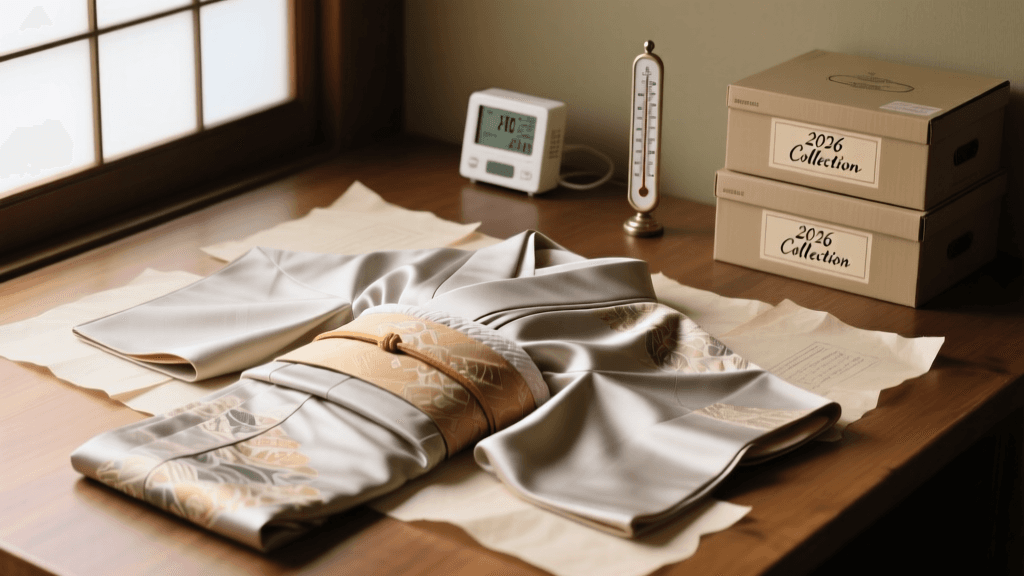
The cornerstone of Japanese garment storage is tatoushi (tatou paper), a specialized wrapping paper designed to protect textiles from dust, light, and acidic off-gassing. In 2026, the industry standard for high-end kimono preservation is unbleached, acid-free mulberry washi. Unlike standard archival tissue, premium tatou paper possesses a unique tensile strength and slight sizing that prevents it from tearing during the folding process while remaining entirely breathable.
The folding technique used is known as hon-datami (standard folding). This method aligns the seams of the kimono to distribute stress evenly across the garment, preventing permanent creases that can shatter aged silk fibers. When folding heavily embroidered garments or pieces with metallic surihaku (gold leaf application), archivists in 2026 utilize yofu—small, acid-free cotton padding rolls—placed inside the folds to cushion the threads and prevent metal oxidation caused by friction.
Climate Control: IoT Sensors and Micro-Environments
Silk is a protein fiber that reacts violently to humidity fluctuations. According to guidelines maintained by the Library of Congress, textile environments must avoid rapid shifts in moisture to prevent the physical expansion and contraction of fibers, which leads to structural fatigue.
In 2026, private collectors and institutions rely on integrated IoT (Internet of Things) micro-sensors placed directly inside storage cabinetry. These wireless, low-emission data loggers track temperature and relative humidity (RH) in real-time, sending alerts to mobile devices if parameters breach safe thresholds.
- Optimal Temperature: 18°C to 20°C (64°F to 68°F). Lower temperatures slow chemical degradation but must be balanced against the risk of condensation.
- Optimal Relative Humidity: 50% to 55%. This specific range prevents the silk from becoming brittle (which occurs below 40%) and inhibits mold growth (which thrives above 65%).
- Light Exposure: 0 lux. Kimono must be stored in total darkness, as UV and even ambient visible light will irreversibly fade natural dyes like safflower red and indigo.
According to the Canadian Conservation Institute, maintaining a stable relative humidity is the single most critical factor in preventing silk degradation and dye migration in historic textiles.
Sustainable Kiri Tansu and Pest Management Strategies
Traditionally, kimono are stored in tansu (chests) made from kiri (Paulownia wood). Kiri is highly prized because it naturally regulates humidity, swelling to seal the drawers when moisture rises and shrinking to allow airflow when the environment is dry. Furthermore, kiri contains natural compounds that deter insects.
However, with increased environmental awareness in 2026, the harvesting of wild paulownia is heavily regulated. Modern collectors now source tansu crafted from sustainably farmed plantation kiri. Crucially, the interior of these chests must remain unfinished or be treated only with natural kakishibu (fermented persimmon tannin). Synthetic varnishes and polyurethane finishes emit volatile organic compounds (VOCs) that can yellow silk and degrade metallic threads over time.
For pest management, chemical mothballs and naphthalene are strictly prohibited in modern archives due to their toxicity and the acidic residues they leave on fibers. Instead, 2026 best practices involve:
- Pheromone Traps: Placed in the corners of storage rooms to monitor for the presence of webbing clothes moths and carpet beetles without introducing toxins.
- Anoxic Treatment: If an infestation is suspected, the affected kimono is sealed in an oxygen-deprived environment using argon gas or specialized oxygen scavengers, safely eliminating pests at all life stages without chemical contact.
- Red Cedar Blocks: Used in the broader storage room (never touching the garments directly) to provide a mild, natural aromatic deterrent.
Digital Collection Management for Private Archivists
Managing a kimono collection requires meticulous cataloging. In 2026, the integration of inert, textile-safe RFID (Radio Frequency Identification) threads has revolutionized collection management. Unlike older adhesive barcode stickers that damaged delicate linings, modern RFID micro-threads are temporarily basted into the eri (collar) or the lining of the obi, allowing collectors to scan and locate specific garments within a crowded storage facility without physically handling them.
Database platforms like CollectionSpace and specialized textile CMS software allow archivists to log the garment's provenance, weave type, dye analysis, and condition reports. High-resolution, color-calibrated photography is uploaded alongside the digital record, minimizing the need to unbox and expose the physical garment to light during research or appraisal processes.
Archival Storage Materials Comparison (2026 Standards)
Selecting the right materials for wrapping, padding, and boxing is a critical decision. The American Institute for Conservation (AIC) Wiki provides extensive resources on material compatibility. Below is a comparison of the most common storage materials used for kimono today.
| Material | Best Use Case | Pros | Cons | 2026 Cost Estimate |
|---|---|---|---|---|
| Unbleached Mulberry Tatou Paper | Primary wrapping for all silk and woven kimono | Breathable, acid-free, traditional, high tensile strength | Requires specific folding knowledge, susceptible to tearing if wet | $12 - $18 per large sheet |
| Archival Tyvek Envelopes | Storing fragmented textiles or heavily degraded obi | Water-resistant, extremely durable, pest-proof | Non-breathable, can trap moisture if sealed improperly | $8 - $15 per custom envelope |
| Washed Unbleached Muslin | Outer dust covers for garments on padded hangers | Washable, reusable, excellent dust barrier | Must be washed in pH-neutral detergent, heavy | $25 - $40 per yard |
| Acid-Free Corrugated Boards | Base support for boxed flat storage | Rigid support, prevents sagging in large archival boxes | Bulky, takes up valuable drawer space in tansu | $10 - $20 per board |
Annual Maintenance and Inspection Schedules
Even in a perfectly controlled environment, a kimono collection requires a disciplined maintenance schedule. In 2026, conservationists recommend the following annual protocol, ideally performed during the dry, cool days of late autumn:
- Visual Inspection: Carefully unwrap each garment to check for early signs of foxing (brown spots), dye migration, or metallic thread tarnishing.
- Airing Out: Allow the kimono to rest in a dark, climate-controlled room for 24 to 48 hours. This allows any trapped micro-climates or residual odors to dissipate.
- Refolding: Refold the garment along slightly different lines than the previous year. This prevents permanent stress on the exact same silk fibers and threads, a practice known as 'rotating the fold'.
- Material Replacement: Inspect tatou paper for any signs of acidity or discoloration. While high-quality washi can last decades, it should be replaced if it becomes brittle or stained.
Conclusion
Preserving a kimono collection in 2026 requires a delicate balance of honoring historical methodologies and embracing modern conservation science. By utilizing premium acid-free tatou paper, maintaining strict IoT-monitored climate parameters, and adopting sustainable pest management strategies, collectors can ensure that the breathtaking artistry of Asian textile traditions remains vibrant and intact. Proper collection management is not merely an act of storage; it is a profound commitment to cultural stewardship, safeguarding the intricate narratives woven into every silk thread for centuries to come.