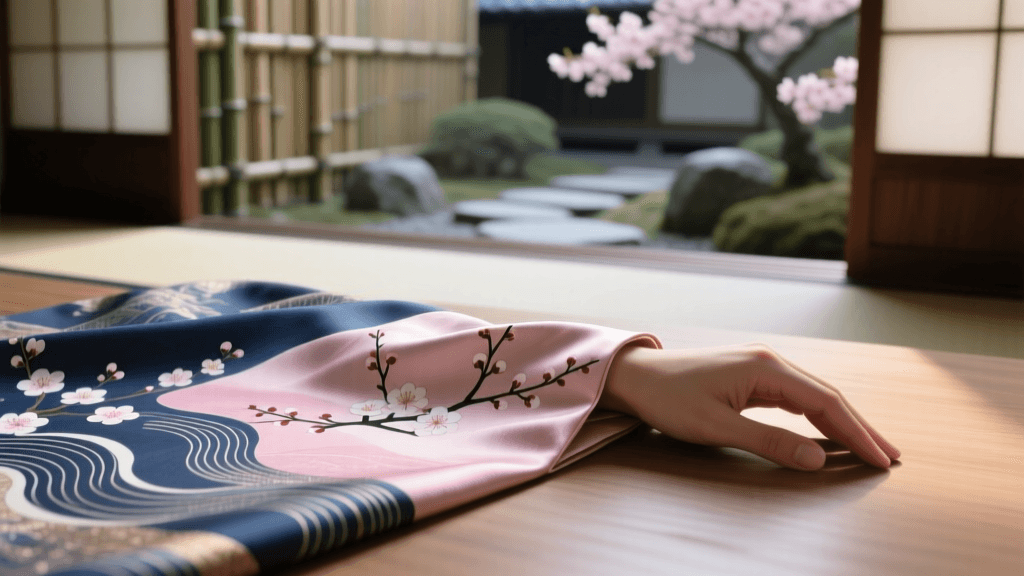
Traditional Kimono Tanmono Construction: Zero-Waste 2026 Guide
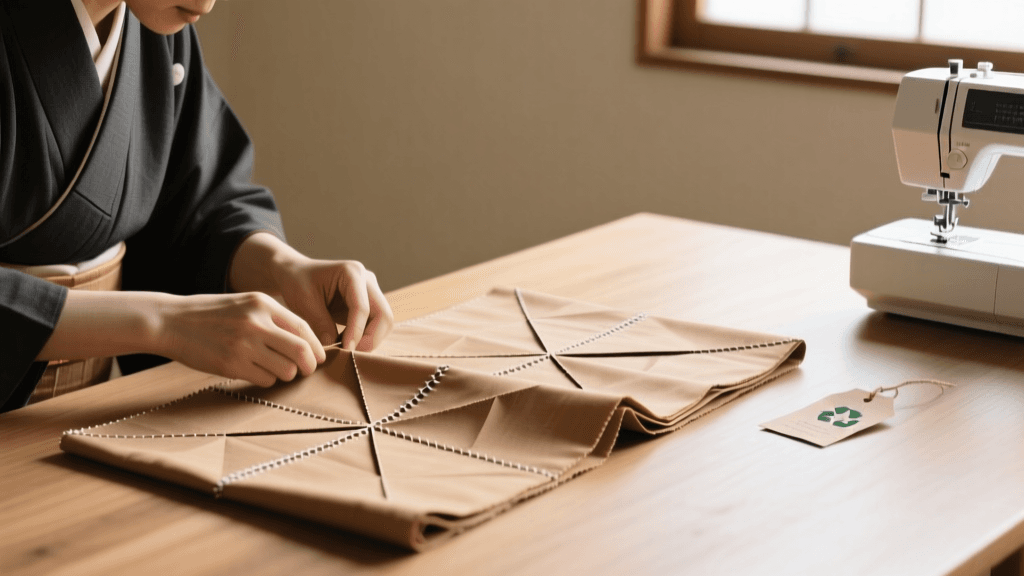
The Philosophy of the Tanmono: A Masterclass in Zero-Waste Design
Long before the modern sustainability movement redefined the global apparel industry, traditional Asian dress traditions had already perfected the art of zero-waste garment construction. At the heart of this sartorial philosophy is the Japanese kimono, a garment whose very existence is dictated by the tanmono—a standard bolt of woven fabric. Unlike Western tailoring, which aggressively cuts curves into wide textiles and discards the remnants, the kimono is a triumph of geometric efficiency. Every single inch of the tanmono is utilized in the final garment, leaving absolutely no scrap fabric behind.
As the global fashion industry faces stricter textile waste regulations and a massive consumer pivot toward circularity in 2026, the ancient construction techniques of the kimono offer profound lessons for contemporary designers. By examining the straight-line cutting, specialized stitching, and modular reconstruction methods inherent in kimono making, we can uncover a blueprint for the future of sustainable fashion. According to The Metropolitan Museum of Art, the kimono's T-shaped, straight-lined construction is not merely an aesthetic choice, but a deeply ingrained cultural approach to respecting the material integrity of the textile.
Dimensions and Material Yield: The Anatomy of the Bolt
To understand kimono construction, one must first understand the canvas. A standard tanmono for a women's kimono is woven to precise, unvarying dimensions: approximately 14 to 15 inches (36 to 38 centimeters) in width and 12 to 13 yards (11 to 12 meters) in length. This specific width is historically tied to the reach of the traditional handloom and the width of the silk cocoon threads used.
The entire bolt is cut into eight primary rectangular panels:
- Migoro (Main Body): Two panels that form the front and back of the torso.
- Sode (Sleeves): Two panels that create the deep, draping sleeves.
- Okumi (Front Overlaps): Two narrower panels cut from the remaining fabric, attached to the front edges to create the overlapping closure.
- Eri (Collar): One panel for the main collar, and a smaller secondary panel for the inner collar (kake-eri).
Because the width of the fabric dictates the maximum width of the garment's panels, the kimono is inherently modular. If a wearer requires a wider fit, the seams are simply let out, or additional fabric strips are added, rather than cutting a completely new curved pattern. This respect for the woven edge (the selvedge) ensures that the fabric never frays and eliminates the need for hemming or overlocking the raw edges inside the garment.
Straight-Line Cutting and the Absence of Curves
The most striking difference between Asian traditional garment construction and Western tailoring is the complete absence of curved seams. Western pattern drafting relies on darts, princess seams, and curved armholes to mold flat fabric to the three-dimensional contours of the human body. The kimono, conversely, embraces the two-dimensionality of the cloth.
When laid flat, a kimono forms a perfect geometric cross. The sleeves are attached in straight lines, and the body panels are joined with simple vertical seams. The shaping of the garment does not occur during the cutting phase; rather, it occurs during the kitsuke (the art of dressing). The wearer wraps, folds, and binds the rectangular panels around the body using a series of ties and the obi (sash), creating a customized, three-dimensional silhouette that accommodates fluctuations in body weight and shape over a lifetime.
Essential Stitching Techniques in Kimono Construction
The sewing techniques used to assemble the tanmono panels are specifically designed for longevity, modularity, and eventual deconstruction. The seams are not meant to be permanent in the way a Western suit is; they are meant to be resilient yet reversible.
Shitsuke (Basting) and Kakehari
Before the final stitching, panels are meticulously aligned using shitsuke (long basting stitches). The final running stitch, known as kakehari, is executed with a specific tension that allows the seam to stretch slightly with the wearer's movement but remain secure. In 2026, modern sustainable ateliers are adopting this variable-tension hand-stitching to replace rigid, thread-shredding machine locks, significantly extending the lifespan of delicate natural fibers like peace silk and organic ramie.
Kuke (Blind Stitching)
The hems of the sleeves (sodeguchi) and the bottom of the garment (suso) are finished using kuke, a nearly invisible blind stitch. Because the selvedge edges are folded inward, the kuke stitch catches only a single thread of the fabric's weave, ensuring that no stitching is visible on the exterior of the garment. This technique preserves the unbroken visual flow of the textile's dyed or woven pattern.
Chikara-nuno (Reinforcement Cloth)
Instead of using heavy interfacing or synthetic fusing—which degrades over time and renders garments unrecyclable—traditional kimono makers use chikara-nuno. This is a lightweight, tightly woven silk or hemp reinforcement cloth applied to high-stress areas like the collar and the underarm openings (miyatsukuchi). This natural reinforcement method is seeing a massive resurgence in 2026 among zero-waste designers looking to eliminate plastic-based interfacings from their supply chains.
Comparative Analysis: Tanmono vs. Western Tailoring
To fully appreciate the engineering of the kimono, it is helpful to contrast its construction methodology with standard Western apparel manufacturing.
| Feature | Tanmono (Kimono) Construction | Standard Western Tailoring |
|---|---|---|
| Pattern Shape | Straight lines, rectangles, T-shape | Curved lines, darts, contoured armholes |
| Fabric Waste | Zero (100% of the bolt is utilized) | 15% to 25% waste (off-cuts discarded) |
| Edge Finishing | Selvedge edges folded inward; no overlocking | Raw edges serged, zigzagged, or bound |
| Fit Adjustments | Seams let out or taken in; modular panels | Requires complex recutting or darts |
| End-of-Life | Deconstructed, washed, rewoven, or repurposed | Difficult to recycle due to mixed materials |
Arai-Hari: The Ultimate Circular Fashion Practice
Perhaps the most revolutionary aspect of kimono construction is the arai-hari (wash and stretch) process. Historically, silk could not be submerged in water without losing its shape and luster. Because the kimono is constructed entirely of straight, easily accessible seams, the garment can be completely taken apart into its original eight rectangular panels.
These panels are then gently washed, stretched on wooden frames to dry, and pressed flat. Once restored to their pristine, bolt-like state, the panels can be sewn back together into a brand-new kimono, rearranged to hide stains or fading, or passed down to a smaller family member. This practice is the historical embodiment of the circular economy. As highlighted by the Ellen MacArthur Foundation, transitioning to circular fashion systems requires designing products that can be easily disassembled and regenerated—a principle the kimono has followed for centuries.
Zero-Waste Construction in 2026 Sustainable Fashion
In 2026, the intersection of traditional Asian dress techniques and modern technology has birthed a new wave of zero-waste design. Contemporary fashion houses are utilizing 3D body scanning not to cut curved patterns, but to calculate the exact geometric folding required to wrap rectangular, tanmono-style panels around diverse body types without wasting a single centimeter of fabric.
Furthermore, the modular nature of the kimono's okumi and migoro panels is inspiring modular streetwear and workwear brands. By utilizing straight-line construction and chikara-nuno reinforcement, these brands are creating garments that consumers can easily repair at home, replace individual panels on, or completely disassemble for textile recycling. The integration of smart-textiles into straight-line seams also allows for easier extraction of electronic threads at the garment's end-of-life, a major hurdle in current e-waste fashion initiatives.
Conclusion
The construction of the traditional Japanese kimono is far more than a historical artifact; it is a masterclass in sustainable engineering. The tanmono bolt dictates a zero-waste philosophy that honors the labor of the weaver and the integrity of the fiber. By abandoning the curved, wasteful cutting methods of fast fashion and embracing the geometric, modular, and reversible techniques of Asian dress traditions, the modern apparel industry can find a viable path toward true circularity. As we look at the fashion landscape of 2026 and beyond, the ancient straight line remains the most revolutionary shape in sustainable design.