Mastering Kimono Tanmono Construction: Zero-Waste Cutting in 2026
Introduction to Tanmono and Zero-Waste Construction
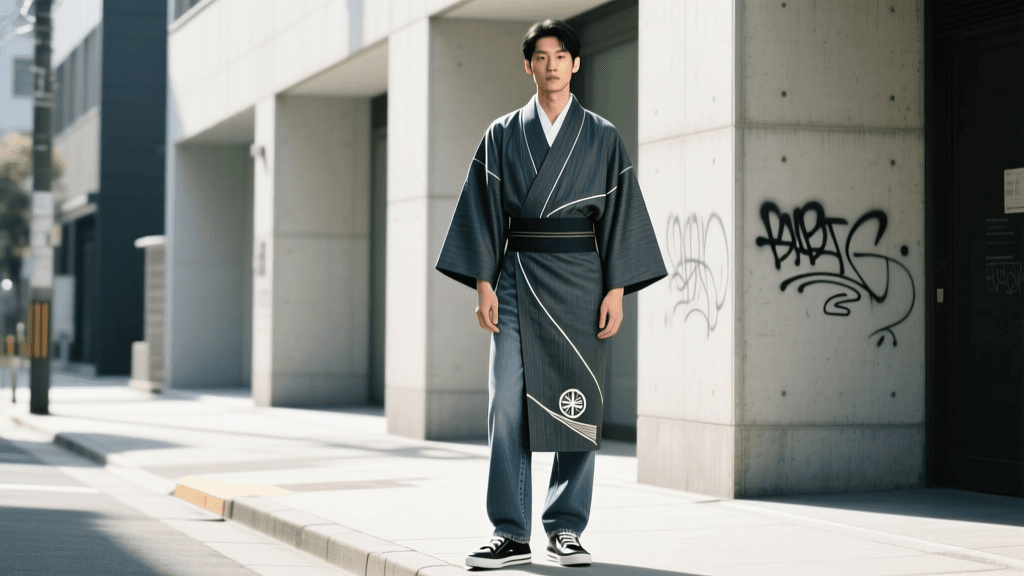
In the contemporary landscape of 2026, the global fashion industry is aggressively pivoting toward sustainable, zero-waste methodologies. Yet, long before modern eco-consciousness became a trend, traditional Asian garment construction had already perfected the art of waste-free design. At the forefront of this heritage is the Japanese kimono and its foundational textile format: the tanmono. Unlike Western tailoring, which relies on complex curved patterns that leave behind significant fabric scraps, the kimono is constructed using a system of straight-line cutting that utilizes nearly 100% of the textile. For today's sewists, patternmakers, and sustainable fashion designers, understanding the tanmono system offers a profound masterclass in zero-waste flat-pattern construction.
The genius of the kimono lies not just in its aesthetic elegance, but in its mathematical precision and respect for the material. According to the Victoria and Albert Museum's Asian collections, the structural integrity and longevity of traditional Japanese dress are directly tied to this standardized bolt system, which allows garments to be easily deconstructed, cleaned, and reassembled over generations. In 2026, as we seek to minimize textile waste, revisiting these ancestral techniques provides actionable, scalable solutions for modern wardrobe creation.
The Anatomy of a Tanmono Bolt
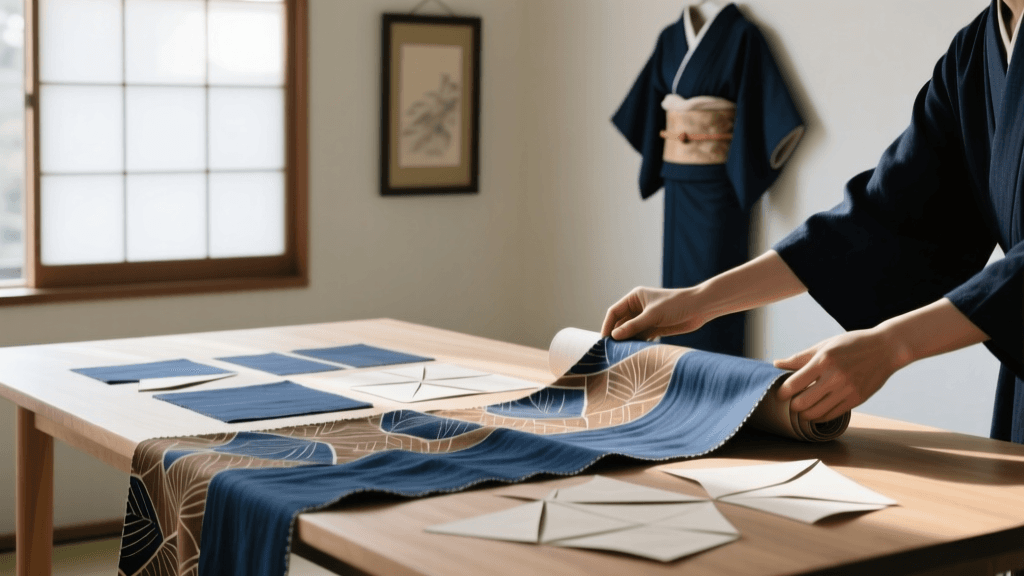
To understand kimono construction, one must first understand the canvas. A tanmono is a standardized bolt of fabric woven specifically for kimono making. Historically constrained by the width of the traditional backstrap loom, a standard tanmono measures approximately 36 to 38 centimeters (about 14 to 15 inches) in width and roughly 12 meters (about 13 yards) in length. This specific dimension is not arbitrary; it is precisely calculated to yield exactly one adult-sized kimono with minimal leftover material.
Because the fabric is so narrow, the kimono pattern does not require large, sweeping curved cuts. Instead, the garment is composed of long, rectangular panels. This straight-grain cutting ensures that the fabric's structural integrity remains uncompromised, and it eliminates the awkward, unusable offcuts that plague modern Western pattern drafting. When working with standard 115cm or 150cm wide fabrics available in 2026, sewists must adapt by cutting strips to mimic the tanmono width, thereby preserving the zero-waste philosophy of the original technique.
Flat-Pattern Cutting: The Eight-Piece Kimono
The basic kimono (specifically the standard hitoe or unlined kimono) is constructed from eight primary rectangular panels. These pieces are sewn together using straight seams, creating a T-shaped garment that wraps around the body. Below is a breakdown of the core components and their traditional dimensions, adapted for modern 2026 sizing standards.
| Component Name | Function | Traditional Dimensions (Approx.) | 2026 Modern Adaptation Notes |
|---|---|---|---|
| Migoro (Body Panels) | Forms the main front and back body of the garment. | 36cm wide x 12m long (cut into two sections) | Can be widened to 40cm for contemporary oversized fits. |
| Sode (Sleeves) | Creates the iconic hanging sleeves. | 36cm wide x variable length (up to 114cm for furisode) | Standardized to 50cm drop for modern daily wearability. |
| Okumi (Overlaps) | Added to the front edges to create the overlapping closure. | 15cm to 23cm wide | Crucial for securing the wrap; do not omit in modern drafts. |
| Eri (Collar) | The long, folded band that forms the neckline. | 115cm long x 15cm wide (folded) | Interfacing is recommended in 2026 for softer modern linens. |
Because these pieces are entirely rectangular, the cutting process is remarkably efficient. The sleeves are attached to the body panels with a straight seam, leaving the underarm area open (the miyatsukuchi). This open underarm gusset not only provides ventilation but also allows the garment to drape fluidly over the body's curves without the need for complex darts or princess seams.
Seam Allowances and the Art of the Tuck
One of the most revolutionary aspects of kimono construction is its approach to seam allowances and hemming. In Western garment construction, seam allowances are typically trimmed, graded, and finished with sergers to prevent fraying. Hems are cut to the exact desired length, and any future alterations require complex reconstruction. The kimono rejects this permanence.
In traditional tanmono construction, seam allowances are exceptionally wide—often 2 to 3 centimeters—and are never trimmed. Instead, they are folded inward and enclosed within the seam itself. This means the fabric's selvedge edges are often left intact and visible inside the garment, acting as a natural finish that prevents fraying without any additional stitching. Furthermore, the hem of a kimono is not cut to fit the wearer's exact height. Instead, the garment is made significantly longer than necessary, and the excess fabric is folded up at the waist to create the ohashori (waist tuck), which is then hidden beneath the obi (sash).
This built-in adjustment mechanism means a single kimono can be worn by individuals of varying heights, and as the wearer's body changes over time, the garment can be easily adjusted. Research highlighted by the Textile Society of America emphasizes that this inherent flexibility is a cornerstone of garment longevity, a concept that modern slow-fashion advocates are aggressively adopting in 2026.
Modern 2026 Adaptations for Home Sewists
For contemporary makers looking to integrate tanmono techniques into their 2026 sewing practice, the primary challenge is sourcing fabric. True silk tanmono bolts are expensive and difficult to procure outside of specialized Japanese suppliers. However, the underlying geometry can be easily applied to modern textiles.
Step-by-Step: Drafting Your First Tanmono-Style Garment
- Select the Right Textile: Opt for medium-weight organic linen or hemp blends. In 2026, high-quality GOTS-certified linen averages $28 to $35 per yard. You will need approximately 12 yards of 45-inch wide fabric to mimic the yardage of a traditional bolt.
- Cut the Strips: Instead of laying out a complex paper pattern, use a 45mm rotary cutter and a long acrylic quilting ruler to cut your fabric into 38cm wide strips, parallel to the selvedge. This preserves the straight grain and leaves long, usable strips of the remaining fabric for accessories like tote bags or scrunchies.
- Utilize the Selvedge: When sewing the migoro (body panels) together, align your seams so that the selvedge edges face inward. Use a flat-felled seam or a French seam to enclose the raw edges, mimicking the traditional enclosed allowance.
- Implement the Ohashori: Do not cut your hem. Sew a deep 15cm hem allowance. When wearing the garment, use a modern elastic korin belt (widely available in 2026 for around $15) to secure the waist tuck before tying your sash.
Environmental Impact and the Future of Heritage Techniques
The transition toward zero-waste fashion is no longer a niche interest; it is an industry imperative. The traditional Asian approach to garment construction proves that sustainability and elegance are not mutually exclusive. By embracing the straight-line cutting of the tanmono, modern designers can drastically reduce the 15% to 20% of textile waste typically generated during the cutting phase of Western apparel manufacturing.
As we move further into 2026, the integration of heritage techniques like the kimono's flat-pattern construction into mainstream fashion education is vital. It teaches makers to view fabric not as a disposable medium to be carved away, but as a precious, continuous plane to be folded, wrapped, and respected. Whether you are drafting a traditional silk kimono or a modern, zero-waste linen wrap coat, the mathematical brilliance of the tanmono remains a timeless guide to sustainable, purposeful design.