Traditional Chinese Footwear 2026: Cloud Shoes & Boots Guide
The 2026 Revival: Xin Zhongshi and the Return of Heritage Footwear
The global fashion landscape in 2026 has witnessed an unprecedented embrace of the Xin Zhongshi (New Chinese Style) movement. While previous seasons focused heavily on the Mamianqun (horse-face skirt) and Song-style outerwear, the 2026 sartorial conversation has decisively shifted to the foundation of the outfit: traditional Chinese footwear. From the elegant, upturned toes of Yunxie (cloud shoes) to the structured warmth of Xuezi (traditional boots), heritage footwear is no longer relegated to museum displays or theatrical stages. Today, master artisans and contemporary design houses are collaborating to produce historically accurate yet ergonomically refined footwear that anchors the modern wardrobe. Understanding the nuances, materials, and styling potential of these garments is essential for any enthusiast of Asian traditions looking to build an authentic, culturally resonant closet.
Yunxie (Cloud Shoes): Stepping on Embroidered Clouds
Yunxie, literally translating to 'cloud shoes,' are perhaps the most iconic of all traditional Chinese footwear. Characterized by their distinctive upturned toes (qiaotou) and flat, multi-layered soles, these shoes were historically worn by both men and women across various dynasties, reaching a zenith of artistic expression during the Ming and Qing eras. According to the Metropolitan Museum of Art's Heilbrunn Timeline, the intricate embroidery and silk-weaving techniques of the Qing dynasty heavily influenced the decorative motifs found on elite footwear, incorporating symbols of longevity, bats for good fortune, and peonies for wealth.
In 2026, contemporary Yunxie retain these auspicious motifs but utilize advanced, cruelty-free peace silk and reinforced vegan-leather soles for urban durability. The upturned toe, originally designed to prevent the hem of long robes from catching, now serves as a striking silhouette breaker when paired with modern wide-leg tailoring or cropped Hanfu skirts. The craftsmanship involves a meticulous process of stacking and stitching dozens of layers of cotton cloth to form the sole, a technique known as 'nadi.' This traditional method provides surprising shock absorption and flexibility, rivaling modern sneaker technology, despite the lack of a molded heel cup. Artisans in Suzhou are currently leading the 2026 market, offering bespoke Yunxie featuring Su embroidery that takes over forty hours to complete per pair, with prices reflecting this intense labor, typically ranging from $280 to $450 USD.
Xuezi (Traditional Boots): Winter Elegance and Warmth
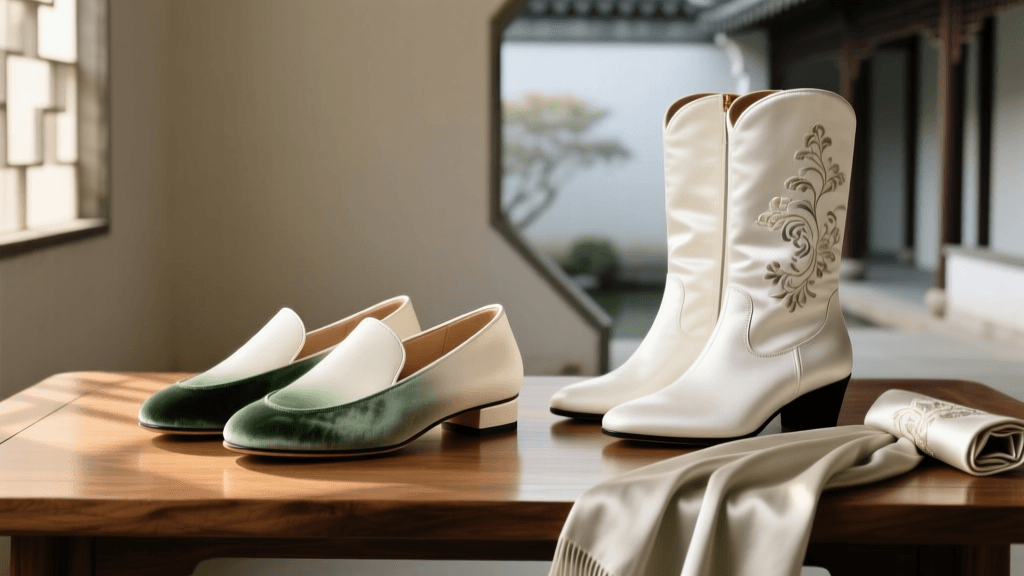
As the autumn and winter seasons approach, the focus transitions to Xuezi, the traditional Chinese boot. Unlike the delicate Yunxie, Xuezi are robust, often crafted from heavy silk velvets, Zhangzhou satin, or gambiered Canton gauze (Xiangyunsha). Historically, these boots featured thick, white, multi-layered cotton soles that elevated the wearer above the mud and snow of imperial courtyards. The Bata Shoe Museum highlights how traditional Asian footwear often prioritized the preservation of the textile upper and the social status it conveyed over the anatomical contouring seen in Western shoemaking.
In 2026, the Xuezi has been brilliantly reimagined for the modern commuter. Artisans are integrating hidden thermal linings and flexible rubber outsoles that mimic the visual profile of the traditional white cotton sole while providing the grip necessary for wet city streets. The structured ankle support of the historical Xuezi remains, but modern iterations feature subtle ergonomic arch contouring and side-zipper closures concealed beneath traditional fabric knot buttons (pankou). These boots have become a staple in the 2026 winter capsule wardrobe, offering a sophisticated alternative to standard leather Chelsea boots.
2026 Buyer’s Guide: Comparing Traditional and Adapted Footwear
Navigating the market requires an understanding of the different categories available today. Below is a comparison of the primary styles dominating the 2026 Xin Zhongshi footwear market.
| Footwear Style | Primary Materials (2026) | Best Use Case | Average Price Range (USD) |
|---|---|---|---|
| Yunxie (Cloud Shoes) | Peace Silk, Su Embroidery, Cotton Nadi Sole | Spring/Summer, Formal Hanfu, Gallery Events | $180 - $450 |
| Xuezi (Velvet Boots) | Silk Velvet, Xiangyunsha, Thermal Lining | Autumn/Winter, Office Wear, Street Style | $220 - $500 |
| Xin Zhongshi Sneakers | Song Brocade Accents, EVA Foam, Leather | Daily Commute, Travel, Casual Outings | $90 - $160 |
| Platform Opera Boots | Satin, Cork Platforms, Rubber Treads | Avant-Garde Fashion, Runway, Evening Wear | $300 - $650 |
Sizing, Fit, and the Modern Orthotic Hack
One of the most common challenges for Western buyers and those accustomed to modern athletic shoes is the fit of traditional Chinese footwear. Historically, shoes like the Yunxie and Xuezi were constructed on a flat last with zero arch support and a wide toe box. While the wide toe box is excellent for natural toe splay, the flat sole can cause plantar fatigue during long days of walking on hard urban surfaces.
The prevailing styling and comfort hack in 2026 is the 'orthotic upgrade.' When purchasing authentic, artisanal Yunxie or flat-soled Xuezi, experts recommend sizing up by a half or full size. This deliberate sizing choice allows you to insert a custom-molded or high-quality over-the-counter arch support insole. Because traditional uppers are often made of soft, unstructured silk or velvet, they easily accommodate the extra volume of an insole without distorting the exterior silhouette. For Xuezi boots, ensure the calf circumference is measured carefully, as traditional designs favor a snug, tailored fit around the ankle and lower calf to maintain the sleek, vertical line of the garment.
Care and Maintenance of Silk and Brocade Footwear
Investing in heritage footwear requires a commitment to proper maintenance, particularly when dealing with delicate natural fibers. Xiangyunsha (gambiered Canton gauze), a highly prized material for premium Xuezi boots, is dyed using a centuries-old process involving yam juice and river mud. This fabric is naturally water-resistant and antibacterial, but it is highly sensitive to alkaline substances.
- Cleaning: Never use standard laundry detergents or harsh soaps on Xiangyunsha or embroidered silk. Use a pH-neutral, silk-specific cleaner and spot-test on an inconspicuous area. For mud or dust, allow it to dry completely before gently brushing it away with a soft-bristled horsehair brush.
- Drying: Avoid direct sunlight and artificial heat sources. The UV rays can degrade the natural mud-dye finish of Xiangyunsha and cause silk embroidery threads to become brittle. Always air-dry in a shaded, well-ventilated area.
- Storage: Insert untreated cedar shoe trees into your Xuezi boots to maintain their structural integrity and absorb moisture. For Yunxie, stuff the toe box with acid-free tissue paper to preserve the iconic qiaotou (upturned toe) shape. Store all silk footwear in breathable cotton dust bags, never in sealed plastic containers, to prevent mold and fiber degradation.
Styling Heritage Footwear for the Modern Wardrobe
The beauty of the 2026 Xin Zhongshi movement lies in its fluidity; it does not demand head-to-toe historical reenactment, but rather a thoughtful integration of heritage pieces into contemporary life. Yunxie cloud shoes look exceptionally striking when paired with modern, tailored wide-leg trousers. The upturned toe peeks out from beneath the drape of the fabric, creating a dynamic visual rhythm that standard loafers or pumps cannot achieve. For a more casual approach, pair them with cropped denim and a structured silk-blend bomber jacket.
Xuezi boots are the ultimate anchor for winter layering. They pair seamlessly with heavy wool Midi skirts, oversized cashmere turtlenecks, and long, sweeping Xiangyunsha trench coats. The juxtaposition of the historical velvet texture against modern, minimalist tailoring creates a look that is both deeply rooted in Asian traditions and fiercely forward-looking. As we move through 2026, traditional Chinese footwear has firmly established itself not as a fleeting trend, but as a permanent, elevated pillar of the global conscious wardrobe.