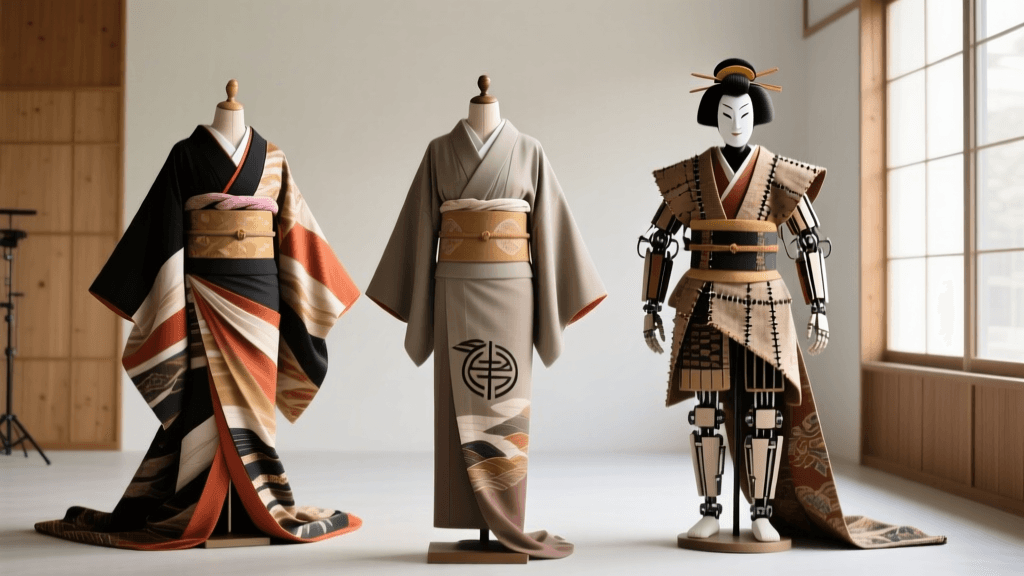
Mastering Kimono Tanmono Zero-Waste Cutting in 2026
The Genius of Tanmono: Zero-Waste Construction
In the landscape of 2026 sustainable fashion, the industry is desperately seeking solutions to the massive textile waste generated by Western pattern-cutting methods. Conventional garment manufacturing wastes up to 20% of fabric on the cutting room floor. Yet, centuries ago, Japanese artisans perfected a zero-waste construction system that remains entirely relevant today: the tanmono bolt system used for kimono and kosode. By understanding and applying these traditional Asian garment construction techniques, modern sewists, designers, and cultural preservationists can create stunning, sustainable garments without generating a single scrap of waste.
According to sustainability advocates at Fashion Revolution, the shift toward circular fashion requires looking at historical methodologies that inherently respect the material. The kimono is not merely a beautiful cultural artifact; it is a masterclass in geometric efficiency, modular design, and textile preservation. In this comprehensive guide, we will break down the exact measurements, cutting layouts, and sewing techniques required to construct a traditional kimono using the tanmono method, updated with 2026 sizing adaptations for modern bodies.
Anatomy of the Tanmono Bolt
The foundation of this zero-waste technique is the tanmono, a narrow, continuous bolt of fabric woven specifically for a single garment. Unlike Western broadcloth, which is cut into curved shapes, the tanmono is woven to a precise width that dictates the entire cutting layout. Every single centimeter of the bolt is utilized in the final garment, with any excess length folded inward or used for structural reinforcement, ensuring absolute zero waste.
A standard traditional silk or hemp tanmono bolt measures approximately 36 centimeters (about 14.2 inches) in width and 11.5 to 12.5 meters (roughly 12.5 to 13.6 yards) in length. Because the fabric is so narrow, the garment is constructed entirely from straight, rectangular panels sewn together. The Metropolitan Museum of Art notes that this straight-line construction, known as wasai, allows the garment to be easily taken apart, cleaned, and reassembled, a feature that defines its longevity.
Standard vs. Modern Bespoke Measurements (2026)
Historically, kimono were constructed using a one-size-fits-most approach, with the wearer adjusting the drape and the ohashori (waist fold) to fit their height. However, as global average heights have increased and modern styling in 2026 often favors a more tailored, floor-skimming silhouette without excessive folding, bespoke adjustments are necessary. Below is a comparison of traditional Edo-period standard measurements versus modern 2026 bespoke adjustments for a standard women's kosode.
| Garment Section | Traditional Edo Measurement | 2026 Modern Bespoke Adjustment | Seam Allowance / Fold |
|---|---|---|---|
| Migoro (Body Panel Length) | 150 cm (59 in) | 165 cm (65 in) | 2 cm hem / 2 cm shoulder fold |
| Sode (Sleeve Length) | 49 cm (19.3 in) | 54 cm (21.2 in) | 1 cm side seams |
| Sode (Sleeve Depth/Drop) | 55 cm (21.6 in) | 60 cm (23.6 in) | 1 cm bottom seam |
| Okumi (Overlap Panel) | 15 cm (5.9 in) visible | 17 cm (6.7 in) visible | 1.5 cm inner fold |
| Eri (Collar) | 5.5 cm (2.1 in) width | 6.0 cm (2.3 in) width | Standard fold-over |
Step-by-Step Cutting Layout for a Basic Kosode
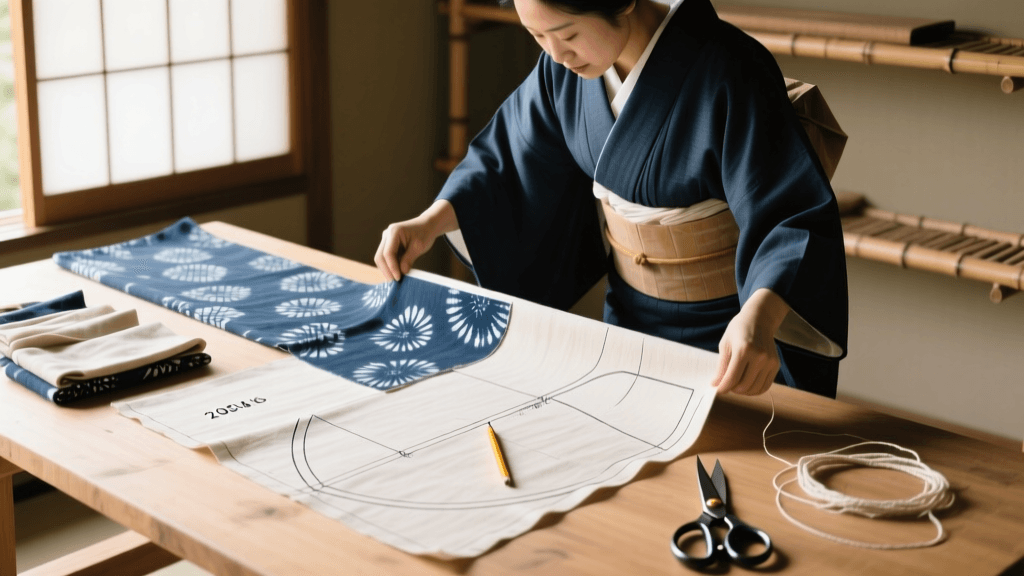
The true magic of the tanmono system lies in the cutting layout. The 11.5-meter bolt is meticulously folded and cut into exactly eight primary rectangular pieces. No curved armholes, no shaped waistlines, and no offcuts. The layout follows a strict mathematical sequence to ensure the pattern motifs (if woven or dyed) align perfectly across the seams.
The Eight-Piece Breakdown
- Two Migoro (Body Panels): The main front and back body panels. These are cut to the full length of the wearer's height plus the ohashori fold and hem allowances.
- Two Okumi (Front Overlap Panels): Narrower strips cut from the remaining fabric, attached to the front edges of the migoro to create the overlapping V-neck closure.
- Two Sode (Sleeves): Long rectangles that are folded in half horizontally. The bottom and back edges are sewn shut, while the front and top edges are left partially open to create the iconic kimono sleeve pouch and armhole.
- Eri (Collar): A long, narrow strip cut from the leftover width of the okumi panels, folded over to encase the neckline.
- Kake-Eri (Collar Cover): A protective, often contrasting or heavily decorated strip that is basted over the back of the neck collar to prevent wear and allow for easy replacement.
"The elegance of the kimono lies not in the cutting of the cloth, but in the draping of the rectangle. The fabric is never forced into a shape; rather, the human body gives the fabric its form." — Traditional Kyoto Textile Artisan Proverb.
The Sewing Technique: Wasai and Kuke
Constructing a kimono requires a departure from Western machine-sewing habits. The traditional hand-sewing method, wasai, relies on long, straight running stitches. In 2026, while some modern artisans use specialized straight-stitch machines for the primary structural seams, the finishing techniques remain entirely by hand to preserve the garment's drape and flexibility.
The most critical technique is kuke, a blind-stitching method used for hems and the collar. Because the kimono is made of straight panels, the seams must lie perfectly flat without puckering. The seam allowances are not pressed open as in Western tailoring; instead, they are folded together and enclosed, or folded flat against the body panel. This creates a beautiful, clean interior that is as visually pleasing as the exterior. The stitches are spaced precisely 2 to 3 millimeters apart, catching only a single thread of the face fabric to remain completely invisible on the outside. For a standard silk crepe (chirimen) tanmono, a sewist will execute over 15,000 individual hand stitches to complete the garment.
Sourcing Authentic Tanmono Bolts in 2026
Sourcing high-quality tanmono has evolved significantly. While vintage silk bolts from the mid-20th century are abundant in Kyoto recycling markets, the 2026 market has seen a massive surge in sustainable, newly woven tanmono utilizing eco-friendly fibers. Artisans in regions like Kiryu and Tango are now weaving zero-waste bolts using organic hemp, lotus silk, and peace silk (ahimsa silk).
When purchasing a modern bespoke tanmono bolt in 2026, expect to invest between $250 and $600 USD for high-grade artisanal hemp or blended silk-hemp textiles. These modern bolts often come pre-treated with natural plant-based water repellents, making them highly practical for contemporary urban wear. The evolution of these textile arts, as documented by institutions like the Metropolitan Museum of Art's Heilbrunn Timeline, shows a continuous thread of innovation in Japanese weaving that perfectly aligns with today's ecological imperatives.
Arai-Hari: The Ultimate Circular Fashion Practice
Perhaps the most profound lesson the tanmono system offers modern fashion is the concept of arai-hari. Because the kimono is constructed from straight panels with specific seam allowances, it is designed to be completely deconstructed. When the garment becomes soiled, or when the hem frays from dragging on the ground, the entire piece is taken apart into its original eight rectangles.
The panels are then washed, stretched, and dried on large wooden boards (a process called shinshi), which removes all wrinkles and restores the fabric's original tension. Once dry, the fabric looks brand new. The panels are then re-sewn, with the front and back panels sometimes swapped to ensure even wear and sun fading. This practice means a single high-quality tanmono bolt can literally last for centuries, being passed down, resized, and refreshed across multiple generations. In an era where the average lifespan of a fast-fashion garment is measured in months, the arai-hari philosophy is the ultimate blueprint for 2026 circular wardrobe management.
Conclusion: Integrating Tradition into Modern Design
Mastering the kimono tanmono zero-waste cutting technique is more than an exercise in historical reenactment; it is a vital skill for the future of sustainable garment construction. By adopting the strict geometric discipline of the eight-panel layout, modern designers can eliminate cutting waste, create modular garments that adapt to changing body sizes, and embrace a lifecycle model that prioritizes longevity over planned obsolescence. Whether you are drafting your first hemp kosode or adapting the straight-panel philosophy to contemporary outerwear, the wisdom of the tanmono bolt remains an unparalleled guide to respectful, zero-waste fashion.