Decoding Kabuki, Noh & Bunraku Kimono Costumes 2026
Introduction to Japanese Theatrical Garments in 2026
Japanese traditional theater represents a profound synthesis of performance, narrative, and textile artistry. As we navigate the cultural landscape of 2026, the study of theatrical kimonos—known collectively as isho or shozoku—has evolved beyond mere historical appreciation. Today, costume designers, textile conservators, and cultural historians utilize advanced digital archiving and material science to decode the garments of Kabuki, Noh, and Bunraku. These three distinct art forms demand radically different approaches to garment construction, dyeing, and weaving. Understanding the nuances of these stage kimonos offers a masterclass in functional fashion and symbolic storytelling, revealing how cloth moves, breathes, and speaks on stage.
Kabuki: The Spectacle of Hikinuki and Aragoto
Born in the Edo period, Kabuki is the theater of the people, characterized by exaggerated movements, dramatic storylines, and visual spectacle. The costumes, or isho, are explicitly designed to amplify the actor's physical presence and emotional intensity. Unlike everyday garments, Kabuki kimonos are engineered for dynamic motion and theatrical revelation.
The Mechanics of Hikinuki (Quick Change)
The most iconic Kabuki costume technique is hikinuki, a miraculous on-stage quick-change. Garments are basted together with specialized threads that, when pulled by stage assistants (kuroko) at a climactic moment, cause the outer layer to fall away, revealing a contrasting kimono underneath. In 2026, modern conservators studying surviving historical hikinuki garments note the incredible precision required in the basting tension. If the thread is too tight, the garment will not release smoothly; if it is too loose, the silk will sag and ruin the silhouette during vigorous dance sequences. This technique requires bespoke tailoring that remains a closely guarded secret among Kabuki wardrobe masters.
Aragoto vs. Wagoto Textile Choices
The visual language of Kabuki is divided into distinct styles, each demanding specific textiles. The aragoto (rough style), often used for heroic or demonic characters, features heavily padded kimonos with bold, geometric patterns. These garments utilize massive family crests and stark checkered patterns that mirror the bold kumadori makeup worn by the actors. Conversely, the wagoto (soft style) relies on realistic, subtly dyed Yuzen silks that reflect the refined fashions of the historical merchant class, utilizing delicate floral motifs and softer, more pliable silk crepes like chirimen.
Noh: Subtlety, Symbolism, and the Kariginu
If Kabuki is a spectacular explosion of color and motion, Noh is a restrained meditation on the human spirit. The garments, called shozoku, are deeply rooted in the aristocratic dress of the Heian and Muromachi periods. Noh costumes are not merely worn; they are inhabited to transform the actor into deities, spirits, or demons. The aesthetic principle of yugen (mysterious depth) dictates that the textiles must convey profound emotion through subtle shifts in light and texture rather than overt spectacle.
Nuihaku and the Art of Layering
The nuihaku is a masterpiece of textile engineering, featuring intricate Nishijin-ori (brocade weaving) and gold-leaf embroidery. It is typically worn by female characters, often draped over the hips rather than tied at the waist. The sheer weight and stiffness of the gold-threaded brocade dictate the actor's gliding, heel-to-toe walking style (suriashi). The stiffness of the Nishijin brocade is not a flaw but a feature; it forces the actor to move with a rigid, otherworldly grace that perfectly complements the carved wooden masks worn in performance.
Color Symbolism and the Choken
For female or dancer roles, the choken offers a translucent, flowing silhouette. Woven with intricate float patterns, the choken is deliberately left unlined so that the stage lighting can pass through the fabric, creating an ethereal, ghostly effect. Color in Noh is strictly codified: white represents purity or high nobility, red indicates youth or intense passion, and dark blues or browns signify older, grounded characters. The subtle sheen of the silk changes as the actor tilts their head, allowing the mask to appear to smile or weep depending on how the light catches the collar.
Bunraku: Engineering Kimonos for Puppetry
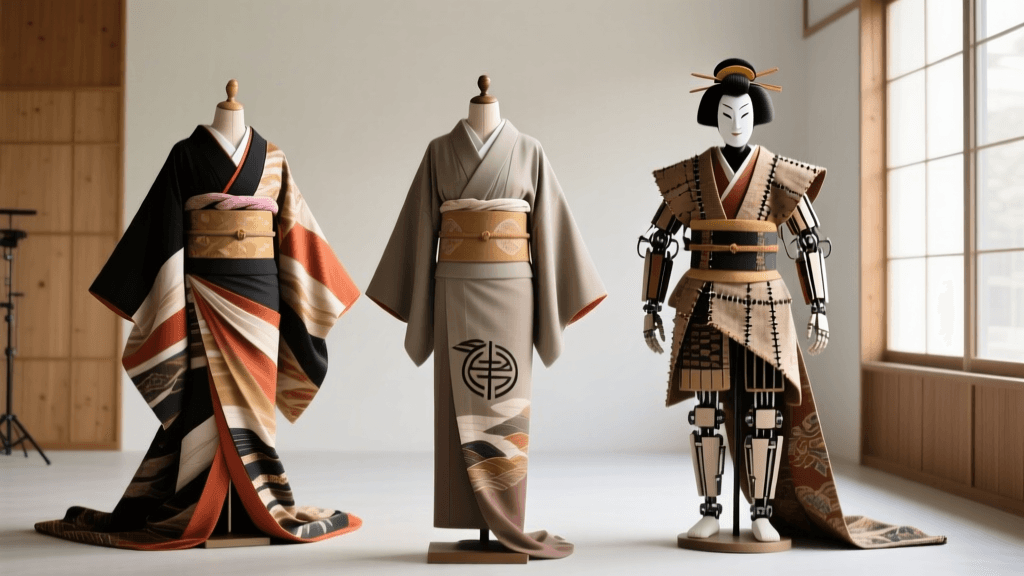
Bunraku, or Ningyo Joruri, presents a unique engineering challenge that bridges the gap between tailoring and mechanical design. The puppets, which are roughly one-half to two-thirds the size of a human, are operated by three puppeteers in full view of the audience. The costumes must look entirely authentic while accommodating the complex mechanics of the puppet's internal armature.
Scaling and Structural Adaptations
A Bunraku kimono is heavily stuffed with cotton (nuigurumi) to give the puppet a lifelike volume and weight. Crucially, the sleeves and torso feature strategic, hidden openings that allow the omozukai (head and right-arm operator) and hidarizukai (left-arm operator) to manipulate the puppet's limbs without tangling in the silk. The inner lining of a Bunraku costume is a labyrinth of hidden pockets and reinforced seams designed to withstand the friction of the puppeteers' hands and the wooden control rods.
Despite the reduced scale, Bunraku costumes utilize genuine, high-quality silks, including tsumugi (pongee) and rinzu (satin damask). The patterns must be meticulously scaled down; a standard human-sized Yuzen floral motif would look comically oversized on a Bunraku puppet. Specialized weavers and dyers in Kyoto create bespoke, proportionate textiles specifically for the theater, ensuring that the visual harmony of the garment is maintained even at a two-thirds scale.
Comparative Analysis: Kabuki vs. Noh vs. Bunraku
| Feature | Kabuki | Noh | Bunraku |
|---|---|---|---|
| Primary Garment | Isho (Padded, layered) | Shozoku (Kariginu, Choken) | Nuigurumi (Stuffed, rigged) |
| Key Textile | Chirimen crepe, bold Yuzen | Nishijin-ori brocade, unlined silk | Scaled Tsumugi, Rinzu damask |
| Movement Style | Dynamic, acrobatic, quick-change | Gliding (Suriashi), restrained | Manipulated via hidden armatures |
| Visual Impact | High contrast, spectacular | Subtle, ethereal, symbolic | Authentic scale, mechanically functional |
Preservation and Digital Archiving in 2026
The preservation of these fragile, sweat-stained, and mechanically stressed garments is a major focus for Japanese cultural institutions in 2026. The National Theatre of Japan has expanded its digital archiving initiatives, utilizing 3D photogrammetry to capture the drape, weave density, and basting techniques of historical isho. This allows global researchers to study the internal rigging of a hikinuki garment without risking damage to the physical artifact.
Similarly, the Kyoto Costume Institute continues to provide invaluable open-access databases for researchers studying the intersection of stage wear and everyday Edo-period fashion. Their recent 2026 textile analyses have shed light on how natural indigo and safflower dyes degrade under the heat of modern stage lighting, prompting a return to traditional, light-fast dyeing methods for new repertoire productions. For Bunraku enthusiasts, the National Bunraku Theatre offers unprecedented behind-the-scenes documentation of the costume-stuffing and rigging processes that bring the puppets to life, ensuring these highly specialized tailoring skills are passed down to the next generation of artisans.
Sourcing and Identifying Theatrical Textiles Today
For costume designers, collectors, and theater students operating in 2026, distinguishing authentic theatrical textiles from commercial kimono requires a trained eye. When sourcing materials for theatrical reproduction, consider the following actionable guidelines:
- Weight and Drape: Noh kariginu silks are specifically woven to be lightweight and unlined to catch the air. Standard commercial kimono silks are often too heavy or heavily lined, which will destroy the floating effect required for Noh choreography.
- Pattern Scale: If you are designing for puppetry or scaled theater, remember that Bunraku requires a 2/3 scale reduction in motif size. Sourcing standard Yuzen bolts will result in disproportionate costumes. You must commission bespoke weaving from Nishijin artisans.
- Reinforcement: Kabuki garments, particularly those used for tachimawari (combat scenes), require hidden internal reinforcement at the shoulders and sleeves. Authentic theatrical isho will feature extra layers of hemp or cotton lining in high-stress areas that are absent in civilian garments.
- Color Fastness: Theatrical garments are subjected to intense heat and perspiration. When commissioning dyed fabrics for the stage in 2026, insist on high-grade, light-fast synthetic mordants or traditionally fermented indigo, which naturally resists odor and degradation better than standard chemical dyes.
Conclusion
The kimonos of Kabuki, Noh, and Bunraku are far more than decorative garments; they are highly engineered tools of the theatrical trade. From the explosive revelations of Kabuki's hikinuki to the ethereal, light-catching silks of Noh and the mechanical marvels of Bunraku puppetry, these textiles represent the pinnacle of Japanese weaving and tailoring. As preservation technologies advance in 2026, our understanding of these garments deepens, ensuring that the silent language of the stage continues to captivate audiences for centuries to come.