Best Breathable Hanfu for Qigong and Meditation 2026
The Intersection of Hanfu and Mindful Movement in 2026
As the global wellness tourism market continues to evolve in 2026, there has been a profound resurgence in integrating traditional cultural garments into mindfulness practices. For practitioners of Qigong, Tai Chi, and seated meditation, the clothing worn during practice is no longer viewed merely as aesthetic coverage, but as an active participant in the flow of energy. Hanfu, the traditional clothing of the Han Chinese, has emerged as a premier choice for wellness retreats across Hangzhou, Chengdu, and international meditation centers. Unlike modern synthetic activewear, which often compresses the body and restricts lymphatic flow, traditional Hanfu cuts are engineered to promote breathability, unrestrictive movement, and a deep connection to historical grounding techniques.
In 2026, the fusion of ancient sartorial wisdom and modern eco-friendly textile innovation has created a new category of 'Wellness Hanfu.' This guide explores the best traditional styles, fabric technologies, and practical styling tips for optimizing your Qigong and meditation practice through the lens of Asian traditions.
The TCM Philosophy: Qi Flow and Garment Construction
Traditional Chinese Medicine (TCM) emphasizes the unobstructed flow of Qi (vital energy) and blood through the body's meridian system. Modern athletic wear, characterized by tight waistbands and compressive synthetic fabrics, can inadvertently restrict the superficial fascia and impede the deep diaphragmatic breathing required for advanced Qigong. According to the National Center for Complementary and Integrative Health, the physical relaxation of the body is a prerequisite for the neurological benefits of mindfulness and meditation.
Hanfu construction inherently respects the body's energetic centers. The absence of rigid tailoring around the chest and the use of sash-tied waistlines allow the lower abdomen—the Dantian, or body's energetic core—to expand fully during deep breathing exercises. Furthermore, the traditional cross-collar (jiaoling youren) gently stimulates the acupressure points along the neck and collarbone, promoting an upright yet relaxed spinal posture essential for seated meditation.
Top Hanfu Styles for Wellness Practices
Not all Hanfu styles are suited for movement. While ceremonial garments like the heavily embroidered Mang Pao are reserved for festivals, several historical cuts are perfectly aligned with the biomechanics of Qigong and Tai Chi.
The Daopao (Taoist Robe)
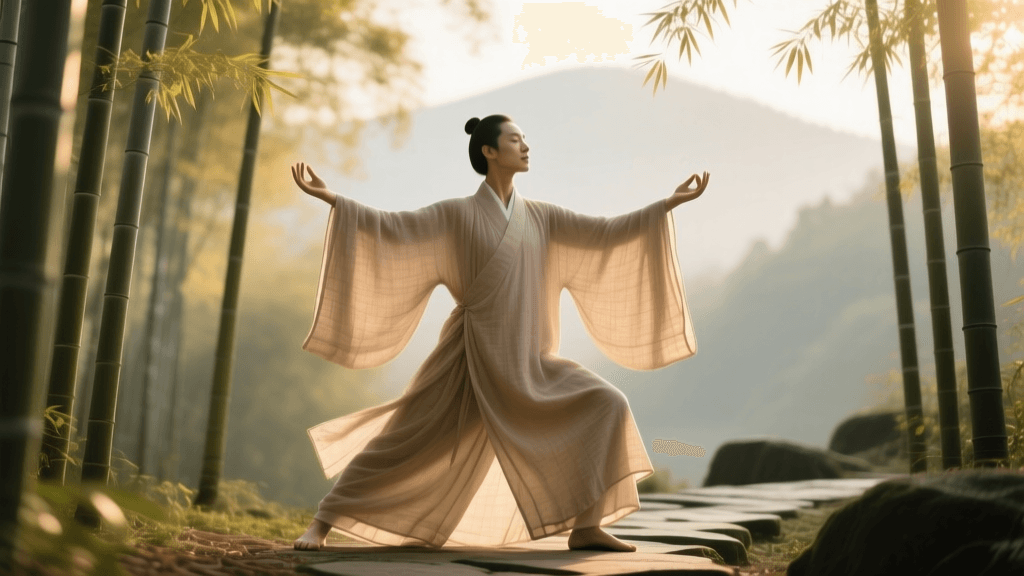
Historically worn by scholars, monks, and Taoist practitioners, the Daopao is a full-length, wide-sleeved robe featuring a cross-collar and side slits for mobility. In 2026, modernized wellness versions of the Daopao are constructed from lightweight ramie and organic linen. The generous sleeve width allows for unrestricted arm circulation during the 'Two Hands Hold up the Heavens' movement in the Ba Duan Jin (Eight Brocades), while the flowing hem grounds the practitioner's visual focus during standing meditation (Zhan Zhuang).
The Yese (Curved Hem Robe)
The Yese features a curved hemline and side panels that provide exceptional lower-body mobility. For practitioners engaging in dynamic Qigong forms or low-stances in Tai Chi, the Yese prevents the fabric from pulling tightly across the thighs and knees. The 2026 iterations of the Yese often incorporate hidden gussets under the arms, a subtle modern tailoring technique that enhances overhead reach without compromising the historical silhouette.
The Baidiqun (Pleated Skirt) and Duan Da (Short Tunic)
For warmer climates or more vigorous morning routines, pairing a lightweight Baidiqun (a multi-pleated skirt) with a Duan Da (a short, fitted tunic) offers the perfect balance. The pleats of the skirt fan out during wide stances, providing zero resistance, while the short tunic keeps the core warm without overheating the upper body.
2026 Fabric Innovations: Natural Fibers and Eco-Dyes
The year 2026 has seen a massive shift away from synthetic blends in wellness apparel, driven by a deeper understanding of skin microbiome health and environmental sustainability. Leading Hanfu artisans in Zhejiang and Jiangsu provinces are utilizing heritage weaving techniques combined with natural, hypoallergenic plant dyes. Synthetic dyes can cause contact dermatitis when the body heats up and sweats during intense Qigong sessions, making natural eco-friendly dyeing methods a critical component of wellness garments.
| Fabric Type | Breathability & Drape | Best Practice Application | 2026 Market Price Range |
|---|---|---|---|
| Ramie (Xia Bu) | Highly breathable, crisp drape, excellent moisture-wicking. | Summer Qigong, outdoor Tai Chi, hot weather meditation. | $85 - $160 USD |
| Organic Linen | Moderate breathability, softens with wash, structured drape. | Transitional seasons, standing meditation, retreat wear. | $110 - $220 USD |
| Bamboo Viscose Blend | Silky drape, cooling to the touch, high elasticity. | Seated meditation, gentle stretching, indoor wellness centers. | $70 - $130 USD |
| Lotus Fiber (Lian) | Ultra-lightweight, naturally antibacterial, soft drape. | Advanced meditation, multi-day silent retreats, sensitive skin. | $250 - $450 USD |
According to the World Health Organization's ongoing integration of traditional medicine and holistic practices into global health frameworks, the use of natural, non-toxic materials in daily wellness routines is highly recommended to reduce systemic inflammation and environmental toxin exposure. In 2026, premium wellness Hanfu is frequently dyed using indigo (for cooling properties), madder root (for grounding, earthy tones), and pagoda tree bud yellow, ensuring the garments are as healing to the environment as the practice is to the body.
Mastering the Ba Duan Jin in Traditional Garments
The Ba Duan Jin, or Eight Brocades, is one of the most popular Qigong forms practiced globally. Performing these eight movements in Hanfu requires an understanding of how the fabric interacts with the body's kinetic chain. The Harvard Medical School notes that Tai Chi and Qigong are highly effective for improving balance, flexibility, and cardiovascular health, provided the practitioner can move without physical restriction.
- Drawing the Bow to Shoot the Hawk: This wide, lunging stance requires a skirt or robe with deep side slits. If wearing a Mamianqun (horse-face skirt), ensure the flat front and back panels are aligned with your center of gravity to prevent tripping, allowing the pleated sides to accommodate the deep lunge.
- Wise Owl Gazes Backwards: This twisting movement benefits from the Daopao's wide sleeves. As you twist, the heavy fabric of the sleeve creates a gentle, sweeping momentum that encourages a slower, more controlled rotation of the cervical and thoracic spine.
- Bouncing on the Toes: The final movement involves gentle bouncing to settle the Qi. A high-waisted Hanfu skirt tied securely above the navel ensures the garment moves in unison with the body, rather than sliding down and causing distraction.
Practical Tips: Sashes, Cuffs, and Footwear
Wearing Hanfu for wellness is not just about putting on the garment; it is about how you secure and manage it during practice.
Protecting the Dantian with the Sash
The waist sash (yaodai) should be tied firmly enough to keep the garment in place, but loose enough to allow the lower belly to expand outward during deep abdominal breathing. In 2026, many wellness-specific Hanfu sets feature wide, elasticized cotton-silk blend sashes that distribute pressure evenly, avoiding the 'tourniquet' effect of thin, rigid cords.
Managing Wide Sleeves
While flowing sleeves are beautiful, they can interfere with hand mudras or precise wrist movements in Qigong. For practices requiring intricate hand positions, practitioners utilize traditional fabric sleeve ties (shouyi) or opt for 'narrow sleeve' (zhai xiu) variations of the Yese or Ruqun that were historically worn by martial artists and laborers.
Footwear: The Dengyun Lu (Cloud Shoes)
Grounding is a vital component of Qigong. Thick, rubber-soled modern sneakers disconnect the practitioner from the earth and alter the natural biomechanics of the foot. The traditional Dengyun Lu, or cloud shoe, features a thin, flexible cotton or hemp sole that allows the toes to grip the ground and the practitioner to feel the subtle shifts in weight distribution. In 2026, artisan cobblers have reinforced these traditional soles with natural tree rubber for better traction on damp morning grass, without sacrificing the essential ground-feel required for Tai Chi.
Conclusion
The integration of Hanfu into Qigong and meditation is more than a passing aesthetic trend; it is a return to the holistic roots of Asian wellness traditions. By choosing garments that respect the body's energetic pathways, utilizing breathable, eco-friendly natural fibers, and understanding the biomechanics of traditional cuts, practitioners can deepen their mindfulness and physical alignment. As we move through 2026, the wardrobe of the modern wellness practitioner is beautifully, and functionally, rooted in the wisdom of the past.