Mastering Kimono Tanmono Construction: Zero-Waste Sewing in 2026
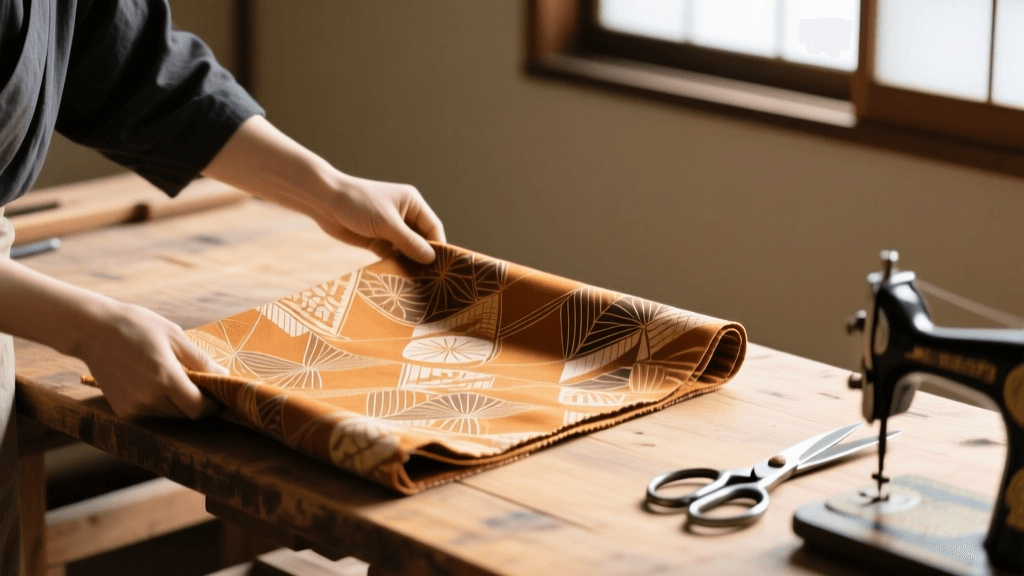
The Philosophy of Tanmono: Asia’s Original Zero-Waste Blueprint
In 2026, as the global fashion industry faces strict textile waste regulations and a massive consumer shift toward sustainable garment creation, modern sewists and designers are looking backward to move forward. Long before the term "zero-waste pattern drafting" entered the contemporary fashion lexicon, traditional Asian dress traditions had already perfected the art. At the very heart of this sustainable revolution is the Japanese kimono and its foundational construction technique: the Tanmono (反物) system.
Unlike Western tailoring, which relies on complex, curved pattern pieces that leave behind 15% to 20% of fabric as scrap waste, the kimono is constructed entirely from straight, rectangular panels. The Tanmono is a standardized bolt of fabric woven specifically to yield exactly one adult garment with virtually zero waste. According to the Victoria and Albert Museum's extensive textile archives, this ingenious system not only conserves precious materials but also allows the garment to be entirely deconstructed, washed, and resewn, extending its lifecycle across generations.
The Mathematics of Zero-Waste: Standard Measurements
To understand kimono construction, one must understand the mathematics of the loom. A standard women’s Tanmono bolt measures approximately 36 centimeters (about 14.2 inches) in width and 12 meters (about 13.1 yards) in length. This specific dimension is not arbitrary; it is calculated to provide the exact surface area required for the eight main panels of a women's kimono, plus the necessary seam allowances and hems.
For modern sewists in 2026 attempting to replicate this technique using standard Western fabric widths (usually 115cm or 45 inches), the first step is cutting the fabric down into 36cm strips to mimic the traditional bolt. Below is the standard breakdown of how a single 12-meter bolt is allocated.
| Component | Japanese Term | Quantity | Standard Width (Women's) | Approximate Length Required |
|---|---|---|---|---|
| Main Body Panels | Migoro | 2 | 36 cm | 400 cm each |
| Sleeve Panels | Sode | 2 | 36 cm | 100 cm each |
| Front Overlaps | Okumi | 2 | 15-18 cm (split) | 150 cm each |
| Collar | Eri | 1 | 15-18 cm (split) | 120 cm |
Note: The Okumi and Eri are created by splitting a third 36cm panel down the middle, ensuring that the entire 12-meter bolt is utilized without a single scrap left behind.
Step-by-Step Construction: Cutting, Basting, and Stitching
Constructing a kimono requires a departure from Western sewing habits. There are no darts, no princess seams, and no curved armholes. The entire garment relies on precise folding, strategic basting, and specialized hand-stitching techniques.
1. The Straight-Line Cut and Edge Finishing
Because the fabric is woven to a specific width, the selvedge edges of the Tanmono are intentionally left intact and utilized as the finished outer edges of the sleeves and lower hem. This eliminates the need for overlocking or serging. When cutting modern fabric to mimic Tanmono, you must finish the raw edges using a traditional fold-and-stitch method or a modern zigzag stitch before assembly to prevent fraying during the garment's lifecycle.
2. Basting (Shitsuke) for Temporary Assembly
Before any permanent stitches are made, the kimono is entirely assembled using Shitsuke (basting). In 2026, modern sewists use high-visibility, easily breakable cotton basting thread. The basting allows the maker to check the drape, alignment of woven patterns (such as the crucial matching of motifs across the back seam, known as se-tyu), and overall fit. Because kimono sizing is adjusted by the depth of the folds and the placement of the collar rather than the cut of the fabric, basting is a mandatory step for precision.
3. The Running Stitch and the Kise Seam
The primary stitch used in kimono construction is a simple running stitch (nunui), executed with silk or high-quality polyester-core thread. However, the true genius of the construction lies in the Kise (きせ). The Kise is a slight fold-over of the seam allowance that hides the actual stitching line and protects the thread from friction and abrasion. When sewing the main body panels together, the seam allowance is folded over by about 2-3 millimeters, creating a soft, flexible joint that drapes beautifully and prevents the thread from snapping under tension.
Sourcing Tanmono and Modern Alternatives in 2026
For those looking to practice traditional construction in 2026, sourcing authentic Tanmono has become more accessible through global digital marketplaces, though prices reflect the current economic landscape.
- Vintage Silk Bolts (1970s-1990s): Widely available on auction sites and specialized Japanese export vendors. Expect to pay between $120 and $350 USD for a high-quality, unused vintage silk bolt. These are excellent for practice and historical replication.
- Modern Artisan Wovens (e.g., Yuki-tsumugi): As recognized by UNESCO's Intangible Cultural Heritage list, traditional hand-woven silks like Yuki-tsumugi represent the pinnacle of the craft. In 2026, commissioning a new, authentic artisan bolt directly from weaving cooperatives in Ibaraki or Kyoto will cost upwards of $2,500 to $5,000 USD, reflecting the intensive labor and aging artisan demographic.
- Modern Upcycled Linens and Cottons: Many contemporary zero-waste designers in 2026 are adapting the Tanmono geometry using deadstock European linens. By cutting 150cm wide linen into four 36cm strips and sewing them end-to-end, you can create a functional, breathable, modern Tanmono bolt for everyday wear.
Tools Required for Authentic Assembly
To properly execute the Kise seams and handle delicate silks, your 2026 sewing kit should include the following specialized tools:
- Sashiko Needles or Long Hand-Sewing Needles: Longer needles allow you to load multiple running stitches onto the needle at once, ensuring even tension.
- Kote (Iron): A traditional Japanese iron or a modern gravity-feed iron with a precise tip is essential for pressing the Kise folds flat before stitching.
- Shaku (Japanese Ruler): While metric measurements are standard today, understanding the traditional shaku (approx. 37.8 cm) helps when reading vintage pattern drafting manuals.
- Clips and Weights: Silk Tanmono shifts easily. Use brass sewing weights to hold panels perfectly aligned on your cutting mat before basting.
Aratoi: The Ultimate Sustainable Lifecycle
Perhaps the most remarkable aspect of Tanmono construction is the end-of-life (or rather, mid-life) care protocol known as Aratoi. Because the kimono is sewn entirely with a running stitch, it can be completely taken apart in a matter of hours.
According to the Metropolitan Museum of Art's Heilbrunn Timeline of Art History, the flat panels of a deconstructed kimono were traditionally washed in rivers, stretched on bamboo frames (a process called shinshi), and dried. This method allowed the fabric to be cleaned thoroughly without the stress of scrubbing or wringing a fully assembled, heavily lined garment. Once dry, the panels are simply basted and stitched back together, looking virtually brand new.
In 2026, this deconstruction-reconstruction cycle is being embraced by sustainable fashion advocates as the ultimate antidote to fast fashion. A single Tanmono bolt can be sewn into a kimono, deconstructed and resewn into a haori (jacket) as styles or the wearer's body changes, and eventually repurposed into children's clothing or household textiles, all while maintaining the structural integrity of the original woven cloth.
Conclusion: Ancient Geometry for Future Fashion
The Tanmono system is a masterclass in geometric efficiency and respect for materials. By mastering the straight-line cuts, the protective Kise seams, and the modular assembly of the Japanese kimono, modern sewists can drastically reduce their textile waste. Whether you are working with a $150 vintage silk bolt or upcycling deadstock linen, the construction techniques of Asian dress traditions offer a timeless, zero-waste blueprint that is more relevant in 2026 than ever before.