Kimono Storage Preservation 2026: Silk Care & Collection Management
The Intersection of Heritage and Modern Archival Science
Kimono are more than mere garments; they are wearable canvases that encapsulate centuries of Japanese aesthetic philosophy, weaving techniques, and cultural heritage. As we navigate through 2026, the preservation of these exquisite silk textiles has become an intricate dance between time-honored Japanese traditions and cutting-edge archival science. Whether you are a private collector safeguarding a family heirloom, a vintage dealer managing a high-value inventory, or a museum archivist, understanding the nuances of kimono storage preservation is paramount. Silk is a protein fiber that is highly susceptible to environmental degradation, light damage, and biological threats. This comprehensive guide explores the definitive 2026 standards for kimono collection management, focusing on the synergistic use of traditional tatōshi paper, paulownia wood storage, and modern climate control technologies.
The 2026 Landscape of Textile Conservation
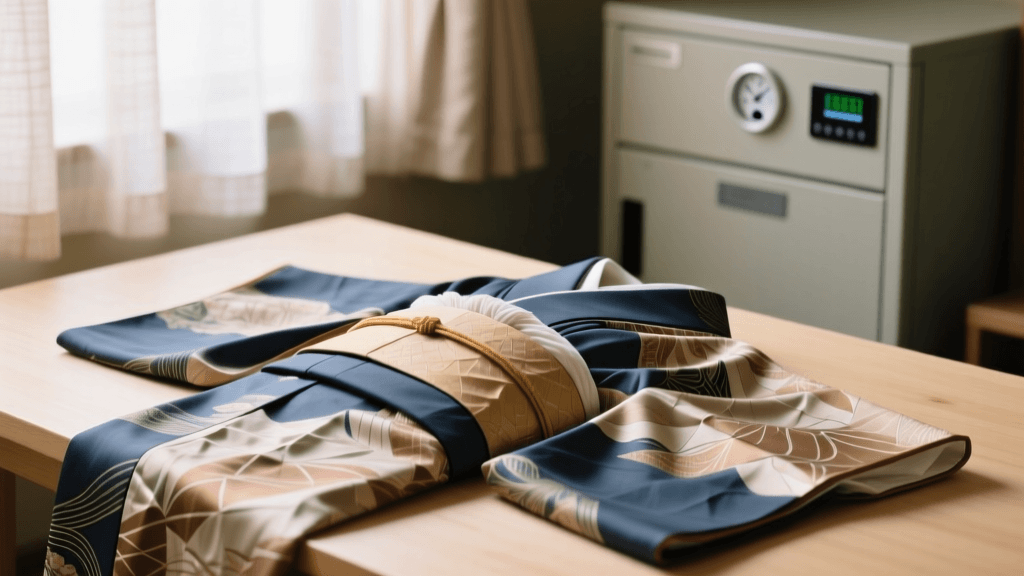
In 2026, the global market for vintage and antique kimono has surged, driven by a renewed interest in sustainable fashion and cross-cultural sartorial appreciation. However, this boom has highlighted a critical gap in post-purchase care. Many collectors inadvertently store their silk garments in environments that accelerate the deterioration of delicate dyes and fibers. According to conservation guidelines outlined by the Victoria and Albert Museum, textiles require a stable microclimate to prevent the mechanical stress caused by fluctuating humidity. For kimono, which often feature metallic threads (surihaku), intricate embroidery, and hand-painted yuzen designs, environmental stability is not just a recommendation—it is an absolute necessity. Modern smart-home ecosystems now allow collectors to integrate museum-grade environmental sensors directly into their storage spaces, ensuring real-time alerts if temperature or relative humidity deviates from the safe zone.
The Enduring Legacy of Tatōshi (Wrapping Paper)
At the heart of traditional kimono storage is the tatōshi (or tatogami), a specialized wrapping paper that serves as the first line of defense against dust, light, and abrasion. In Japan, high-quality tatōshi is crafted from unbleached, acid-free mulberry (kozo) paper. The long fibers of the kozo plant provide exceptional tensile strength while remaining incredibly soft, ensuring that the paper will not abrade the delicate silk surface or catch on raised embroidery. In 2026, while synthetic archival sleeves are available on the market, textile conservators and traditionalists overwhelmingly recommend authentic kozo-based tatōshi. Synthetic materials, even those labeled as 'archival,' can sometimes trap moisture or off-gas volatile organic compounds (VOCs) over decades. When wrapping a kimono, the tatōshi acts as a hygroscopic buffer, absorbing minor fluctuations in ambient moisture and releasing it slowly, thereby protecting the silk from rapid dimensional changes. It is crucial to replace or inspect the tatōshi every three to five years, checking for signs of acid migration or pest activity.
Optimal Climate Parameters for Silk Collections
Maintaining a strict microclimate is the cornerstone of any successful textile preservation strategy. Silk fibers become brittle in overly dry conditions and are prone to mold growth and dye bleeding in high humidity. Furthermore, the metallic threads and natural dyes used in vintage kimono are highly reactive to heat and light. Based on the latest 2026 conservation standards and guidelines supported by institutions like the National Trust, the following parameters should be strictly maintained in your storage environment.
| Environmental Factor | Optimal 2026 Standard | Acceptable Range | Risks of Deviation |
|---|---|---|---|
| Temperature | 18°C (64°F) | 15°C - 20°C | Heat accelerates silk degradation and dye fading. |
| Relative Humidity | 50% | 45% - 55% | High RH causes mold; low RH causes fiber embrittlement. |
| Light Exposure | 0 Lux (Darkness) | Max 50 Lux when viewing | UV and visible light cause irreversible photo-oxidation. |
| Air Quality | Filtered (HEPA/Carbon) | Low VOCs | Pollutants tarnish metallic threads and weaken fibers. |
The Paulownia Wood Advantage (Kiribako)
No discussion of kimono storage is complete without addressing the kiribako, the traditional Japanese storage box crafted from paulownia wood (kiri). For centuries, paulownia has been the gold standard for storing precious textiles in Japan. The wood possesses unique hygroscopic properties; it swells slightly in high humidity to seal the box's joints against moisture ingress, and contracts in dry conditions to allow the interior to breathe. Additionally, paulownia contains natural compounds that repel insects and resist fire. In 2026, authentic, domestically sourced Japanese paulownia boxes remain a premium investment, often ranging from $300 to over $1,200 depending on the craftsmanship and joinery (such as traditional kumiko lattice or finger joints). For collectors on a budget, acid-free corrugated archival boxes lined with unbleached cotton muslin are the accepted modern alternative, provided they are kept off the floor and away from exterior walls to prevent condensation and water damage.
The Art of Tatamikata (Folding)
Improper folding can lead to permanent creases, which over time will cause the silk fibers to fracture along the fold lines. The traditional folding method, tatamikata, is designed to align with the garment's original straight-line construction, ensuring that folds occur along the seams rather than across the delicate fabric panels. When preparing a kimono for long-term storage, it is essential to pad the folds with acid-free, unbuffered tissue paper. This prevents sharp creases and reduces the tension on the silk fibers. In 2026, conservation-grade tissue paper infused with calcium carbonate is widely available, but for protein fibers like silk, unbuffered (neutral pH) tissue is mandatory, as the alkalinity of buffered tissue can damage silk proteins over time.
Integrated Pest Management (IPM) for Garment Archivists
Pests such as silverfish, carpet beetles, and clothes moths pose a catastrophic threat to silk collections. Modern collection management in 2026 has moved away from the use of harsh chemical mothballs (like naphthalene or paradichlorobenzene), which are not only toxic to humans but can also cause yellowing and chemical degradation of silk dyes. Instead, collectors utilize Integrated Pest Management (IPM). This involves the strategic placement of non-toxic pheromone traps to monitor insect activity, alongside the use of natural deterrents like Japanese camphor (shounou) or dried neem leaves placed in the corners of the storage room—never in direct contact with the textiles. For suspected infestations, the safest 2026 protocol is anoxic treatment, where the affected garment is sealed in an oxygen-depleted environment using specialized barrier films, effectively suffocating any pests at all life stages without the use of chemicals.
Digital Cataloging and Collection Management
As collections grow, managing the provenance, condition reports, and storage locations of individual kimono becomes a complex logistical challenge. In 2026, digital collection management has been revolutionized by AI-driven cataloging applications designed specifically for textile archivists. These platforms allow collectors to upload high-resolution images, which the AI then analyzes to identify specific weaving techniques (such as nishijin-ori or shibori), estimate the production era, and flag potential condition issues like dye migration or structural weakness. By pairing these digital catalogs with passive RFID tags discreetly sewn into the garment's inner lining or attached to the tatōshi, collectors can instantly locate a specific kimono within a large vault without having to physically handle and disturb the entire collection. This minimizes unnecessary exposure to light and handling stress, preserving the garments for future generations.
Conclusion: Safeguarding the Future of Silk
Preserving a kimono collection in 2026 requires a harmonious blend of respect for traditional Japanese methodologies and the application of modern conservation science. By utilizing authentic tatōshi paper, investing in paulownia wood or archival-grade storage, maintaining strict climate parameters, and leveraging digital cataloging tools, collectors can ensure that these magnificent silk garments survive as vibrant, tangible links to Asian cultural heritage. The effort invested in proper storage today guarantees that the artistry of the kimono will continue to inspire, educate, and captivate for centuries to come.