The Sensory Kimono: Fabric Sound & Texture Guide 2026
The Hidden Symphony of Traditional Japanese Garments
When we think of the kimono, our minds immediately drift to its breathtaking visual aesthetics: the vibrant yuzen dyeing, the intricate metallic embroidery, and the graceful drape of the obi. However, in 2026, a growing movement in neuroaesthetics and sensory fashion has brought a long-overlooked element of traditional Japanese clothing to the forefront: the auditory and tactile experience. The kimono is not merely meant to be seen; it is designed to be heard and felt. The subtle rustle of silk, known in Japanese as kinu-oto (the sound of silk), and the distinct textural landscapes of various weaves create a multi-sensory experience that grounds the wearer in the present moment. This guide explores the science, culture, and care of kimono fabric textures and sounds, offering a comprehensive look at how to curate a sensory wardrobe in 2026.
The Acoustics of Silk: Understanding Kinu-Oto and Scroop
The characteristic rustling sound of high-quality silk is scientifically referred to as "scroop." In the context of the kimono, this acoustic property is not accidental; it is a hallmark of luxury and proper dressing. Scroop is generated by the friction of silk fibers rubbing against one another. According to textile conservation records at the Metropolitan Museum of Art, the unique triangular prism-like structure of the silk fibroin protein, combined with the residual sericin (silk gum) left on the threads during the weaving process, creates this high-frequency acoustic emission.
In traditional Japanese aesthetics, sound is a vital component of spatial awareness and elegance. Just as the shishi-odoshi (bamboo water feature) or the furin (wind chime) punctuate the silence of a Japanese garden, the kinu-oto of a kimono announces the presence of the wearer with refined subtlety. The sound is primarily generated not by the outer kimono alone, but by the friction between the outer garment and the nagajuban (the traditional undergarment). When a wearer walks, the layered silk slides against itself, producing a crisp, rhythmic whisper that is deeply associated with the concept of iki (understated, sophisticated chic).
Tactile Landscapes: Comparing Traditional Kimono Weaves
Beyond sound, the tactile sensation of a kimono against the skin dictates its seasonal appropriateness and emotional resonance. The Japanese textile tradition features dozens of distinct weaves, each offering a unique sensory profile. Below is a comparative overview of the most prominent kimono fabrics experienced in 2026.
| Fabric Type | Weave / Texture Profile | Acoustic Profile (Scroop) | Best Season |
|---|---|---|---|
| Habutae | Smooth, dense, plain weave; cool to the touch. | High, crisp rustle; very fluid. | Spring / Autumn |
| Chirimen | Crepe texture with a pebbled, bumpy surface. | Muted, soft swish; friction absorbs high notes. | Autumn / Winter |
| Tsumugi | Slubbed, nubby, cotton-like feel; lightweight. | Low, dry rustle; earthy and subdued. | Year-round (Casual) |
| Ro / Sha | Open gauze weave; breathable, slightly crisp. | Sharp, papery whisper; highly breathable. | Summer |
Chirimen (Crepe Silk): The Comfort of Texture
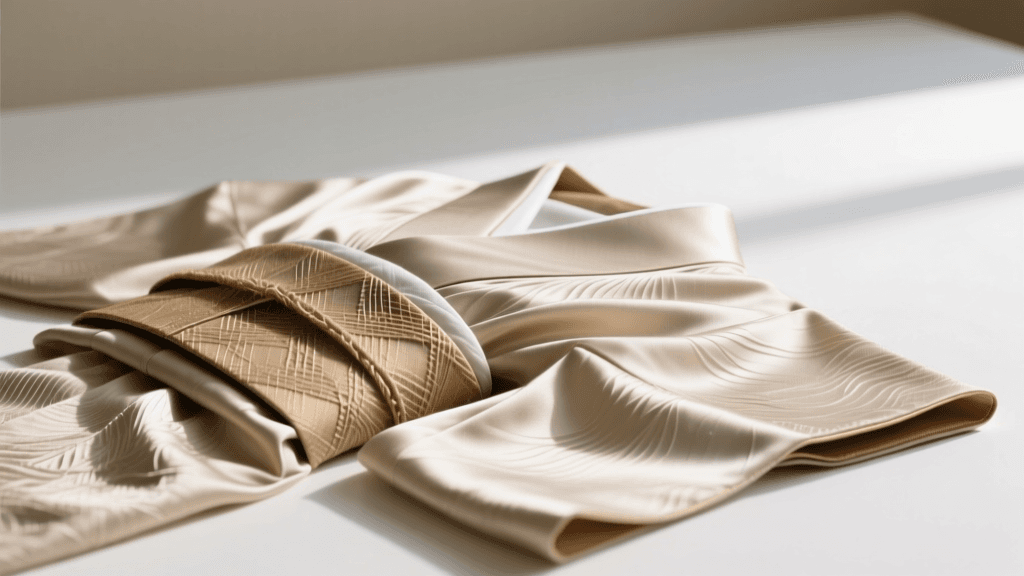
Chirimen is created by weaving highly twisted yarns that are subsequently relaxed, causing the fabric to shrink and develop a distinctive pebbled surface. Tactilely, chirimen is incredibly forgiving and soft, molding to the body's contours while providing excellent insulation. Because the surface is uneven, the acoustic scroop is dampened, resulting in a softer, more intimate sound. In 2026, modern collectors highly prize vintage Oshima Tsumugi and heavy Chirimen for their unparalleled comfort during long tea ceremonies.
Tsumugi (Pongee): The Earthy Whisper
Spun from silk noil (the shorter fibers left over from reeling), Tsumugi possesses a matte finish and a nubby texture that feels remarkably similar to fine cotton or linen. It lacks the brilliant sheen and loud scroop of habutae, offering instead a dry, earthy rustle. Tactilely, it is highly breathable and becomes softer with decades of wear, making it a favorite for everyday, casual kimono styling.
Ro and Sha (Summer Gauze): The Cool Breeze
Worn exclusively in the peak of summer, Ro and Sha feature open, leno-weave structures that allow air to circulate directly against the skin. The tactile experience is defined by a cooling sensation and a slight, crisp stiffness. The sound of Ro is distinct—almost papery—providing an auditory illusion of coolness that perfectly complements the visual transparency of the garment.
Preserving the Sound: 2026 Care Techniques for Silk Scroop
The scroop of a kimono is fragile. Modern dry-cleaning chemicals and aggressive degumming processes can strip the silk of its natural sericin, permanently silencing the fabric. As of 2026, leading textile conservators and kimono care specialists advocate for specialized, non-stripping maintenance routines to preserve the auditory heritage of these garments.
- Avoid Alkaline Detergents: Sericin is highly sensitive to alkaline environments. Always use pH-neutral, enzyme-free silk washes specifically formulated to retain the silk gum. Many traditional Japanese soap makers now offer 2026-certified organic camellia oil-based cleansers that clean without stripping acoustic properties.
- The Vinegar Rinse Secret: A mild, diluted white vinegar rinse (one tablespoon per gallon of cold water) is a closely guarded secret among 2026 kimono stylists. The mild acidity helps tighten the silk fibers and enhances the friction between them, effectively "re-tuning" the scroop of a habutae nagajuban.
- Proper Storage for Acoustic Health: Storing silk in plastic traps moisture and flattens the fibers, muting the sound. Wrap your kimono in acid-free tatou-shi (traditional Japanese paper) and store it in a paulownia wood chest (tansu). The wood naturally regulates humidity, keeping the silk fibers plump and acoustically resonant.
- Airing Out (Mushiboshi): Twice a year, during the dry autumn and winter months, air your kimono on bamboo poles in the shade. This allows the fibers to breathe and regain their natural stiffness, which is essential for a crisp rustle.
The Role of the Nagajuban in Sensory Layering
To truly master the sensory experience of the kimono, one must understand the nagajuban. This undergarment is the unsung hero of kimono acoustics. While the outer kimono (especially heavy winter brocades or woven wools) may be acoustically dead or visually focused, the nagajuban is almost always made of high-quality habutae silk or modern 2026 sensory-engineered cupro blends. When you walk, it is the nagajuban sliding against the inner lining of the outer kimono that generates the most prominent kinu-oto. Investing in a premium, well-fitted silk nagajuban is the single most effective way to enhance the auditory feedback of your kimono wardrobe.
Neuroaesthetics and the Kimono in 2026
The intersection of neuroscience and traditional art, known as neuroaesthetics, has recently begun to quantify why the sensory experience of the kimono is so profoundly calming. Studies in 2026 indicate that the rhythmic, high-frequency, low-decibel sound of silk scroop acts as a form of auditory white noise, lowering the wearer's heart rate and promoting a state of mindful presence. Furthermore, the tactile feedback of the obi wrapping tightly around the core provides deep-pressure stimulation, similar to a weighted blanket, which reduces cortisol levels. Wearing a kimono is therefore not just an act of cultural preservation; it is a holistic, somatic practice that engages the nervous system in a uniquely grounding way.
Experiencing Kimono Sensory Heritage
For those looking to immerse themselves in the tactile and auditory world of traditional garments, several institutions and workshops offer unparalleled access. The Kyoto National Museum frequently rotates its textile exhibitions, allowing visitors to observe the microscopic weaves of Edo-period chirimen and tsumugi. Additionally, specialized sensory-focused tea ceremony workshops in Kyoto's Gion district now encourage practitioners to close their eyes and focus entirely on the sound of the silk and the texture of the tatami, offering a profound meditation on the Japanese concept of ma (negative space) and the beauty of fleeting, subtle sounds.
Whether you are a seasoned collector evaluating the acoustic resonance of a vintage Meiji-era habutae, or a newcomer selecting your first summer Ro kimono for a festival, paying attention to the sound and texture of your garments will fundamentally transform your relationship with traditional Japanese fashion. In 2026, the kimono remains a masterpiece of multi-sensory design, proving that true elegance is not just seen, but deeply felt and heard.