Mastering Kimono Fabrics: Silk Weaves & Dyeing Guide
The Art of the Kimono: A Textile Masterclass
The creation of a traditional Japanese kimono is an intricate symphony of textile engineering, artistic dyeing, and generational craftsmanship. Unlike Western tailoring, which relies on cutting and shaping fabric to fit the human form, the kimono is constructed from straight, uncut bolts of fabric known as tanmono. This structural philosophy places the entirety of the garment's aesthetic and monetary value squarely on the fabric itself. For collectors, enthusiasts, and cultural historians, understanding the dichotomy of woven (ori-mono) and dyed (some-mono) silks is essential to appreciating and acquiring these masterpieces of Asian tradition.
The Structural Foundation: Understanding Tanmono
Before exploring specific regional techniques, one must understand the canvas. A standard tanmono bolt measures approximately 36 to 38 centimeters in width and 12 to 13 meters in length. This specific width dictates the iconic straight-line construction of the kimono, utilizing almost the entire bolt with virtually zero waste. Because the fabric is rarely cut, a kimono can be entirely disassembled, cleaned, and re-sewn, or even repurposed into futons or haori jackets. When commissioning or purchasing a new silk kimono, expect the base fabric alone to require 4 to 6 months of weaving or dyeing time before the tailoring (shitate) even begins.
Iconic Woven Silks (Ori-mono)
Woven textiles, or ori-mono, derive their patterns from the interlacing of pre-dyed warp and weft threads. The pattern is structural, meaning the design is often visible on both the inside and outside of the garment.
1. Nishijin-ori (Kyoto Brocade)
Originating from the Nishijin district of Kyoto, this is the pinnacle of Japanese brocade. Utilizing complex Jacquard looms and sometimes precious metals spun into threads, Nishijin-ori is heavily textured and opulent. The weaving process is so complex that a single artisan may produce only a few centimeters of fabric per day.
- Best Use: Formal obi (sashes), uchikake (wedding overcoats), and theatrical costumes.
- Cost Indicator: A high-quality vintage Nishijin-ori fukuro obi ranges from $300 to $1,500, while bespoke contemporary pieces easily exceed $5,000.
2. Oshima Tsumugi (Mud Silk)
Produced in Amami Oshima, this fabric is legendary for its lightweight, wrinkle-resistant properties and subdued, intricate geometric patterns. The threads are dyed using the bark of the techiki (Yeddo hawthorn) tree and mud rich in iron, creating a chemical reaction that yields deep, earthy tones. The weaving involves a highly complex kasuri (splash) technique where pre-dyed threads must align perfectly on the loom to form the pattern.
- Best Use: High-end everyday wear, sophisticated casual gatherings, and intellectual circles.
- Cost Indicator: Authentic Oshima Tsumugi kimono bolts start around $2,000 and can reach $8,000 for complex, double-sided kasuri patterns.
3. Chirimen (Silk Crepe)
Chirimen is created by tightly twisting the weft threads before weaving, then washing the fabric to cause the threads to relax and pucker. This results in a distinct, pebbled texture that resists wrinkling and takes dye beautifully, making it the premier canvas for Japanese dyers.
- Best Use: The foundational canvas for dyed kimono, yuzen work, and haori jackets.
- Cost Indicator: Highly accessible; vintage Chirimen garments can be found for $50 to $200.
Masterful Dyeing Techniques (Some-mono)
Dyed textiles, or some-mono, involve applying color and pattern to a finished, woven cloth. The Metropolitan Museum of Art highlights that the evolution of paste-resist dyeing in the 17th century revolutionized Japanese fashion, allowing for painterly, free-flowing designs that were previously impossible with woven threads.
1. Yuzen (Kyo-Yuzen and Kaga-Yuzen)
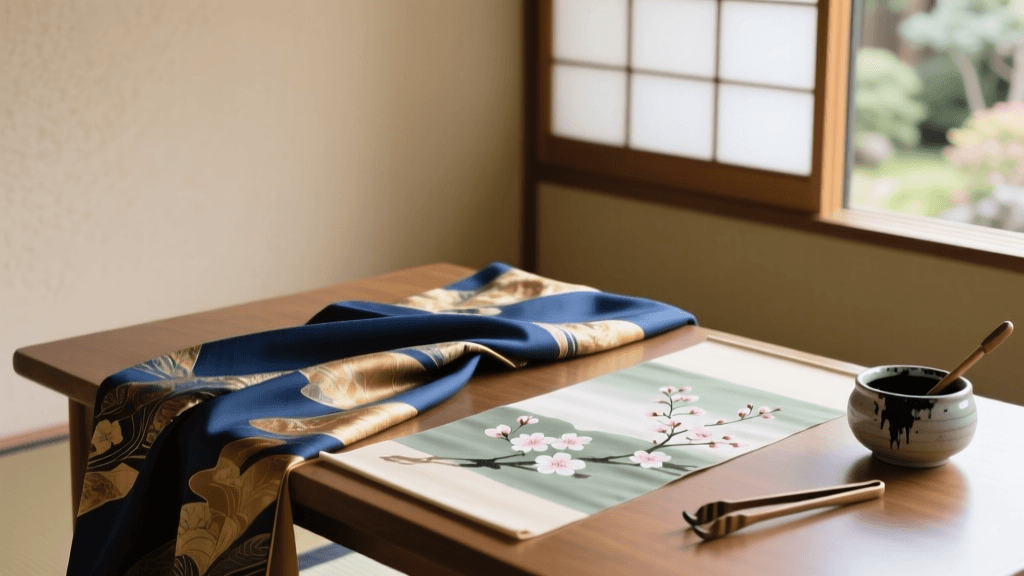
Yuzen is a resist-dyeing technique where a rice-paste glue (itome-nori) is applied to outline designs, preventing colors from bleeding. Kyo-Yuzen (Kyoto) is known for vibrant, stylized motifs and generous gold leaf accents, while Kaga-Yuzen (Kanazawa) favors realistic, botanical illustrations with a distinct "bug-eaten" leaf motif and five muted, natural colors.
- Best Use: Houmongi (visiting wear) and furisode (unmarried women's formal wear).
- Cost Indicator: Hand-painted Yuzen kimono range from $1,500 to $10,000+. Stencil Yuzen (kata-yuzen) is more affordable at $400 to $1,000.
2. Edo Komon (Micro-Patterns)
Born from the strict sumptuary laws of the Edo period that forbade commoners from wearing flashy clothing, Edo Komon involves dyeing incredibly minute, repetitive patterns using paper stencils (katagami). From a distance, the kimono appears solid; up close, it reveals thousands of tiny dots or geometric shapes. The density of these patterns is staggering; some master artisans achieve up to 300 dots per square inch.
- Best Use: Edo Komon with family crests (kamon) serves as formal wear equivalent to a Western business suit.
- Cost Indicator: $800 to $3,000, depending on the density of the dots and the reputation of the dye house.
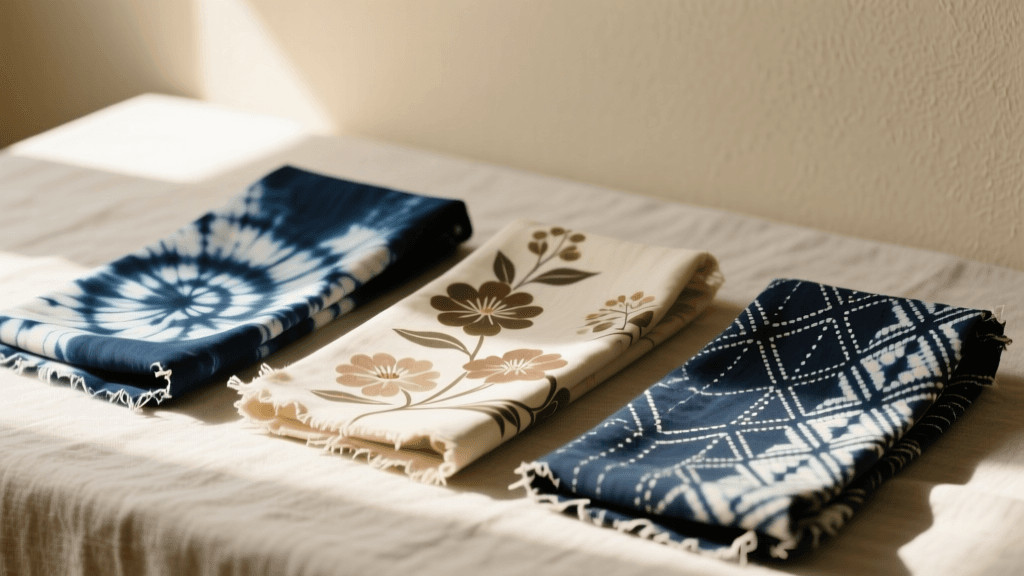
3. Shibori (Tie-Dye and Resist)
As noted by the Victoria and Albert Museum, Shibori encompasses various manual resist techniques, including binding, stitching, and clamping. Kanoko shibori (fawn-spot tie-dye) is notoriously labor-intensive, requiring artisans to tie thousands of individual microscopic knots by hand before dyeing. A single furisode sleeve might require over 100,000 individual ties.
- Best Use: Luxurious haori, informal summer wear, and contemporary fashion statements.
- Cost Indicator: True hand-tied kanoko shibori is a luxury investment, typically $1,500 to $5,000.
Comprehensive Kimono Fabric Comparison Chart
| Fabric / Technique | Category | Formality Level | Average Cost (USD) | Best Season | Maintenance |
|---|---|---|---|---|---|
| Nishijin-ori | Woven | High (Ceremonial) | $500 - $5,000+ | Year-round (Winter preferred) | Dry Clean Only |
| Oshima Tsumugi | Woven | Smart Casual | $2,000 - $8,000 | Spring / Autumn | Specialist Wash |
| Chirimen (Crepe) | Woven Base | Varies by Dye | $50 - $1,500 | Year-round | Spot Clean / Wash |
| Hand-Painted Yuzen | Dyed | High (Visiting/Formal) | $1,500 - $10,000 | Year-round | Dry Clean Only |
| Edo Komon | Dyed | Medium to High | $800 - $3,000 | Year-round | Specialist Wash |
| Kanoko Shibori | Dyed | Medium (Luxury Casual) | $1,500 - $5,000 | Spring / Summer | Steam & Air |
Practical Buyer’s Guide: Sourcing and Authenticity
When investing in traditional Japanese garments, distinguishing between authentic hand-crafted textiles and modern mass-produced alternatives is critical. According to Kogei Japan, the official portal for the country's Traditional Craft Industries, genuine regional crafts must adhere to strict material and methodological guidelines established by the Ministry of Economy, Trade and Industry.
Verifying Authenticity
- The Selvedge Mark: Authentic Oshima Tsumugi and other certified crafts often feature a small, woven mark or a paper certification tag attached to the bolt, verifying the artisan cooperative.
- The Inside Inspection: Turn the garment inside out. In woven patterned silks like kasuri, the pattern should be nearly as vibrant on the inside as the outside. In dyed silks, the inside should be mostly white or a solid, lighter shade of the background color.
- The Texture Test: Genuine shibori will have a distinctly puckered, three-dimensional texture that cannot be replicated by flat digital printing or heat-transfer methods.
Where and When to Buy
For vintage pieces, the Kyoto flea markets (such as Toji Temple on the 21st of every month) offer exceptional Chirimen and Yuzen kimono for $30 to $150. For new, bespoke commissions, buyers should engage with established Kyoto dealers or directly with weaving cooperatives in regions like Amami Oshima. Expect a lead time of 6 to 14 months for a fully bespoke, hand-woven and tailored silk kimono.
Actionable Maintenance and Care
Silk is a protein fiber that requires meticulous care to preserve its structural integrity and dye vibrancy.
- Airing Out: After wearing, hang the kimono on a wide, specialized kimono hanger (emono-kake) in a shaded, well-ventilated room for 12-24 hours to release moisture and odors. Never expose silk to direct sunlight, which degrades the protein and fades natural dyes.
- Stain Management: Do not use water or commercial stain removers on Yuzen or Nishijin-ori. Water can cause the rice-paste resist remnants to reactivate or the metallic threads to tarnish. Take it to a specialist immediately.
- Maru-arai (Full Wash): Every 2 to 3 years, or if the garment has heavy overall soiling, send it for maru-arai. This traditional process involves unstitching the kimono back into its original rectangular panels, washing them in specialized solvents, stretching them on wooden frames (shinshi), and re-sewing them. This service typically costs $60 to $100 and takes 3 to 4 weeks.
- Storage: Store silk kimono folded in acid-free tatou-shi paper. Avoid plastic bins, which trap moisture and promote mold. Include natural camphor or paulownia wood blocks to deter insects.
Conclusion
The kimono is far more than a garment; it is a wearable archive of Japanese history, geography, and artisanal devotion. Whether you are drawn to the structural geometry of Oshima Tsumugi or the painterly grace of Kyo-Yuzen, understanding the fabric's origin, creation, and care ensures that these masterpieces of Asian tradition endure for generations to come.