Tang Dynasty Court Fashion: Evolution of the Qixiong Ruqun
The Zenith of Silk: Introduction to Tang Court Opulence
The Tang Dynasty (618–907 AD) is universally celebrated as the golden age of Chinese arts, culture, and cosmopolitan exchange. At the heart of this cultural renaissance was the imperial court in Chang'an, a bustling metropolis where Silk Road merchants, foreign dignitaries, and local aristocrats mingled. This vibrant cross-pollination of cultures profoundly influenced Tang court fashion, giving rise to silhouettes that were bold, expansive, and unapologetically opulent. According to the Metropolitan Museum of Art, the Tang era's openness to foreign ideas is directly reflected in its textile patterns, motifs, and the dramatic evolution of its traditional garments.
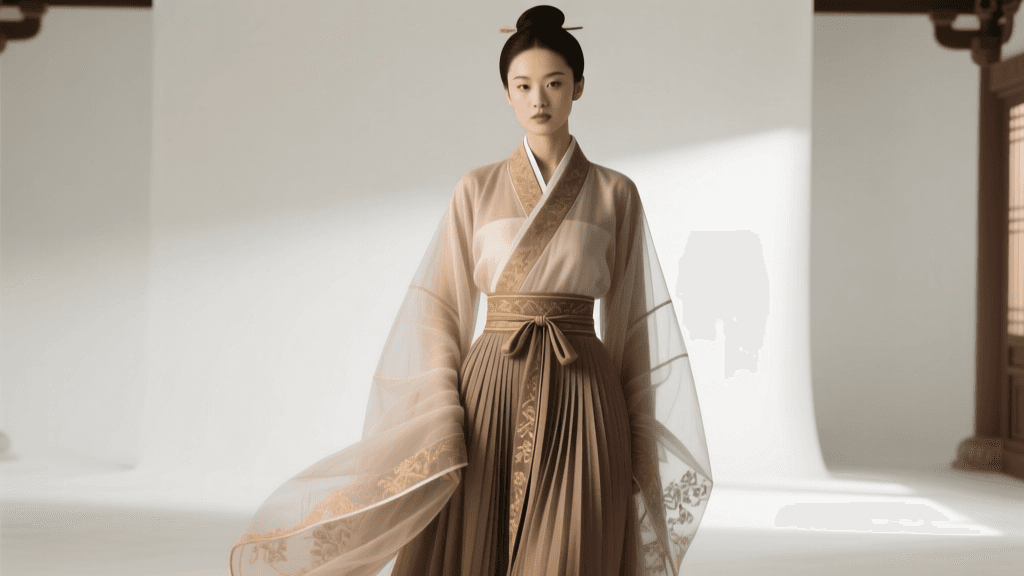
Among the most iconic sartorial innovations of this period was the Qixiong Ruqun (chest-high skirt ensemble). Unlike the modest, waist-bound garments of preceding eras, the Qixiong Ruqun featured a skirt tied securely above the bust, paired with a sheer, large-sleeved upper garment and a flowing silk stole. Today, this silhouette remains a cornerstone of the Hanfu revival movement, beloved by historians, reenactors, and fashion enthusiasts alike for its regal elegance and dramatic drape.
Dynasty Evolution: From Han Restraint to Tang Grandeur
To truly appreciate the architectural marvel of the Tang Qixiong Ruqun, one must understand the evolutionary trajectory of Chinese court dress. The transition from the Han to the Tang dynasty reflects a shift from Confucian modesty to a celebration of individual expression and imperial wealth.
| Dynasty | Silhouette & Fit | Sleeve Style | Skirt Placement | Textile Focus |
|---|---|---|---|---|
| Han (202 BC–220 AD) | Narrow, modest, heavily layered | Narrow to moderate | Natural waist | Hemp, basic woven silk |
| Wei/Jin (220–420 AD) | Flowing, romantic, wide hems | Wide, trailing | Natural to high waist | Lightweight silk gauze |
| Tang (618–907 AD) | Expansive, bold, structured volume | Large, rounded (Shidaijun) | Chest-high (Qixiong) | Brocade, jacquard, organza |
While Han dynasty clothing prioritized deep, wrapping robes (Shenyi) that concealed the body's form, the Tang court embraced the female silhouette. The high-waisted skirt elongated the legs and allowed for a generous display of luxurious textiles, while the plunging neckline of the upper garment reflected a society that was remarkably liberated by the standards of the ancient world.
Anatomy of the Tang Court Ensemble
A historically accurate Tang court ensemble is a masterclass in layering and textile contrast. As noted by the Smithsonian Asian Art archives, Chinese clothing of this era relied heavily on the interplay between opaque, heavily woven structural pieces and gossamer-thin, translucent overlays.
The Qun (Chest-High Skirt)
The foundation of the ensemble is the Qun. In the Tang court, these skirts were exceptionally wide, often utilizing 4 to 6 meters of fabric to create deep, voluminous pleats. The most prized color was pomegranate red, achieved through complex plant-dyeing techniques. The skirt features a wide, stiffened waistband that sits directly over the bust, providing structural support for the heavy silk body.
The Shan (Upper Garment)
Worn over or tucked into the skirt is the Shan. For high court fashion, this was often a Daxiushan (large-sleeved shirt) made of sheer silk organza or leno-weave gauze. The sleeves were so wide and long that they draped elegantly past the hands, creating a sense of ethereal movement when the wearer walked or danced.
The Pibo (Silk Stole)
No Tang court lady was fully dressed without her Pibo. This long, flowing silk scarf was draped over the shoulders and wrapped around the arms. Often woven with gold thread or featuring intricate jacquard patterns of lotus flowers and mythical birds, the Pibo added a dynamic, horizontal line that balanced the verticality of the high-waisted skirt.
A Reenactor's Guide: Sourcing, Fabrics, and Costs
For modern Hanfu enthusiasts and historical reenactors, acquiring a Tang Qixiong Ruqun requires navigating a market that ranges from mass-produced costume wear to haute couture historical reproduction. Understanding the traditional silk craftsmanship recognized by UNESCO is vital when selecting fabrics that mimic the drape and sheen of Tang court textiles.
Recommended Brands and Product Lines
- Ming Hua Lu: Renowned for their museum-grade reproductions. Their 'Peony' series Qixiong Ruqun utilizes authentic silk brocade and natural plant dyes. Expect to pay between $250 and $450 USD.
- Shi San Yu: Excellent for mid-tier, everyday Hanfu. Their silk organza Pibo and jacquard skirts offer a beautiful drape at a more accessible price point ($120–$180 USD).
- Zhong Zheng: Specializes in the Daxiushan (large-sleeved outer robes). Their sheer, gold-stamped organza pieces are perfect for achieving the opulent Tang court layering effect ($150–$300 USD).
Fabric Selection Guide
When commissioning or buying, avoid cheap polyester satins. They lack the breathability and structural drape required for a chest-high skirt. Instead, look for:
- Skirt Body: Mulberry silk jacquard, heavy silk crepe, or cotton-linen blends for structured pleating.
- Skirt Waistband: Must be a stiff, non-stretch fabric like silk taffeta or reinforced brocade to prevent the skirt from slipping down.
- Shan & Pibo: 100% silk organza, silk gauze, or leno-weave silk. These provide the necessary stiffness to hold the wide sleeve shape while remaining translucent.
Timing the Market: The Pre-Order (Yushou) Cycle
Top-tier Hanfu brands operate on a pre-order (Yushou) model. Major product drops typically occur in March (for spring/summer collections) and September (for autumn/winter). Because authentic silk weaving and natural dyeing are time-intensive, production times usually range from 45 to 90 days. Plan your commissions well in advance of any historical festivals or reenactment events.
Mastering the Fit: Measurements and Styling Techniques
The most common complaint among newcomers to the Qixiong Ruqun is the skirt slipping down. In the Tang dynasty, the structural integrity of the garment relied on precise tailoring and specific tying techniques. To ensure a flawless, secure fit, follow these actionable measurement and styling guidelines.
Crucial Measurements for Commissioning
- Upper Bust (Shang Xiongwei): Measure horizontally around the chest, directly over the bust line. This is the exact circumference where the skirt's waistband will sit. Add 2-3 cm for breathing room and overlap.
- Under Bust (Xia Xiongwei): Measure directly beneath the bust. The difference between upper and under bust helps tailors curve the waistband for anatomical support.
- Skirt Length: Measure from the upper bust line down to the ankle bone. For a traditional court look, the skirt should just graze the top of the foot. (Formula: Total Height x 0.65 is a safe baseline for most wearers).
- Arm Span: Crucial for the Daxiushan. Measure from wrist to wrist with arms outstretched to ensure the large sleeves reach the correct historical length.
The Double-Loop Knot Technique
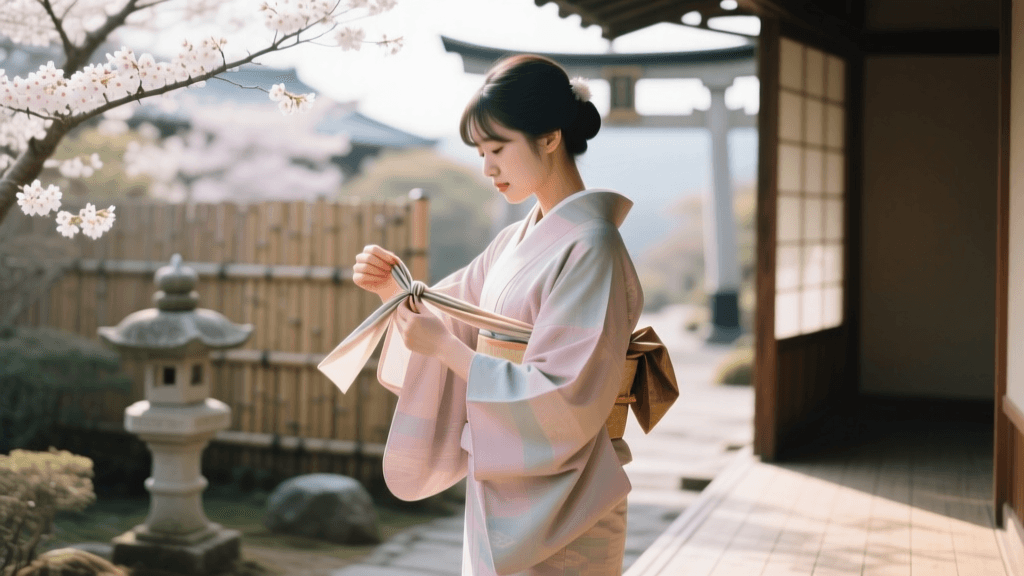
To prevent the heavy silk skirt from sliding down during wear, you must use the traditional double-loop tying method:
- Wrap the skirt around your upper bust, ensuring the front panel is centered.
- Cross the two long ties at the front, pulling them tightly to secure the band against your chest.
- Bring the ties around to your back, cross them again, and pull them back to the front.
- Tie a firm, flat square knot at the center of the chest.
- Take the remaining lengths of the ties, loop them under the main horizontal band, and tuck the ends securely into the side seams of the skirt.
This technique distributes the weight of the 4-meter skirt across the ribcage rather than relying solely on friction, allowing you to move, dance, and walk with the confidence of a Tang imperial consort.
Preserving the Legacy of Tang Textiles
The Qixiong Ruqun is more than just a beautiful garment; it is a wearable archive of Chinese textile history. The evolution from the restrained Han silhouettes to the flamboyant, chest-high skirts of the Tang court mirrors the empire's broader journey toward cosmopolitanism and cultural confidence. For modern collectors and reenactors, investing in high-quality silk, understanding historical tailoring, and mastering the art of the drape are essential steps in keeping this magnificent dynasty's legacy alive. Whether you are sourcing a museum-grade brocade from Ming Hua Lu or carefully measuring for a custom commission, the pursuit of Tang court fashion is a deeply rewarding journey into the heart of Asian sartorial traditions.