Global Runway Kimono Trends: 2026 Fashion Week Guide
The Sartorial Shift of 2026: Kimono on the Global Stage
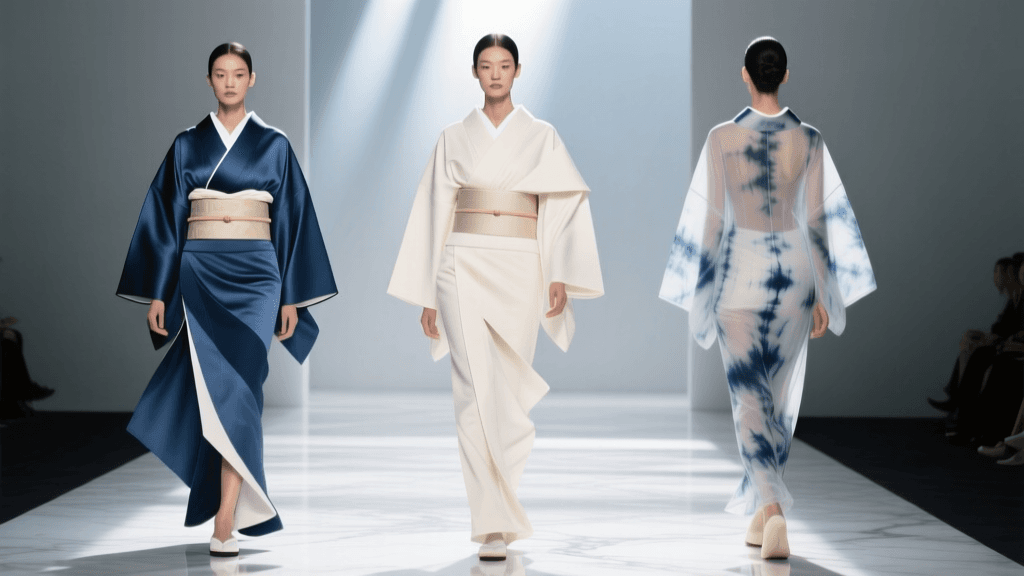
As we navigate the Spring/Summer and Fall/Winter 2026 fashion weeks in Paris, Milan, and Tokyo, one silhouette continues to dominate the avant-garde and luxury sectors: the kimono. No longer confined to ceremonial wear or treated merely as a superficial exotic reference, the traditional Japanese garment has become a structural foundation for contemporary high fashion. In 2026, top-tier design houses are moving past mere cultural appreciation into deep, technical collaborations with Japanese artisans, resulting in hybrid garments that respect historical provenance while pushing the boundaries of modern tailoring.
The integration of the kimono into global runways this year is defined by a rejection of fast-fashion approximations. Instead, designers are focusing on the architectural geometry of the T-shaped silhouette, the zero-waste cutting techniques inherent in traditional kimono construction, and the integration of heritage textiles like Nishijin-ori brocade and Tango chirimen silk. According to the Victoria and Albert Museum's extensive research on the kimono's journey from Kyoto to the catwalk, the garment's flat, linear construction offers a stark, revolutionary contrast to the Western tradition of darted, body-conforming tailoring. In 2026, this contrast is the focal point of luxury fashion's exploration of volume, drape, and gender-fluid dressing.
Deconstructing the Silhouette: Traditional vs. 2026 Runway Adaptations
To understand the current runway landscape, one must first recognize how designers are manipulating traditional elements. The 2026 collections have seen a surge in modular kimono-inspired pieces, where the foundational elements are preserved but the execution is radically modernized. Below is a comparative breakdown of how traditional kimono components are being reimagined on the 2026 runways.
| Garment Element | Traditional Kimono Standard | 2026 Runway Adaptation |
|---|---|---|
| Silhouette & Cut | T-shaped, straight-lined, floor-length, zero-waste fabric usage | Asymmetrical hems, deconstructed tailoring, cropped jackets, modular layering |
| Textiles & Weaving | Tango chirimen silk, Nishijin-ori brocade, hand-painted Yuzen | Recycled tech-silk, bio-based jacquards, upcycled vintage silks, digital Yuzen printing |
| Fastening & Waist | Obi belt, obijime cord, koshihimo ties, no buttons or zippers | Magnetic closures, integrated corsetry, utilitarian buckles, drawstring obi hybrids |
| Sleeves (Sode) | Furisode (long swinging), Tomesode (short), continuous shoulder line | Detachable sleeves, exaggerated drop-shoulders, cape-like draping, zip-off furisode |
| Collar (Eri) | Overlapping left over right, crisp silk han-eri under-collar | Deep V-neck plunge, exaggerated lapels, contrast stitching, detachable collars |
Artisanal Techniques Meeting 2026 Sustainability Mandates
A major driving force behind the kimono's prominence in 2026 is the fashion industry's pivot toward sustainability, heavily influenced by the EU's stringent 2026 circular textile mandates. Traditional kimono construction is inherently zero-waste; the garment is cut from straight bolts of fabric (tanmono) without curved seams, meaning almost no fabric is discarded during production. European houses are now adopting this 'tanmono' approach to minimize offcuts.
Furthermore, heritage dyeing techniques are experiencing a renaissance. The Metropolitan Museum of Art's historical archives on Japanese textile arts highlight the immense labor and skill required for techniques like Shibori (intricate tie-dyeing) and Kata-yuzen (stencil dyeing). In 2026, luxury brands are partnering directly with cooperatives in Kanazawa and Kyoto to source these textiles ethically. Rather than mass-producing imitation prints, houses are purchasing deadstock vintage kimono silks, deconstructing them, and patchworking them into modern trench coats and bomber jackets. This upcycling trend not only satisfies eco-conscious consumers but also preserves the tactile richness of hand-dyed silk that modern synthetic dyes cannot replicate.
Sourcing and Pricing: The 2026 Luxury Market
For collectors, fashion archivists, and enthusiasts looking to acquire runway-authentic kimono-inspired pieces in 2026, the market is highly stratified. Understanding the pricing tiers is essential for making informed investments.
- Tier 1: Haute Couture & Bespoke (€8,000 - €25,000+)
Pieces from Parisian couture houses featuring hand-woven Nishijin-ori gold thread and custom-fitted obi corsetry. These are typically one-of-a-kind runway samples or made-to-measure commissions. - Tier 2: Luxury Ready-to-Wear (€2,500 - €6,500)
High-end designer jackets and wrap dresses utilizing upcycled vintage kimono silks blended with modern cashmere or tech-wool. Brands in this tier often feature magnetic closures and structured drop-shoulders. - Tier 3: Contemporary Hybrid (€600 - €1,800)
Accessible luxury pieces from emerging Japanese and European designers. These often feature digital Yuzen prints on sustainable cupro or Tencel fabrics, mimicking the drape of heavy silk without the environmental footprint of traditional sericulture.
When shopping in 2026, platforms like Dover Street Market and specialized luxury archives on Farfetch are the primary hubs for these hybrid garments. Always look for tags that specify the origin of the textile; genuine 2026 collaborations will proudly list the specific weaving cooperative in Kyoto or the dyeing atelier in Ishikawa Prefecture.
Cultural Appreciation vs. Appropriation in Modern Fashion
The line between appreciation and appropriation has been a critical discourse in fashion for the last decade, but by 2026, the industry has largely established a framework for respectful integration. The Kyoto Costume Institute Digital Archives serves as a vital resource for designers, ensuring that the historical context of garments is understood before they are deconstructed.
In 2026, respectful adaptation means avoiding the use of sacred or highly specific ceremonial motifs (such as the imperial chrysanthemum or specific wedding crane arrangements) on casual, mass-market garments. Instead, designers are focusing on the *geometry* and *construction* of the kimono—the drape, the overlap, the sleeve attachment—rather than merely copying surface-level prints. Furthermore, profit-sharing models have become standard, where a percentage of the revenue from kimono-inspired collections is reinvested into Japanese artisanal guilds to help sustain the aging population of master weavers and dyers.
Actionable Guide: Building a 2026 Kimono-Inspired Wardrobe
Incorporating these global runway trends into your personal wardrobe requires a balance of traditional respect and modern styling. Here is how to wear kimono-inspired pieces in 2026 without looking like you are wearing a costume:
1. Master the Art of Layering
The traditional kimono relies on the layering of the nagajuban (undergarment) and the main silk layer. In 2026, translate this by wearing a crisp, high-collared white poplin shirt beneath a silk kimono-wrap jacket. Allow the collar of the shirt to peek out, mimicking the traditional han-eri (under-collar) while providing a sharp, contemporary contrast to the fluid silk.
2. Reimagine the Obi
Traditional obi belts are incredibly stiff and require complex tying. For daily wear, opt for 2026's 'soft-obi' belts—wide, structured sashes made from vegan leather or heavy canvas that tie with a simple architectural knot or secure via hidden magnetic clasps. Pair a wide obi-style belt with a tailored, oversized blazer to cinch the waist and create an hourglass silhouette over boxy tailoring.
3. Footwear Pairings
Avoid traditional zori or geta sandals unless you are attending a specific cultural event. On the 2026 runways, kimono-hybrid garments are almost exclusively paired with chunky, lug-sole leather boots or sleek, pointed-toe mules. The heavy, grounded footwear anchors the flowing, ethereal nature of the wide sleeves, creating a striking visual balance that is highly relevant to current street-style photography.
4. Invest in Haori Jackets
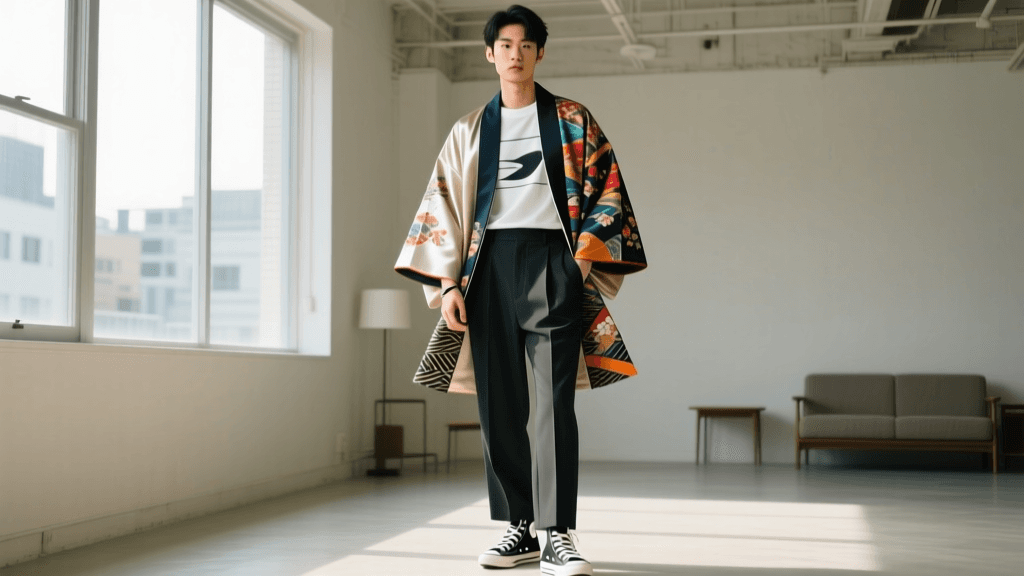
If a full kimono silhouette feels too dramatic for your lifestyle, the haori (a traditional hip- or thigh-length kimono jacket) is the most versatile entry point. A vintage or contemporary haori worn open over a simple turtleneck and wide-leg trousers is a staple of the 2026 intellectual-chic aesthetic. Look for pieces featuring subtle geometric patterns (like the asanoha hemp leaf or seigaiha wave motifs) which offer timeless elegance without overwhelming your outfit.
Conclusion
The presence of the kimono on the 2026 global runways is a testament to its enduring architectural brilliance. As the fashion industry grapples with the urgent need for sustainability and meaningful cultural exchange, the kimono offers a masterclass in zero-waste design, artisanal dedication, and fluid elegance. By understanding the nuances of its construction and supporting ethical, collaborative design houses, enthusiasts can embrace this beautiful tradition in a way that is both sartorially forward-thinking and deeply respectful of its Japanese heritage.