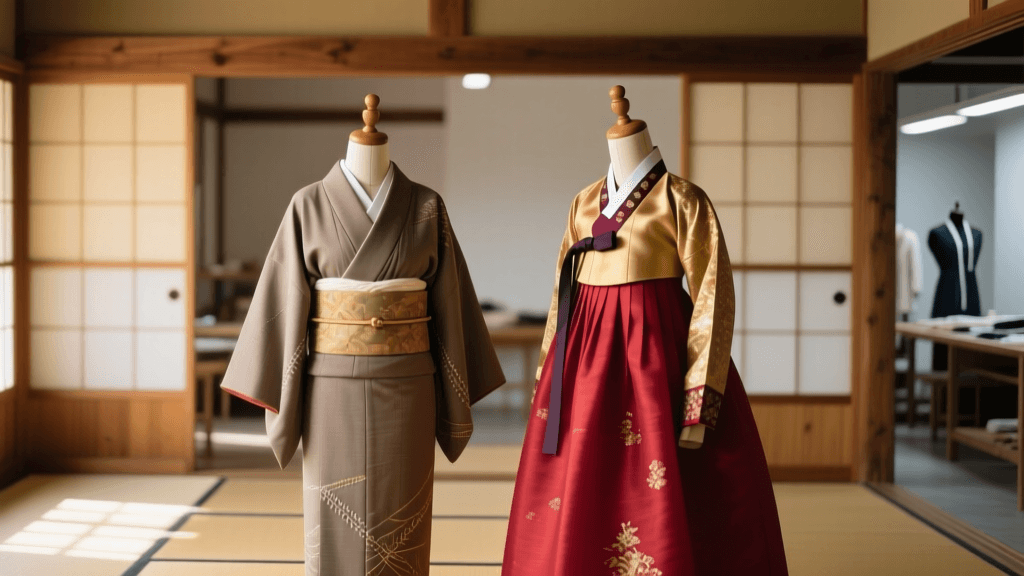
Global Runways 2026: The Kimono's Haute Couture Revival

The Kimono’s Triumphant Return to the 2026 Runways
As the global fashion calendar unfolds for the Spring/Summer and Fall/Winter 2026 seasons, one silhouette has undeniably dominated the international runways: the Japanese kimono. No longer confined to museum archives or niche cultural ceremonies, the kimono has emerged as the structural and philosophical foundation for some of the most talked-about haute couture and ready-to-wear collections in Paris, Milan, and Tokyo. This 2026 revival is not merely about surface-level Japonisme or the appropriation of exotic motifs; rather, it represents a profound engagement with the garment's revolutionary geometry, zero-waste construction, and fluid relationship with the human body.
Western tailoring has historically relied on darts, seams, and restrictive corsetry to mold fabric to the body's contours. In stark contrast, the traditional kimono utilizes a T-shaped, straight-line construction that drapes, wraps, and folds. According to extensive research documented by the Victoria and Albert Museum, this fundamental difference in spatial philosophy has captivated avant-garde designers for decades. However, in 2026, driven by a global demand for comfort, gender-fluid silhouettes, and sustainable manufacturing, the kimono’s architectural principles have moved from the avant-garde fringe to the very center of mainstream luxury fashion.
Deconstructing the Silhouette: Key Runway Adaptations
The 2026 runway season has seen designers deconstruct and reimagine the core components of the kimono. The sode (sleeves), the eri (collar), and the obi (sash) have been exaggerated, hybridized, and recontextualized. Designers are playing with volume and asymmetry, creating garments that offer the elegance of traditional Japanese formalwear while accommodating the dynamic movement required by modern urban life.
At Paris Fashion Week 2026, several heritage houses presented collections where the strict V-neck overlap of the traditional kimono collar was transformed into deep, sweeping plunges or structured, architectural mandarin collars. Meanwhile, the obi belt—traditionally a wide, tightly bound silk sash requiring complex knotting (musubi)—was reimagined as corseted leather harnesses, utility webbing, and sheer organza sashes that cinched oversized trench coats and fluid slip dresses.
Traditional Kimono vs. 2026 Runway Adaptations
| Garment Feature | Traditional Kimono | 2026 Runway Adaptation |
|---|---|---|
| Sleeve (Sode) | Straight, uniform drop, attached to the body | Asymmetrical, detachable, exaggerated volume, or split-seam |
| Collar (Eri) | Strict V-neck overlap, layered undergarments | Deep plunge, structured mandarin, or open drape over bare skin |
| Belt (Obi) | Wide, tightly bound silk, complex knots | Corseted leather, utility webbing, or sheer sash with hardware |
| Fabric | Woven silk, crepe, brocade (Nishijin-ori) | Upcycled denim, technical nylon, bio-engineered silk, liquid organza |
| Construction | Straight lines, zero-waste, un-tailored | Hybrid: straight-line draping combined with hidden elasticized joints |
The Zero-Waste Revolution: Kimono Cutting in 2026
Beyond aesthetics, the kimono’s influence on the 2026 runways is deeply tied to the global fashion industry's urgent pivot toward sustainability. With stringent textile waste directives taking full effect across the European Union and North America in 2026, luxury houses are actively seeking historical methodologies that minimize environmental impact. The traditional kimono is cut from a single bolt of fabric, known as a tan, which measures approximately 14 inches wide and 12.5 yards long. Because the pieces are cut in straight lines, there is virtually no fabric waste.
As highlighted by the Kyoto Costume Institute, the historical ingenuity of the tan cutting method represents a masterclass in sustainable design. In 2026, contemporary designers are adopting this modular approach. By utilizing straight-line cutting and modular seaming, brands are creating garments that can be easily disassembled, repaired, and ultimately recycled. Some emerging Tokyo-based designers featured in the 2026 fashion weeks are even using 3D-knitting technology to create seamless, kimono-inspired wraps that perfectly mirror the zero-waste philosophy of the tan bolt, but with biodegradable algae-based yarns.
Spotlight on Designers Leading the Movement
While the kimono's influence is widespread, certain designers have made it the focal point of their 2026 creative narratives. Thom Browne’s continued exploration of cross-cultural tailoring remains a standout, blending American mid-century prep with the rigid formalities of Japanese ceremonial wear. His 2026 collections featured deconstructed haori (kimono jackets) crafted from heavy grey flannel, paired with pleated skirts that mimic the hakama.
Meanwhile, the successors of the great Japanese avant-garde movements—following in the footsteps of Rei Kawakubo and Yohji Yamamoto—are pushing the boundaries of the kimono silhouette using technical fabrics. At Tokyo Fashion Week 2026, we witnessed waterproof, heat-sealed kimono wraps designed for urban commuters, proving that the garment's utility is just as relevant as its beauty. The Fédération de la Haute Couture et de la Mode has noted a significant increase in cross-cultural silhouettes this year, emphasizing that the global fashion capital is looking East not for costume, but for structural innovation.
Actionable Styling: Integrating Runway Trends into Daily Wear
You do not need to attend a haute couture show to incorporate the 2026 kimono trends into your personal wardrobe. The key to mastering this look is balancing traditional proportions with contemporary minimalism. Here are three actionable ways to integrate these runway adaptations into your daily rotation, complete with specific measurements and styling notes.
1. The Modern Haori Layer
The haori is a traditional kimono jacket that is currently dominating street style. For 2026, look for a contemporary haori crafted from matte crepe or lightweight wool. Proportion Tip: Seek out a garment with a 32-inch shoulder span and a 30-inch sleeve drop. This exaggerated, dropped-shoulder silhouette creates the effortless drape seen on the runways. Layer it over a simple, ribbed turtleneck and wide-leg trousers. Artisan-crafted contemporary haori jackets from modern Kyoto ateliers range from $450 to $1,200 in 2026, offering a worthwhile investment piece that bridges outerwear and formalwear.
2. The Obi Belt Cinch
Instead of purchasing a full kimono, adopt the runway's favorite styling trick: the obi cinch. Invest in a structured, 4-to-6-inch wide leather or heavy-canvas sash. Use it to belt an oversized menswear blazer, a flowing maxi dress, or even a classic camel trench coat. This instantly creates the hourglass silhouette associated with traditional kimono dressing, while grounding the outfit in modern utility. Opt for hardware-free designs that rely on wrapping and tucking, honoring the traditional musubi knotting techniques without the need for formal accessories.
3. Footwear and the Tabi Evolution
The split-toe tabi boot, popularized by Maison Margiela, has evolved significantly by 2026. The latest iterations feature softer leathers, lower block heels, and are designed to be worn with traditional zori-inspired sandals or sleek, pointed-toe mules. Pairing a flowing, kimono-sleeved blouse with modern tabi ankle boots creates a striking visual dialogue between historical Japanese workwear and contemporary Parisian chic.
Cultural Appreciation vs. Appropriation in 2026
As the kimono becomes a staple of global runways, the conversation surrounding cultural appreciation versus appropriation remains vital. In 2026, the most respected fashion houses are moving away from simply copying sacred or historically significant motifs (such as the imperial chrysanthemum or specific clan crests) without context. Instead, true appreciation is found in collaboration and structural homage.
Leading brands are now partnering directly with multi-generational weaving cooperatives in Kyoto and Kanazawa, ensuring that the artisans creating the textiles are fairly compensated and credited. Furthermore, understanding the basic rules of kitsuke (the art of kimono dressing)—such as the absolute rule of wrapping the left side over the right side (right over left is strictly reserved for dressing the deceased)—is a mark of respect that informed designers and enthusiasts alike observe, even when adapting the garment for modern wear.
Conclusion
The kimono’s presence on the 2026 global runways is a testament to its timeless architectural brilliance. It is a garment that refuses to be stagnant, continually offering new solutions to the fashion industry's modern challenges, from sustainability to gender-fluid design. By understanding the deep cultural roots and structural innovations of the kimono, fashion enthusiasts can embrace this 2026 trend not as a fleeting costume, but as a permanent, respectful integration of Asian sartorial mastery into the global wardrobe.