Traditional Hinoki Geta and Zori Craft: 2026 Guide
The Enduring Legacy of Japanese Footwear in 2026
As global fashion pivots toward sustainability, artisanal authenticity, and slow fashion in 2026, traditional Japanese footwear has experienced a remarkable renaissance. Far from being mere historical relics, bespoke geta (wooden clogs) and zori (flat sandals) are now highly sought after by collectors, fashion enthusiasts, and cultural preservationists worldwide. According to the Ministry of Economy, Trade and Industry (METI), the international commissioning of designated traditional crafts has seen a steady upward trajectory, with footwear artisans in regions like Hiroshima and Shizuoka reporting record bespoke orders this year. This comprehensive guide explores the intricate craftsmanship of hinoki wood geta and zori, offering actionable advice for commissioning, wearing, and preserving these masterpieces in the modern era.
Anatomy of Geta and Zori: Understanding the Craft
Before commissioning a pair of traditional Japanese sandals, it is essential to understand their structural anatomy. While both geta and zori utilize the iconic V-shaped thong, their foundational architecture differs significantly, dictating their use cases and acoustic profiles.
The Dai (Base) and Ha (Teeth)
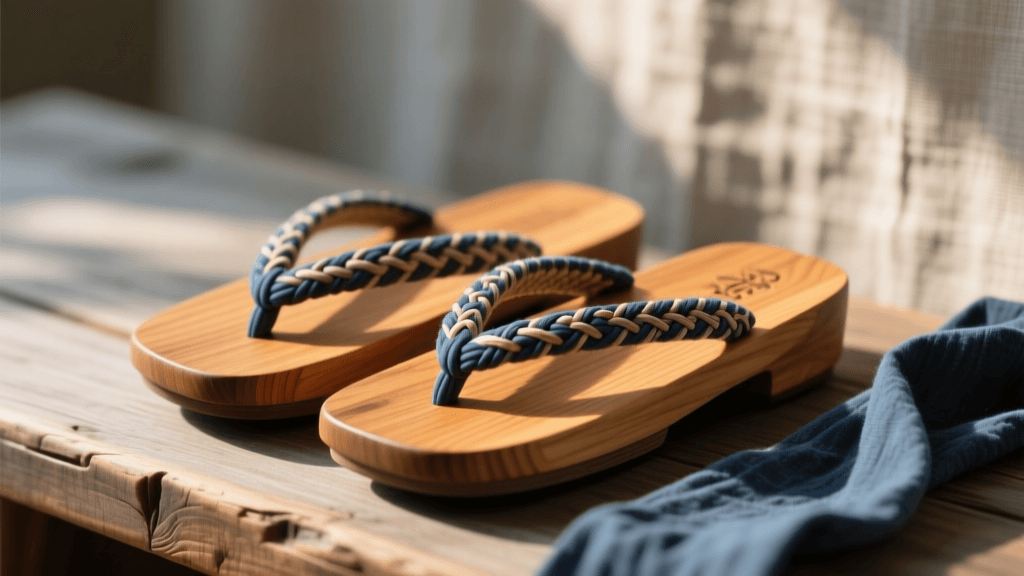
The dai is the main body or base of the footwear. In geta, the dai is elevated by one or two ha (teeth) carved directly from the same block of wood. The teeth are not merely glued on; in high-end bespoke craftsmanship, they are carved from a single solid piece of timber to ensure structural integrity and a resonant, clacking sound known as karankoron. Zori, conversely, feature a flat dai without teeth, traditionally woven from rice straw, bamboo sheath, or igusa (rush grass), though modern 2026 interpretations frequently utilize lacquered wood or high-density cork for formal occasions.
The Hanao (Thong)
The hanao is the Y-shaped strap that secures the foot to the base. It passes through three holes in the dai: one at the front center and two at the rear sides. The knotting technique used underneath the dai is a closely guarded artisanal skill, ensuring the strap remains taut and adjustable without the use of modern adhesives or metal staples.
The 2026 Hinoki Renaissance: Sustainable Sourcing
Hinoki (Japanese cypress) remains the undisputed king of premium geta crafting. Known for its fine, straight grain, natural water resistance, and distinct citrus-pine aroma, hinoki is a luxury material. However, the environmental landscape of 2026 demands rigorous sustainability. According to the Forestry Agency of Japan, sustainable forest management and the utilization of reclaimed architectural timber have become central to the craft.
Master artisans today frequently source hinoki from dismantled 20th-century machiya (traditional wooden townhouses) and retired sake breweries. This reclaimed wood, often aged for over eighty years, possesses a density and stability that newly harvested timber cannot match. When commissioning bespoke geta in 2026, buyers can specifically request 'reclaimed architectural hinoki,' which not only supports circular economy principles but also yields a deeper, more resonant acoustic strike against the pavement.
The scent of aged hinoki is the scent of time itself. When we carve a reclaimed beam into a dai, we are giving the wood a second life to walk into the future. - Master Artisan Kenjiro Sato, Hiroshima Geta Cooperative, 2026.
Modern Hanao: Where Heritage Meets Innovation
The hanao strap is where personal expression meets structural necessity. Traditionally made from cotton or velvet, the hanao of 2026 showcases a fascinating blend of heritage textiles and modern durability. Many artisans now offer straps woven from upcycled vintage kimono silk, carefully reinforced with a core of marine-grade synthetic cord to prevent stretching and snapping in wet weather.
For vegan buyers or those seeking ultra-durable daily wear, innovative plant-based leathers derived from apple waste and mycelium (mushroom root structures) have entered the bespoke market. These modern materials are hand-wrapped around a natural cotton core, providing the softness required to prevent blisters between the toes while offering the tensile strength needed for urban commuting.
How to Commission Bespoke Footwear in 2026
Ordering custom geta or zori is an intimate process that bridges the gap between the artisan's workshop and your unique biomechanics. Here is what to expect when commissioning a pair today.
Step 1: The Ashikata (Foot Tracing)
Unlike Western shoe sizing, bespoke geta are carved to the exact millimeter of your foot. Artisans will require a precise ashikata (foot tracing) and measurements of your arch height and instep girth. Many international buyers now use standardized 3D foot-scanning apps approved by the artisan cooperatives to transmit exact volumetric data to Japan.
Step 2: Wood Selection and Carving
You will be presented with grain options. Masame (straight grain) offers a uniform, elegant look and superior moisture resistance, while itame (wood grain with natural patterns) provides a rustic, organic aesthetic. The artisan uses a kanna (traditional hand plane) to shave the wood to a glass-like finish, eliminating the need for chemical sanding or synthetic sealants.
Step 3: Hanao Threading and Knotting
The final step is threading the hanao. The artisan adjusts the height of the front thong based on your instep measurement, ensuring your heel hangs exactly 1 to 2 centimeters off the back edge of the dai. This deliberate overhang is crucial for the proper biomechanics of the geta walk.
Current Pricing and Timelines
As of early 2026, commissioning a master-crafted pair of raw hinoki geta starts at approximately 35,000 JPY (roughly 230 USD). Fully lacquered formal zori with vintage silk hanao can range from 60,000 to 120,000 JPY (400 to 800 USD). Due to the high volume of international orders, expect a lead time of 8 to 14 weeks.
Comparison: Geta vs. Zori for the Modern Wardrobe
| Feature | Geta (Wooden Clog) | Zori (Flat Sandal) |
|---|---|---|
| Base Material | Solid Hinoki, Paulownia, or Cedar | Woven Straw, Bamboo, Leather, or Cork |
| Elevation | Elevated by 1 or 2 Ha (teeth) | Flat or slightly wedged |
| Primary Use Case | Casual wear, festivals, yukata, rain | Formal wear, kimono, tea ceremonies |
| Acoustic Profile | Loud, rhythmic clacking (karankoron) | Silent or soft rustling |
| 2026 Price Range | 25,000 - 55,000 JPY | 30,000 - 120,000+ JPY |
Mastering the Geta Walk
Walking in geta requires a fundamental shift in posture and gait. Western footwear encourages a heel-to-toe rolling stride, but this will cause geta to clatter violently and slip off the foot. The correct technique involves a slight forward lean, engaging the core, and lifting the sandal with the toes rather than pushing off with the heel.
Think of the movement as a controlled shuffle. You set the entire base of the geta down flat onto the ground simultaneously. This flat-footed strike not only produces the beautiful, traditional acoustic resonance but also stimulates the acupressure points on the sole of the foot, a health benefit long championed by traditional Japanese medicine practitioners.
Preservation and Care for Wooden Footwear
Hinoki and paulownia woods are naturally resilient, but the shifting humidity levels of modern urban environments require mindful maintenance. To preserve your bespoke footwear in 2026, follow these essential care protocols:
- Airing Out: After wearing, place your geta in a well-ventilated area away from direct sunlight. Direct UV exposure can cause the natural oils in the hinoki to evaporate, leading to micro-cracking.
- Moisture Management: If caught in the rain, wipe the dai with a dry, soft cotton cloth immediately. Never use a hairdryer or place them near a radiator, as rapid artificial drying will warp the wood grain.
- Hanao Hygiene: The fabric straps absorb sweat and environmental dust. Gently spot-clean silk or cotton hanao with a damp cloth and mild, pH-neutral soap. For mycelium or plant-leather straps, a simple wipe with a specialized botanical leather conditioner will maintain their suppleness.
- Teeth Maintenance: Over years of use, the ha (teeth) will naturally wear down. Many master artisans offer a resurfacing service, where they can plane the teeth back to perfect symmetry and reapply a natural tung oil finish.
Conclusion
The craft of bespoke hinoki geta and zori is a testament to the enduring appeal of functional art. In 2026, as consumers increasingly reject mass-produced, disposable fashion in favor of garments and accessories that tell a story, traditional Japanese footwear stands out as a paragon of sustainable luxury. Whether you are commissioning a pair of elevated geta for a summer festival or a sleek pair of woven zori for formal events, you are participating in a centuries-old dialogue between nature, artisan, and wearer. By understanding the anatomy, sourcing, and care of these incredible pieces, you ensure that the rhythmic karankoron of wooden footwear will continue to echo through the streets for generations to come.