Identifying Vintage Shibori, Yuzen, and Kasuri Textiles
The Allure of Japanese Resist and Pattern Dyeing
For centuries, Japanese textile artisans have elevated the simple act of coloring fabric into a profound expression of culture, nature, and philosophy. For vintage garment collectors and Asian tradition enthusiasts, understanding the nuanced differences between traditional Japanese dyeing techniques is essential. The triumvirate of Japanese textile art—Shibori, Yuzen, and Kasuri—each represents a distinct approach to manipulating dye, thread, and fabric. Whether you are hunting for a mid-century haori, an Edo-period furisode, or a rustic farm jacket, knowing how to identify, evaluate, and preserve these textiles will significantly enhance your collection. This guide provides a deep dive into the technical identifiers, market valuations, and archival care required for these three magnificent dyeing traditions.
Shibori: The Sculptural Art of Shaped Resist
Technical Process and Identifiers
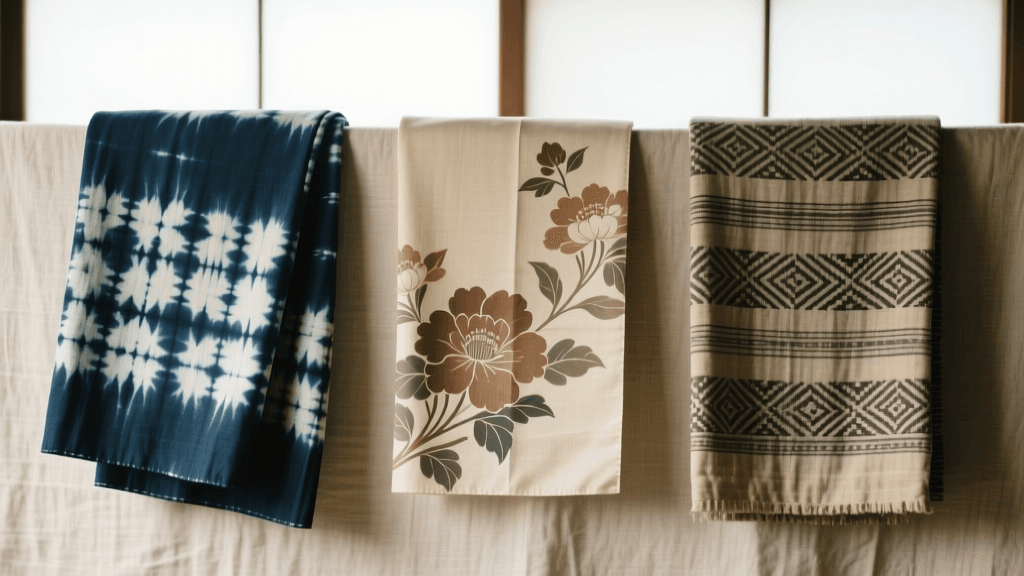
Shibori translates roughly to "to squeeze or wring." Unlike surface-level printing, Shibori is a shaped-resist dyeing technique where the fabric is folded, twisted, bound, or clamped before being submerged in a dye vat, traditionally indigo. The physical manipulation of the cloth creates a three-dimensional, sculptural texture that is the hallmark of authentic Shibori.
When examining a vintage Shibori garment, look closely at the surface. You should see tiny puckers or a crepe-like texture where the threads were tightly bound. According to the World Shibori Network, there are hundreds of specific Shibori techniques, but collectors most frequently encounter Kanoko (fawn-spot tie-dye), Arashi (pole-wrapping that creates diagonal rain-like patterns), and Itajime (shape-resist using wooden blocks). Authentic Kanoko Shibori, particularly the intricate Hitta Shibori from the Arimatsu region, requires thousands of individual micro-knots tied by hand, resulting in a highly textured, almost bumpy surface that catches the light beautifully.
Collecting and Valuation
Vintage Shibori haori and kimono are highly sought after for their tactile quality and striking geometric or organic patterns. A standard vintage Arashi Shibori haori typically ranges from $80 to $250. However, authentic, finely knotted Kanoko Shibori kimono, especially those featuring complex pictorial landscapes created entirely through micro-binding, can command prices from $500 to over $2,000 depending on condition and silk quality.
Yuzen: The Pictorial Mastery of Paste-Resist
Technical Process and Identifiers
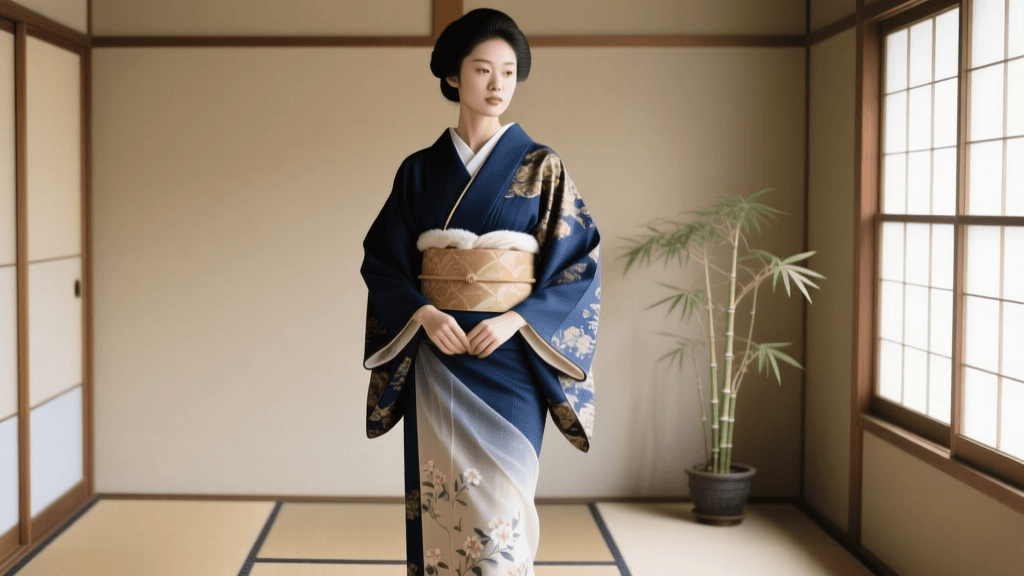
If Shibori is sculptural, Yuzen is painterly. Developed in the late 17th century by Miyazaki Yuzensai, Yuzen dyeing utilizes a thick, waterproof rice paste (nori) applied to the fabric to create a resist barrier. This allows artisans to paint elaborate, multi-colored pictorial designs directly onto the silk without the colors bleeding into one another. The Victoria and Albert Museum highlights Yuzen as the pivotal technique that allowed Japanese kimono to transition from simple woven patterns to sweeping, canvas-like landscapes.
To identify authentic hand-painted Yuzen (Tegaki Yuzen), examine the edges of the dyed motifs. You will often see a faint, white outline where the rice paste was applied and later washed away. This white border, known as ito-me (thread-line), is the definitive signature of hand-painted Yuzen. Additionally, look for the integration of luxurious embellishments such as gold leaf (surihaku), metallic embroidery, and subtle gradient shading (bokashi), which are frequently used to highlight cranes, cherry blossoms, and flowing water motifs.
Collecting and Valuation
Yuzen is the standard for formal Japanese attire, including the kurotomesode (black formal kimono for married women) and furisode (long-sleeved kimono for unmarried women). Because of the intense labor involved in Tegaki Yuzen, vintage pieces hold immense value. A vintage, hand-painted Yuzen tomesode in good condition generally starts around $300 and can easily exceed $1,500 for pieces created by recognized Living National Treasures or master artisans in Kyoto and Kanazawa. Stencil Yuzen (Kata Yuzen), which uses paper stencils rather than freehand paste application, is more common and usually priced between $100 and $400.
Kasuri: The Rustic Charm of Pre-Dyed Threads
Technical Process and Identifiers
Kasuri is the Japanese iteration of Ikat. Unlike Shibori and Yuzen, where the woven fabric is dyed, Kasuri involves dyeing the individual warp and/or weft threads before they are woven on the loom. The threads are tightly bound in specific patterns and dipped in dye (historically natural indigo). When woven, the slight misalignment of the dyed threads creates a characteristic blurred or fuzzy edge to the patterns.
The Kyoto Museum of Traditional Crafts notes that Kasuri was historically the fabric of the common people, prized for its durability, washability, and the fact that the color penetrated the entire thread, meaning the fabric did not show wear as easily as surface-dyed textiles. When identifying Kasuri, look for geometric, rustic motifs like arrows, crosses, or abstract tortoiseshells. Run your fingers over the fabric; unlike Shibori, Kasuri is generally flat and smooth, often woven from cotton or hemp rather than silk. The famous Kurume Kasuri from Fukuoka and Bingo Kasuri from Hiroshima are the most celebrated regional variants.
Collecting and Valuation
Vintage Kasuri appeals to collectors who appreciate wabi-sabi, folk art, and rustic aesthetics. Vintage cotton Kasuri kimono, haori, and work jackets (noragi) are generally more affordable than silk Yuzen or Shibori. You can find beautiful, mid-century Kurume Kasuri kimono for $50 to $150. However, antique, hand-spun, natural indigo-dyed Kasuri textiles from the Edo or Meiji periods, especially those featuring complex pictorial weaves (e-gasuri), are rare museum-quality pieces that can fetch upwards of $800.
Comparative Analysis: Shibori vs. Yuzen vs. Kasuri
Use the following table to quickly differentiate between these three techniques when evaluating vintage garments in antique markets or online auctions.
| Feature | Shibori | Yuzen | Kasuri |
|---|---|---|---|
| Resist Method | Physical manipulation (binding, folding, clamping) | Chemical/Paste resist (rice paste applied to woven fabric) | Thread resist (binding threads before weaving) |
| Primary Fabric | Silk, occasionally cotton | Almost exclusively Silk | Cotton, Hemp, Ramie |
| Surface Texture | 3D puckering, crepe-like, sculptural | Smooth, flat, often embellished with gold/embroidery | Flat, slightly coarse, crisp cotton weave |
| Pattern Edges | Soft, blurred, organic gradients | Crisp, defined, often with a white outline (ito-me) | Fuzzy, blurred edges due to thread misalignment |
| Formality Level | Semi-formal to Formal (depending on crest and motif) | Highly Formal (weddings, tea ceremonies) | Informal, everyday wear, rural workwear |
Actionable Preservation and Care Guide
Acquiring these vintage textiles is only the first step; preserving them requires strict adherence to archival care standards. Japanese vintage silks and cottons are highly susceptible to light damage, moisture, and acidic degradation.
Washing and Spot Cleaning
Never machine wash or aggressively hand-wash vintage Yuzen or Shibori silk. The water-soluble sizing and delicate dyes will bleed, and the physical structure of the Shibori puckers will collapse permanently. For minor spots on silk, use a barely damp microfiber cloth with a drop of pH-neutral detergent like Eucalan. For deep stains or overall odors, seek out a professional Japanese kimono cleaner who offers Maru-arai (a specialized dry-cleaning and re-starching process). Expect to pay between $40 and $100 per garment for this service. Vintage cotton Kasuri is more robust and can be gently hand-washed in cold water (below 30°C) using Orvus WA Paste, a gentle, archival-safe soap favored by textile conservators. Always air-dry Kasuri flat, away from direct sunlight to prevent indigo oxidation and fading.
Archival Storage Solutions
Proper storage is critical for maintaining the value and integrity of your collection. Follow these precise measurements and material guidelines:
- Wrapping: Never store vintage garments in plastic bags, which trap moisture and cause mildew. Wrap each folded kimono or haori in unbleached, washed cotton muslin or traditional tatou paper. The wrap should be at least 40x60 inches to fully enclose the garment without tight folds.
- Padding: To prevent hard creases that can eventually shatter vintage silk fibers, roll acid-free, unbuffered tissue paper into loose tubes and place them inside the folds of the sleeves and hem.
- Environment: Store wrapped textiles in a cool, dark environment with a relative humidity of 45-55%. Avoid cedar wood chests unless the wood is fully sealed and lined with acid-free paper; raw cedar off-gases volatile organic compounds (VOCs) that can cause yellowing and acid-burn on vintage silk.
- Moth Prevention: Instead of chemical mothballs, which leave a toxic residue and degrade silk proteins, use natural alternatives like dried lavender sachets or blocks of Hinoki wood, replacing them every six months.
By mastering the identification and preservation of Shibori, Yuzen, and Kasuri, collectors not only safeguard their financial investments but also act as stewards of Japan's profound textile heritage. Each puckered thread, painted motif, and blurred geometric line tells a story of artisanal mastery that transcends generations.