Kimono Trade Routes: 2026 Guide to Historical Textile Imports
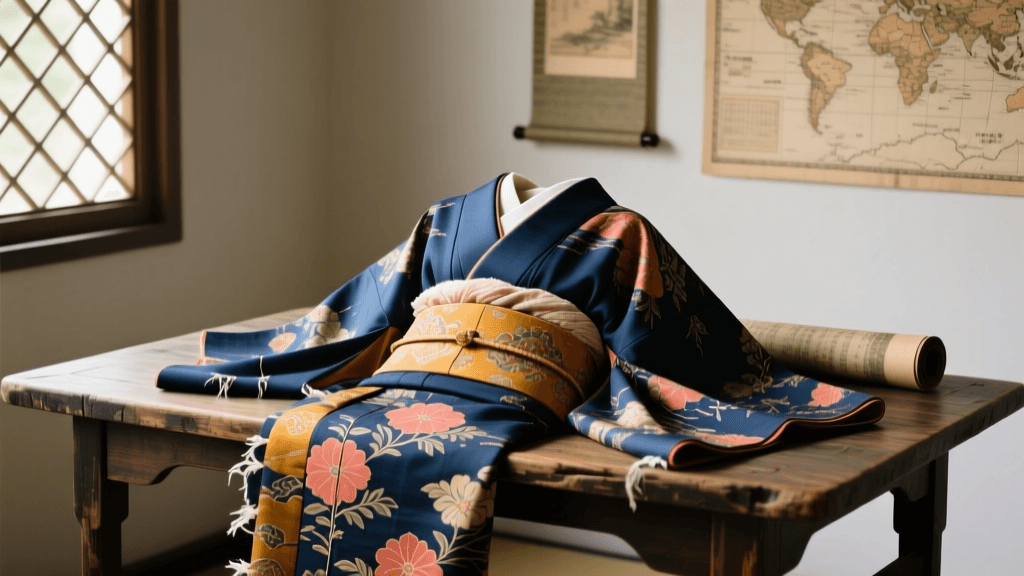
The Global Threads of Japanese Garments
When examining the traditional Japanese kimono, it is a common misconception to view the garment as a product of strict cultural isolation. In reality, the most celebrated kimono textiles are the result of centuries of vibrant international trade, maritime exploration, and cross-cultural exchange. As of 2026, the intersection of heritage preservation and sustainable fashion has sparked a massive renaissance in tracing and reviving these historical import routes. Collectors, historians, and contemporary artisans are looking back at the maritime Silk Road and the Nanban trade routes to understand how foreign fabrics permanently altered Japanese sartorial aesthetics.
This comprehensive 2026 guide explores the historical importation of textiles that shaped the kimono, detailing how Indian chintz, Chinese brocades, and European velvets were assimilated into Japanese culture. Furthermore, we provide actionable advice for modern collectors on how to identify, source, and preserve these globally influenced garments in today's market.
The Maritime Silk Road and the Birth of Sarasa
Perhaps the most profound foreign influence on Japanese textile design came from the Indian subcontinent via the maritime trade routes. During the Edo period, despite strict isolationist policies, trade was maintained with Dutch and Chinese merchants at the port of Dejima. Through these channels, Indian painted and block-printed cotton chintz entered Japan. The Japanese termed this vibrant fabric sarasa. According to the UNESCO Silk Road Project, these maritime corridors were essential in transferring not just goods, but complex dyeing technologies and aesthetic motifs across continents.
Japanese artisans were captivated by the colorfastness and intricate patterns of Indian chintz, which featured exotic motifs such as peacocks, lotuses, and scrolling geometric vines. Because importing the actual fabric was restricted and expensive, domestic weavers and dyers in Kyoto and Sakai began creating Kyo-sarasa and Sakai-sarasa. They adapted local kata-yuzen (stencil dyeing) and tsutsugaki (paste-resist) techniques to mimic the imported Indian aesthetics. In 2026, the demand for authentic Edo-era sarasa has skyrocketed, with contemporary artisans utilizing lab-grown indigo and upcycled madder root to recreate these historical trade patterns with zero environmental runoff.
Chinese Brocades and the Kara-ori Tradition
Long before European ships arrived, the kimono's foundational weaving techniques were heavily influenced by the Asian continent. The importation of luxurious Chinese silk brocades during the Ming dynasty fundamentally transformed the Nishijin weaving district in Kyoto. These imported textiles, known as kara-ori (Chinese weave), featured raised, intricate patterns woven with supplementary wefts of gold and silver threads.
The Metropolitan Museum of Art's Heilbrunn Timeline of Art History notes that Japanese weavers meticulously deconstructed imported Ming brocades to reverse-engineer the complex loom setups required to produce them. This led to the development of indigenous brocade styles that became the standard for high-ranking samurai and aristocratic garments. Today, the legacy of kara-ori lives on in the heavy, ornate maru obi and fukuro obi worn during formal ceremonies.
Key Imported Textiles That Shaped Kimono Design
To understand the 2026 market for heritage textiles, collectors must be able to distinguish between the various foreign imports and their domestic adaptations. The table below outlines the primary historical imports and their status in the modern market.
| Textile Type | Origin | Japanese Adaptation | 2026 Market Status & Trends |
|---|---|---|---|
| Sarasa (Chintz) | India / Coromandel Coast | Kyo-sarasa, Sakai-sarasa (Stencil & Resist Dyeing) | High demand; 2026 eco-revivals use botanical dyes and AI-assisted stencil cutting. |
| Kara-ori (Brocade) | Ming Dynasty China | Nishijin-ori, Hakata-ori (Complex Jacquard & Drawlooms) | Premium tier; 2026 artisans use smart-looms to replicate lost Tang/Ming weaves. |
| Birodo (Velvet) | Netherlands / Portugal | Kyo-birodo (Cut Velvet Yuzen) | Niche luxury; 2026 artisans experiment with sustainable bamboo-blend velvets. |
| Kasuri (Ikat) | Southeast Asia / Ryukyu | Kurume-gasuri, Bingo-kasuri | Resurgent; 2026 upcycling trends favor vintage kasuri for modern streetwear. |
The 2026 Neo-Heritage Movement: Sourcing and Pricing
For collectors and enthusiasts navigating the 2026 textile market, understanding the distinction between historical antiques and modern neo-heritage revivals is crucial. The 2026 Global Heritage Textile Summit in Kyoto recently highlighted a new wave of artisans who are blending historical trade motifs with 2026 sustainable technologies.
Actionable Sourcing Advice for 2026
- Check the Bolt Width (Tan): Historical Edo-period and early Meiji-era kimono bolts were typically woven at 32 to 34 centimeters wide. If you are examining a piece claiming to be a historical antique, a width of 36 to 38 centimeters indicates a modern 2026 revival or a late-20th-century reproduction.
- Analyze the Dye Penetration: Authentic historical sarasa imported or replicated via traditional hand-rubbing will show slight variations in dye penetration on the reverse side of the cotton. Modern 2026 digital printing, even when marketed as "heritage style," will often show a uniform, perfectly printed reverse side or a stark white back.
- Request Spectrophotometer Data: High-end 2026 artisan revivals claiming historical dye accuracy often come with a digital certificate of authenticity. This document includes spectrophotometer analysis proving the use of natural, historically accurate botanical dyes rather than synthetic aniline alternatives.
Current Pricing Guide (2026 Estimates)
The market for trade-inspired kimono has segmented into distinct tiers based on age, condition, and artisan pedigree:
- Vintage Edo-Period Sarasa Fragments: $800 – $2,500 USD. Due to the fragility of historical cotton, full garments are rare; collectors mostly trade in preserved fragments or repurposed tea ceremony garments (shifuku).
- Antique Meiji-Era Kara-ori Obi: $1,200 – $4,500 USD. Heavy silk brocades featuring Chinese-inspired phoenix and dragon motifs remain highly liquid assets in the 2026 auction market.
- 2026 Artisan Neo-Heritage Kimono: $3,500 – $8,500 USD. Custom-woven pieces from Nishijin cooperatives utilizing 2026 sustainable silk and historically accurate trade patterns. These are commissioned directly from Kyoto ateliers.
Preservation Standards for Historical Imports
Owning a piece of global textile history requires meticulous care, especially for imported cottons and early velvets which react differently to humidity than domestic silks. The Victoria and Albert Museum's Asian Collections conservation team emphasizes that fluctuating humidity is the primary enemy of historical dyes and metallic threads.
In 2026, the gold standard for preserving these garments involves traditional kiri (paulownia) wood boxes retrofitted with modern, passive silica-based moisture regulators. Unlike electronic dehumidifiers which can over-dry and shatter centuries-old silk threads, these 2026 smart-silica packets maintain a strict 55% relative humidity and change color via a biodegradable indicator when they require recharging. Furthermore, garments should be interleaved with unbleached, acid-free mulberry paper to prevent the metallic threads of kara-ori brocades from oxidizing or snagging on the cotton weaves of sarasa.
"The kimono is not merely a Japanese artifact; it is a ledger of global commerce. Every peacock motif on a sarasa textile and every gold-wound thread in a kara-ori obi tells the story of a ship that crossed an ocean, bringing the world to the shores of Japan."
— Dr. Arisawa Kenji, Keynote Address, 2026 Global Heritage Textile Summit, Kyoto.
Conclusion
The story of the kimono is inextricably linked to the maritime and overland trade routes that connected Japan to the broader world. From the vibrant Indian chintz that birthed the sarasa tradition to the opulent Chinese brocades that elevated Nishijin weaving, these historical imports transformed Japanese fashion forever. As we navigate 2026, the revival of these techniques through sustainable, technologically assisted artisanry ensures that the global threads of the kimono will continue to be woven for generations to come. Whether you are a seasoned collector or a newcomer to Asian textile traditions, understanding these trade routes enriches the profound experience of wearing and preserving these magnificent garments.