Decoding Kimono Motifs: Seasonal Colors & Symbolism
The Language of Threads: Understanding Japanese Garment Symbolism
When you slip into a traditional Japanese kimono, you are not merely putting on a piece of clothing; you are wearing a canvas that reflects the natural world, philosophical beliefs, and social standings. In the realm of Asian traditions, the Japanese approach to textile design is unparalleled in its strict adherence to Kisetsukan (seasonal awareness) and Iki (refined, understated elegance). From the silk Houmongi worn at formal tea ceremonies to the rugged, elm-bark Attus of the indigenous Ainu people, every motif and color choice is deeply intentional. According to the Metropolitan Museum of Art, the evolution of these garments showcases a meticulous dialogue between the wearer, the artisan, and the changing seasons.
Goshiki: The Five Traditional Colors of Japan
To understand kimono symbolism, one must first understand Goshiki, the five traditional colors rooted in the ancient Chinese philosophy of the Five Elements (Wu Xing), which heavily influenced early Japanese court dress like the Juni-hitoe. These colors remain foundational in modern kimono color theory:
- Red (Aka): Represents fire, summer, and passion. It is deeply tied to Shinto shrines and is often used in auspicious garments for young women, such as the Furisode.
- Black (Kuro): Symbolizes water, winter, and profound formality. The Kurotomesode (black kimono with hem motifs) is the most formal attire for married women.
- Yellow (Ki): Represents earth, the transition of seasons, and nobility. In Okinawan traditions, yellow was strictly reserved for the Ryukyuan royal family.
- White (Shiro): Denotes metal, autumn, purity, and mourning. It is the color of the Shiromuku (traditional wedding kimono) and funeral attire.
- Blue/Green (Ao): Symbolizes wood, spring, and vitality. Indigo (Aizome) is highly prized for its insect-repelling properties and is a staple in everyday Komon and Yukata.
Seasonal Motifs: The Golden Rule of Kisetsukan
The most critical rule in Japanese kimono wearing is that motifs must anticipate the season, never lag behind it. You should begin wearing a seasonal motif roughly two to three weeks before the season or natural event peaks, and you must stop wearing it the moment the season ends. Wearing cherry blossoms when the trees are already blooming in full is considered hazu (out of sync) and aesthetically incorrect.
Seasonal Motif and Color Matrix
| Season | Primary Motifs | Color Palette | Ideal Wearing Window |
|---|---|---|---|
| Spring | Cherry Blossom (Sakura), Plum (Ume), Wisteria (Fuji) | Pastel pinks, soft yellows, vibrant greens | March to early April (wear before peak bloom) |
| Summer | Wisteria, Iris (Shobu), Morning Glory (Asagao), Goldfish | Cool blues, crisp whites, translucent greens | May through August (cooling visual effect) |
| Autumn | Maple (Momiji), Chrysanthemum (Kiku), Pampas Grass (Susuki) | Deep reds, burnt oranges, rich browns, gold | September through November |
| Winter | Pine (Matsu), Bamboo (Take), Plum (Ume), Snowflakes (Yukiwa) | Deep greens, stark whites, navy blues | December through February |
Beyond the Mainland: Ryukyuan Bingata and Ainu Talismans
While mainland Japan focuses heavily on subtle seasonal shifts, the ethnic minority and regional traditions of Japan utilize color and motif for bold cultural identification and spiritual protection.
Ryukyuan Bingata: The Colors of the Okinawan Court
Originating in the Ryukyu Islands (modern-day Okinawa), Bingata is a vibrant resist-dyeing technique. As noted by the Victoria and Albert Museum, Ryukyuan textiles reflect a unique maritime history, blending Japanese, Chinese, and Southeast Asian influences. The motifs feature tropical flora, fauna, and mythical dragons. Color symbolism here was strictly codified by class: brilliant yellow was the exclusive domain of the King and his immediate royal family, while deep reds and blues were designated for the nobility. Commoners were restricted to muted, earthy tones.
Ainu Moreu: Spirals of Protection
In the northernmost island of Hokkaido, the indigenous Ainu people craft garments from attus (elm bark cloth) and traded cotton. Ainu motifs are not dyed but rather appliquéd or embroidered using indigo-dyed cotton onto the base fabric. The primary motif is the Moreu (a continuous spiral) and the Aiushi (thorn pattern). These are not merely decorative; they are spiritual talismans. The spirals are strategically placed at the garment's vulnerable openings—the neck, cuffs, and hem—to trap and ward off evil spirits, preventing them from entering the wearer's body. The dark indigo color itself is believed to possess protective qualities against snakes and insects.
Auspicious Symbols for Milestones
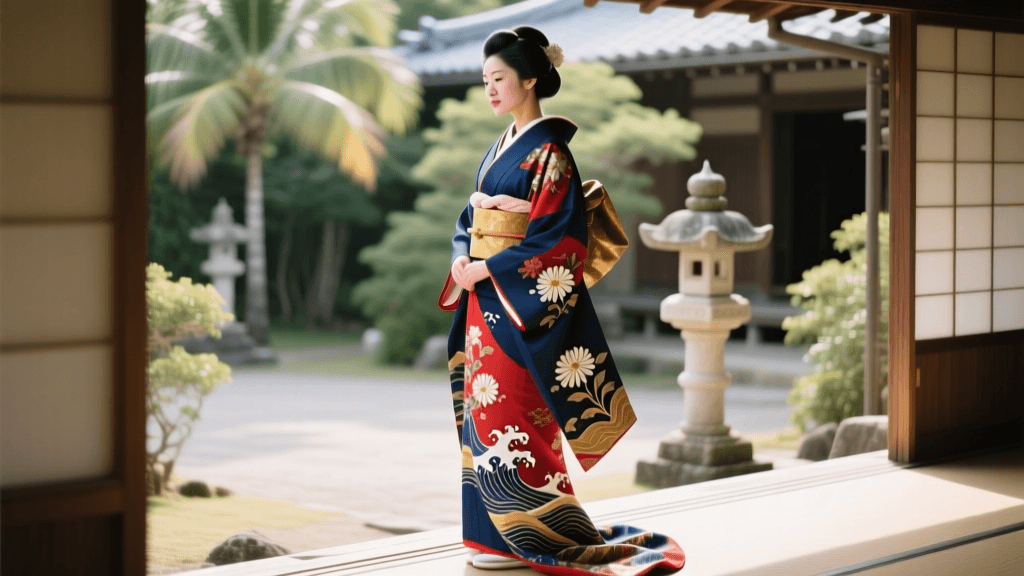
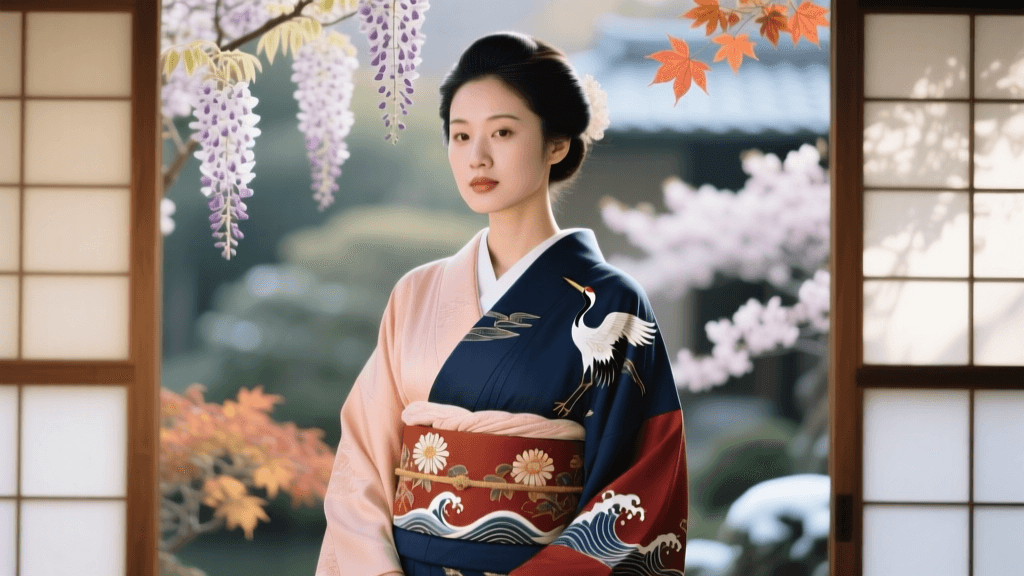
For weddings, coming-of-age ceremonies (Seijin-shiki), and New Year celebrations, garments feature Oshogatsu (auspicious) motifs that transcend strict seasonal rules. The most prominent is Shochikubai, the combination of Pine (Sho), Bamboo (Chiku), and Plum (Bai). Pine represents longevity and steadfastness, bamboo signifies resilience and flexibility, and plum blossoms symbolize perseverance and the promise of spring. Another highly revered motif is the Tsuru (crane), which is said to live for a thousand years, making it the ultimate symbol of a long, prosperous marriage when woven into a Uchikake (wedding over-robe).
Actionable Guide: Sourcing, Measuring, and Styling
If you are looking to purchase, wear, or style a kimono with proper motif placement, understanding the physical architecture of the garment is crucial. The placement of a motif dictates the formality and visual balance of the outfit.
1. Navigating Motif Placement and the Obi
The Obi (sash) is the focal point of the kimono silhouette and typically measures between 30 cm to 35 cm (12 to 14 inches) in width. When tied, it covers the midsection from just below the bust to the hip. Therefore, when selecting a semi-formal Tsukesage or formal Houmongi, you must ensure that the primary motifs are placed where they will not be severed or hidden by the Obi.
- Shoulder and Chest: Motifs here should be subtle and sparse, usually placed on the left shoulder to balance the right-side Obi knot (Otaiko).
- The Hem (Suso): The most important visual weight is at the hem. Motifs should begin approximately 40 cm to 50 cm from the bottom edge. This ensures the design flows beautifully when walking and remains visible beneath the Obi.
- Eba-moyo: For the highest formality, look for an Eba-moyo pattern, where the motif is dyed across the seams so that it forms a single, continuous picture wrapping around the body, uninterrupted by the kimono's structural seams.
2. Sourcing: Costs and Timing
Whether you are buying for a collection or personal wear, timing your purchase can save thousands of dollars.
- Vintage (Recycle Shops): Stores like Tansu-ya or online auction houses are treasure troves. A high-quality, vintage silk Houmongi with hand-painted Yuzen motifs can cost between $50 and $250 USD. Timing Tip: Shop in late February to catch the influx of spring Sakura motifs being restocked, or in August for end-of-summer Obon festival sales.
- New Bespoke (Gofuku-ya): Commissioning a new, hand-dyed kimono from a traditional shop in Kyoto or Tokyo is a major investment. Expect to pay between $3,000 and $15,000+ USD, with a lead time of 3 to 6 months. This route is necessary if you require specific family crests (Kamon) or custom Kaga Yuzen dyeing tailored to your exact body measurements.
- Modern Prints: For casual Komon or washable polyester Yukata, modern brands offer beautiful, seasonally appropriate motifs for $30 to $150 USD, perfect for beginners practicing their Kisetsukan timing.
Conclusion
The traditional garments of Japan are far more than historical artifacts; they are a living, breathing almanac of nature and human aspiration. Whether you are admiring the bold, royal yellows of a Ryukyuan Bingata, tracing the protective indigo spirals of an Ainu Attus, or carefully selecting a silk Houmongi with autumn maple leaves just as the October air turns crisp, you are participating in a centuries-old dialogue. By understanding the profound symbolism of color and the strict, beautiful rules of seasonal motifs, you elevate the act of dressing into an art form that honors the deep, intricate traditions of Asian textile heritage. For further exploration into regional dressing customs, the Japan National Tourism Organization offers excellent resources on experiencing local textile workshops firsthand.