The Modern Qipao: A Guide to Neo-Chinese Fusion Fashion
The Rise of Xin Zhongshi (New Chinese Style)
The global fashion landscape is currently witnessing a profound cultural renaissance led by the Xin Zhongshi, or 'New Chinese Style' movement. Moving far beyond the rigid, ceremonial boundaries of historical dress, this trend reimagines traditional Chinese sartorial elements for the contemporary, fast-paced world. At the heart of this movement is the modern qipao (cheongsam), a garment that has shed its reputation as exclusively formal or costume-like attire to become a versatile staple in modern fusion fashion. According to industry analysts at Jing Daily, the Xin Zhongshi trend is driven by Gen Z and Millennial consumers who seek cultural resonance without sacrificing everyday comfort or personal streetwear aesthetics. This guide will deconstruct the modern qipao, offering actionable advice on tailoring, fabric selection, styling, and sourcing for the contemporary wardrobe.
Deconstructing the Modern Qipao
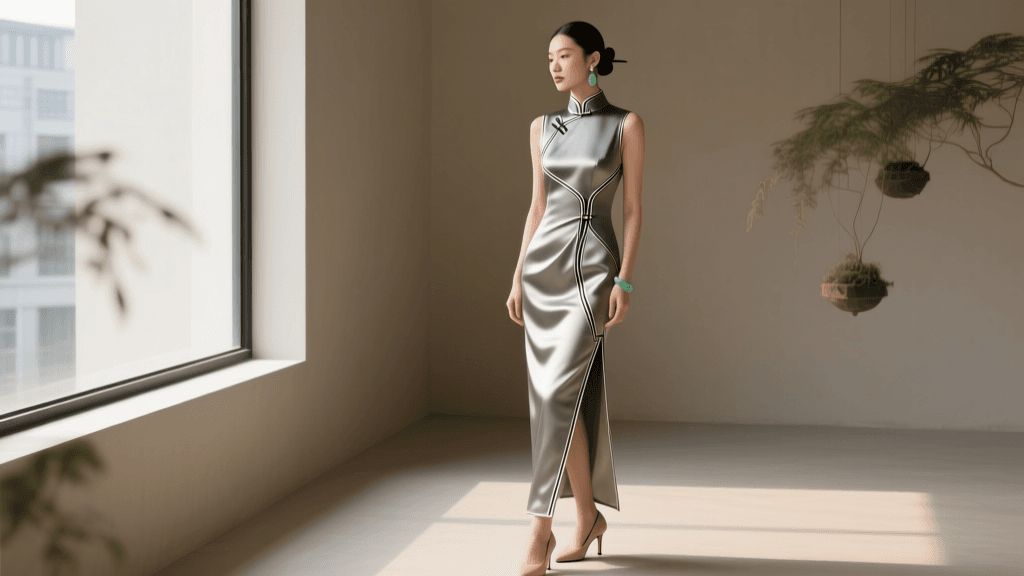
The traditional qipao, popularized in 1930s Shanghai, was characterized by its figure-hugging silhouette, high stiff collar, and restrictive side slits. While undeniably elegant, these structural elements often limited mobility and required specific undergarments and postures. The modern fusion qipao, however, prioritizes ease, layering, and cross-cultural styling. Designers are actively deconstructing the garment, merging the iconic pankou (frog fastenings) and mandarin collars with Western tailoring techniques, oversized silhouettes, and utilitarian fabrics. As noted by the South China Morning Post, this fusion approach allows the qipao to transition seamlessly from a boardroom meeting to an underground art gallery opening.
Comparison Chart: Traditional vs. Modern Fusion Qipao
Understanding the structural shifts between eras is crucial for anyone looking to invest in or design a neo-Chinese piece. Below is a detailed comparison of the key design elements.
| Feature | Traditional (1930s Shanghai) | Modern Fusion (Xin Zhongshi) |
|---|---|---|
| Collar | Stiff, high Yuanbao collar (3-5 cm) | Soft stand, Mandarin, or open V-neck (0-2 cm) |
| Silhouette | Form-fitting, zero-ease, darted | A-line, shift, or oversized drop-shoulder |
| Fastenings | Functional pankou from neck to hip | Decorative pankou, hidden zippers, or snap buttons |
| Slits | High side slits for mobility | Lower slits, asymmetrical hems, or no slits |
| Length | Calf to ankle-length | Micro-mini, midi, or cropped top variations |
| Sleeves | Cap, short, or long fitted sleeves | Balloon, bishop, puff, or sleeveless with dropped armscyes |
Actionable Tailoring Guide: Measurements and Ease
If you are commissioning a bespoke fusion qipao or altering a vintage piece for modern wear, understanding 'ease' is paramount. Traditional qipaos are cut with zero to negative ease, meaning the fabric stretches tightly across the body. For a modern, everyday fusion piece, you must instruct your tailor to incorporate specific ease allowances to allow for layering and dynamic movement.
Key Measurement Adjustments
- Bust Ease: Add 4 to 6 cm of ease to your actual bust measurement. This allows the garment to drape softly rather than pulling at the pankou fastenings, which can cause the neckline to gape.
- Waist Ease: Add 3 to 5 cm of ease. For an A-line or shift-style fusion qipao, the waist dart can be removed entirely, dropping the waistline to the natural hip for a more relaxed, contemporary silhouette.
- Hollow-to-Hem: For a modern midi qipao, measure from the hollow of your neck to 5 cm below the knee. This specific length ensures the garment pairs well with chunky sneakers or combat boots without overwhelming the frame.
- Armhole Depth: Lower the armscye (armhole) by 2 to 3 cm compared to traditional patterns. This accommodates modern layering, allowing you to wear a thin turtleneck or mesh long-sleeve top underneath your qipao during colder months.
Fabric Selection for Everyday Fusion
The choice of textile dictates the garment's drape, care requirements, and overall fusion aesthetic. While traditional silk brocade and heavy jacquards are beautiful, they often read as overly formal or costumey in a modern streetwear context.
Recommended Fusion Textiles
- Cotton-Linen Blends (150-200 GSM): Ideal for summer shift qipaos. The natural slub texture of linen mixed with the softness of cotton provides a relaxed, wabi-sabi aesthetic that pairs beautifully with denim and leather accessories.
- Matte Crepe de Chine (16-19 Momme): Unlike the high-shine satins of the 1980s, matte crepe offers a sophisticated, understated drape. It is perfect for bias-cut, slip-style qipaos that mimic 1990s minimalist fashion.
- Technical Nylon and Ripstop: Pioneered by avant-garde neo-Chinese designers, using water-resistant, utilitarian fabrics for a qipao top instantly transforms it into a piece of tech-wear. Look for fabrics with a slight sheen and structured memory.
- Wool Flannel and Tweed: For autumn and winter, a sleeveless, high-neck qipao vest made from heavy wool tweed (300+ GSM) serves as an elegant alternative to a standard waistcoat when layered over a crisp white poplin shirt.
Styling Neo-Chinese Pieces for the Contemporary Wardrobe
The golden rule of Xin Zhongshi styling is contrast. To prevent your outfit from looking like a period drama costume, you must juxtapose traditional Chinese elements with contemporary, Western, or subcultural staples. Here are three actionable outfit formulas.
Formula 1: The Streetwear Contrast
Pair a cropped, short-sleeve fusion qipao top (featuring a mandarin collar and floral brocade) with high-waisted, wide-leg distressed denim jeans. Ground the outfit with chunky retro sneakers and a utilitarian nylon crossbody bag. The key here is that the qipao acts as a statement top, while the denim anchors it in everyday reality.
Formula 2: The Corporate Layer
Take a sleeveless, midi-length qipao made from matte black crepe and wear it as a pinafore over a structured, oversized white button-down shirt. Add a sleek leather belt at the natural waist to create structure, and finish with pointed-toe ankle boots. This look, frequently spotted on the runways of Shanghai Fashion Week, is perfect for creative corporate environments.
Formula 3: The Avant-Garde Evening
Layer a sheer, organza qipao jacket with exaggerated balloon sleeves over a simple silk slip dress and tailored trousers. The translucent nature of the organza allows the inner layers to show through, creating depth and movement while maintaining the traditional frog closures as a subtle decorative element.
Sourcing, Costs, and Timelines
Acquiring a high-quality fusion qipao requires knowing where to look and what to expect regarding pricing and production times.
Bespoke Tailoring (Shanghai and Hong Kong)
If you are traveling to Shanghai, the boutiques along Changle Road and Maoming South Road remain the epicenter of qipao craftsmanship. For a modern fusion piece with premium fabrics (like imported Italian crepe or Japanese linen), expect to pay between $350 and $800 USD. The timeline for a bespoke commission is typically 3 to 4 weeks, requiring at least two in-person fittings. If you cannot stay for the second fitting, most reputable tailors offer international shipping after a virtual video fitting.
Contemporary Indie Brands (Online)
For ready-to-wear Xin Zhongshi pieces, platforms like Taobao and Tmall host incredible indie designers who specialize in neo-Chinese fashion. Brands like Ms MIN, Samuel Gui Yang, and various independent studios offer modified qipaos ranging from $150 to $500 USD. When ordering online, always check the 'size chart' for the 'flat lay' measurements and compare them against a well-fitting garment you already own, as Asian sizing often runs one to two sizes smaller than Western equivalents.
Caring for Fusion Textiles
Modern fusion garments often mix traditional trims (like silk piping or metallic pankou knots) with modern base fabrics. To preserve the structural integrity of the collar and the vibrancy of the textiles, follow these care protocols:
- Dry Clean Only for Structured Collars: If your fusion qipao has an interfaced, stiff mandarin collar, dry cleaning is essential. Home washing will dissolve the interfacing, causing the collar to collapse and wrinkle permanently.
- Cold Hand Wash for Linens and Cottons: For unstructured, everyday cotton-linen qipaos, hand wash in cold water with a pH-neutral detergent. Never wring the fabric; instead, roll it in a clean towel to absorb excess moisture and lay it flat to dry to prevent the side slits from warping.
- Storage: Never hang a heavy brocade or beaded fusion qipao on a wire hanger, as the weight of the garment will stretch the shoulders and distort the neckline. Use padded, velvet hangers, or fold the garment with acid-free tissue paper and store it in a breathable cotton garment bag to protect the metallic threads from oxidizing.
By embracing the principles of Xin Zhongshi, you are not merely wearing a garment; you are participating in a living, breathing dialogue between centuries of Asian textile heritage and the limitless possibilities of modern global fashion. Whether you are commissioning a bespoke piece or styling a ready-to-wear top with your favorite vintage denim, the modern qipao stands as a testament to the enduring adaptability of Asian traditions.