Kimono Extreme Weather Guide 2026: Rain, Snow & Heat Tips
Navigating the Elements in Traditional Japanese Garments
As global climate patterns shift and extreme weather events become more frequent in 2026, wearing traditional Japanese garments presents unique challenges. The kimono, a symbol of elegance and cultural heritage, was historically designed for the distinct four seasons of Japan. However, modern practitioners and enthusiasts must adapt to sweltering summer heatwaves, unpredictable monsoon rains, and heavy winter snowfall without compromising the integrity of delicate silks or the aesthetics of the outfit. According to the Japan National Tourism Organization, the revival of daily kimono wear among younger generations has sparked a demand for weather-resistant adaptations that honor tradition while embracing 2026 textile technologies. This comprehensive guide explores how to protect, layer, and adapt your kimono for extreme weather conditions.
Surviving the Summer Heat: Ro, Sha, and Modern Cooling
Japanese summers are notoriously hot and humid. Wearing multiple layers of silk in July or August can lead to heat exhaustion if the correct seasonal garments are not selected. The traditional answer to summer heat lies in the weave of the fabric.
The Art of Ro and Sha Weaves
For high-heat environments, the Encyclopedia Britannica notes that traditional summer kimonos are crafted from ro (leno weave) and sha (gauze) silks. These fabrics feature intentional gaps in the weave, allowing air to circulate directly against the skin. In 2026, authentic hand-woven ro kimono from Nishijin remain highly prized, often costing between ¥150,000 and ¥300,000. However, modern textile manufacturers have introduced washable, synthetic-silk blends that mimic the breathability of sha while offering superior moisture-wicking properties, typically priced around ¥45,000.
Cooling Undergarments and Accessories
The foundation of summer kimono wear is the hiyoke (a lightweight, breathable under-slip). In 2026, contact-cooling polymer slips are the standard. These garments absorb body heat upon contact, dropping the skin temperature by up to 2°C. Pair this with a sensu (folding fan) made from washi paper and bamboo, which is not only a stylish accessory but a vital tool for personal climate control. When attending outdoor summer festivals, applying a traditional biyaku (cooling powder) to the collarbone and back of the neck prevents sweat from staining the kimono collar.
Monsoon and Rain Protections: Keeping Silk Dry
Water is the natural enemy of silk. A sudden downpour can cause dyes to bleed, fabrics to warp, and delicate embroidery to ruin. Navigating the rainy season (tsuyu) requires specialized outerwear and footwear protections.
Ame-Gappa and Modern Raincoats
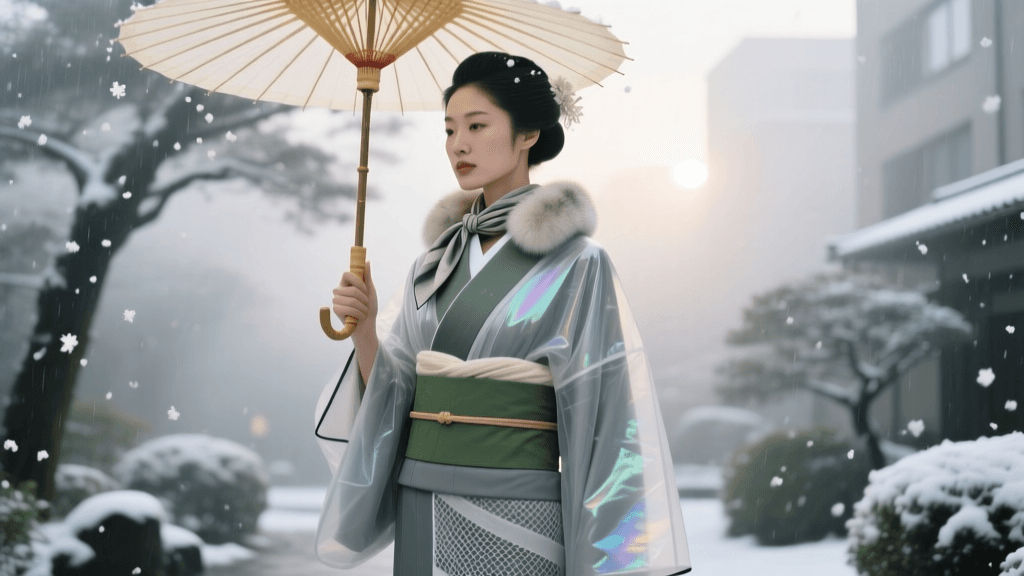
The ame-gappa is a traditional kimono raincoat characterized by its wide sleeves and front tie. Historically made from oiled paper or treated cotton, the 2026 iterations of the ame-gappa utilize eco-friendly, breathable TPU (Thermoplastic Polyurethane) membranes. These modern raincoats repel heavy rain while allowing internal humidity to escape, preventing the wearer from overheating. A high-quality, tailored TPU ame-gappa costs approximately ¥28,000. For lighter drizzles (shigure), a treated silk michiyuki (travel coat) with a modern fluorine-free DWR (Durable Water Repellent) nano-coating offers a more formal, water-resistant alternative.
Footwear: Protecting Zori and Geta
Traditional zori and geta sandals are highly vulnerable to puddles and mud. To protect the fabric thongs (hanao) and the base, wearers utilize ashinaka (toe covers) or full silicone rain slipcovers that stretch over the footwear. In 2026, transparent silicone zori covers are widely available for ¥2,500 per pair, offering a discreet barrier against muddy streets. For heavy rain, switching to setta (leather-soled sandals) with elevated heels keeps the hem of the kimono safely above the waterline.
Winter and Snow: Layering for Warmth and Traction
Winter kimono styling is an exercise in strategic layering. The challenge in snowy conditions is maintaining warmth without adding so much bulk that the elegant silhouette of the kimono is lost.
The Layering System
Warmth begins at the base layer. A thick, quilted cotton hada-juban (undershirt) traps body heat. Over this, a winter nagajuban (full-length under-kimono) lined with silk or modern thermal fleece provides insulation. The outer kimono should be made of awase (lined silk) or heavy wool blends like omeshi. To block icy winds, a haori (hip-length jacket) or a michiyuki (square-necked overcoat) is essential. In 2026, heated inner vests powered by rechargeable USB-C batteries are discreetly worn beneath the nagajuban, providing up to eight hours of active warmth in sub-zero temperatures.
Navigating Snow and Ice
Walking in snow requires specialized footwear to prevent dangerous slips. Yukigeta (snow geta) are traditional wooden clogs fitted with wara (straw) soles for traction. Modern 2026 adaptations feature wooden bases with micro-spike rubber treads, priced around ¥18,000. Additionally, wearing a hanten (a short, padded winter jacket) indoors or during brief outdoor transitions provides immediate core warmth without disrupting the formal obi knot.
2026 Fabric Care and Weatherproofing Technology
Despite the best precautions, extreme weather exposure requires meticulous aftercare. The traditional arai-hari method—where the kimono is completely unstitched, washed as flat bolts of fabric, and re-sewn—remains the gold standard for deep cleaning, costing around ¥25,000 in 2026. However, for minor rain spotting or snow melt, professional ozone dry-cleaning services in Tokyo and Kyoto now offer same-day spot treatments that neutralize water stains without damaging protein-based silk fibers. Furthermore, applying a professional-grade, silk-safe hydrophobic spray before the rainy season can reduce water absorption by up to 80%, buying you precious minutes to find shelter during a sudden storm.
Seasonal Kimono Weather Gear Comparison
| Season | Garment / Accessory | Primary Material (2026) | Avg. Cost (JPY) | Core Function |
|---|---|---|---|---|
| Summer | Ro Kimono | Leno-weave Silk / Synthetic Blend | ¥45,000 - ¥150,000 | Maximized airflow and breathability |
| Summer | Contact-Cooling Hiyoke | Q-TEX Cooling Polymer | ¥8,500 | Lowers skin temperature, wicks sweat |
| Rain | Ame-Gappa | Breathable TPU Membrane | ¥28,000 | Full-body waterproof outer layer |
| Rain | Zori Silicone Covers | Stretch Silicone | ¥2,500 | Protects footwear from puddles and mud |
| Snow | USB-C Heated Vest | Carbon Fiber Elements / Cotton | ¥12,000 | Active core heating beneath layers |
| Snow | Modern Yukigeta | Paulownia Wood / Micro-spike Rubber | ¥18,000 | Elevates hem, provides ice traction |
Conclusion
Adapting to extreme weather in a kimono is a testament to the garment's enduring versatility. By combining centuries-old weaving techniques like ro and sha with 2026 advancements in breathable waterproofing and active thermal wear, enthusiasts can confidently step out into rain, snow, and heat. Respecting the weather means respecting the garment; with the right adaptations, your traditional wardrobe will remain pristine and comfortable for decades to come.