Styling Qipao Tops & Jeogori Jackets: 2026 Capsule Wardrobe Guide
The Renaissance of Asian Heritage in 2026 Fashion
The fashion landscape of 2026 has decisively moved past superficial cultural appropriation, embracing instead a deep, respectful integration of heritage garments into daily life. As the modern capsule wardrobe evolves to prioritize longevity, versatility, and cultural storytelling, traditional Asian pieces have emerged as foundational anchors. Specifically, the Mandarin-collar Qipao (or Cheongsam) top and the Korean cropped Jeogori jacket are leading the "Neo-Heritage" movement. These garments are no longer reserved for Lunar New Year celebrations or formal weddings; they are being reimagined for the contemporary creative office, weekend gallery hopping, and minimalist streetwear.
According to the Ellen MacArthur Foundation, the shift toward circular fashion in 2026 has pushed designers and consumers alike to invest in garments that carry historical weight and artisanal craftsmanship, moving away from micro-trends. By integrating traditional Asian silhouettes into a modern wardrobe, you are not just making a style statement; you are participating in the preservation of global sartorial heritage.
Heritage garments are not meant to be frozen in time; their true beauty is revealed when they interact with the rhythm of contemporary life, bridging centuries of craftsmanship with modern utility.
Deconstructing the Modern Qipao Top
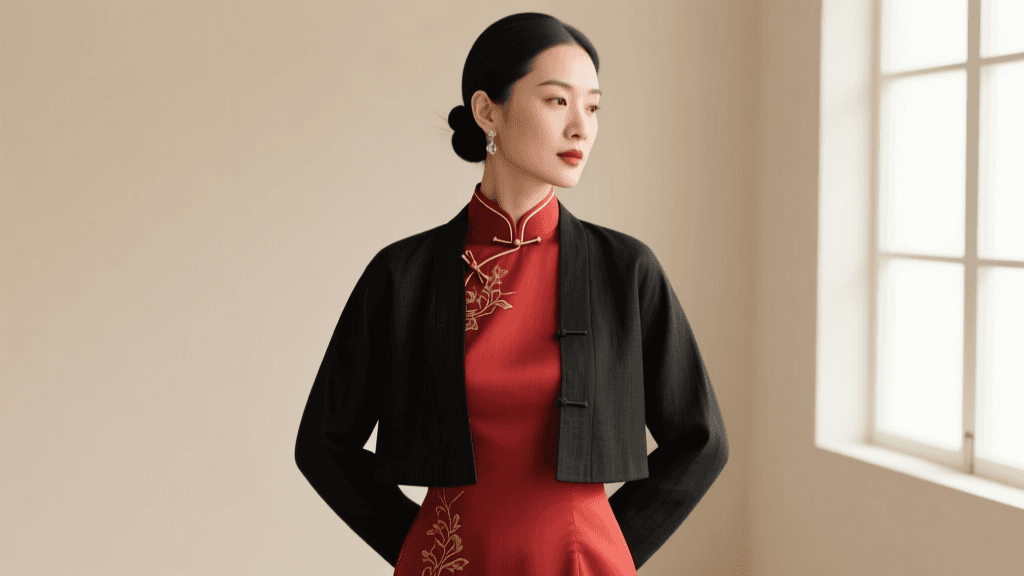
The Qipao top, characterized by its asymmetric closure, standing mandarin collar, and intricate pankou (frog fasteners), is a masterclass in structural elegance. In 2026, the focus has shifted toward matte finishes and sustainable textiles. While traditional Qipaos were often made from heavily embroidered brocades, the modern capsule iteration favors 19-momme peace silk, Tencel blends, and matte Cupro. These fabrics offer the drape and breathability required for all-day wear while maintaining the garment's architectural integrity.
The Collar and Fasteners
The height of the mandarin collar dictates the formality and comfort of the piece. For a 2026 office capsule, look for a collar height of exactly 1.5 inches. This provides the visual structure of a traditional standing collar without restricting neck movement during long hours at a desk. The pankou fasteners, traditionally hand-knotted from silk, are now frequently crafted from 3D-knitted recycled nylon or matte vegan leather in modern interpretations, offering durability and a subtle contemporary edge.
Styling the Qipao Top
To avoid a costume-like appearance, the key is proportion and contrast. Pair a fitted, short-sleeved Tencel Qipao top with high-waisted, wide-leg wool trousers. The volume of the trousers balances the structured, form-fitting nature of the top. Tuck the top in to highlight the waistline, or opt for a cropped Qipao variation that ends precisely at the natural waist, pairing it with a pleated midi skirt for a fluid, romantic silhouette.
The Cropped Jeogori as a Layering Essential
The Korean Jeogori, the upper garment of the traditional Hanbok, has undergone a massive renaissance in contemporary layering. Historically, the Jeogori featured a voluminous fit and a straight hemline. The 2026 modern adaptation is sharply cropped, typically hitting 14 to 16 inches from the shoulder seam, and features a streamlined, minimalist dongjeong (the white paper or fabric collar strip). The goreum (the long front ties) remain, but are often tailored to be slightly narrower and longer, allowing for dramatic, asymmetrical bowing.
Mastering the Modern Goreum Tie
The way you tie the goreum can completely alter the vibe of your outfit. For a sleek, modern office look, tie the goreum in a tight, small knot with one tail left hanging long, mimicking the aesthetic of a minimalist silk necktie. For evening or streetwear, allow the ties to remain loose and flowing, creating movement and a sense of relaxed elegance.
Layering the Jeogori
The cropped Jeogori is the ultimate alternative to the standard cropped blazer or cardigan. In 2026, styling a raw silk Jeogori over a simple, ribbed-knit turtleneck and tailored straight-leg denim creates a striking juxtaposition of textures. For warmer months, layer a sheer, organza Jeogori over a slip dress. The translucency of the organza honors the traditional Korean aesthetic of subtle layering while keeping the outfit breathable and modern.
2026 Capsule Wardrobe Matrix: Traditional Meets Modern
Building a cohesive wardrobe requires understanding how these heritage pieces interact with contemporary staples. Below is a strategic matrix for integrating Qipao tops and Jeogori jackets into your 2026 rotation.
| Traditional Piece | Modern Pairing | Occasion | Est. 2026 Price Range | Fabric Focus |
|---|---|---|---|---|
| Sleeveless Tencel Qipao Top | High-waisted wide-leg linen trousers | Creative Office / Summer Brunch | $180 - $240 | Tencel Lyocell |
| Long-sleeve Matte Silk Qipao | Asymmetrical wool midi skirt | Gallery Opening / Evening Dinner | $280 - $350 | 19-Momme Peace Silk |
| Cropped Raw Silk Jeogori | Ribbed turtleneck & straight-leg denim | Weekend Streetwear / Travel | $220 - $300 | Dupioni or Raw Silk |
| Sheer Organza Jeogori | Minimalist satin slip dress | Summer Wedding / Cocktail | $190 - $260 | Silk Organza |
Color Theory and Proportion Rules for 2026
When mixing traditional Asian garments with Western contemporary pieces, color theory is paramount. Traditional garments often feature deeply symbolic, saturated colors—such as crimson, indigo, and jade. However, the 2026 Neo-Heritage trend leans heavily into "desaturated heritage tones."
- Muted Jade and Slate: Pair a muted jade Qipao top with charcoal grey or black tailoring. The cool undertones create a sophisticated, grounded look.
- Dusty Rose and Oxblood: A dusty rose Jeogori layered over an oxblood turtleneck creates a monochromatic depth that feels incredibly luxurious and intentional.
- The Rule of Thirds: Because the Qipao top and Jeogori are visually complex due to their closures and collars, keep the bottom two-thirds of your outfit visually quiet. Avoid loud prints on your trousers or skirts; let the heritage piece be the sole focal point.
Footwear and Accessory Pairings
The wrong footwear can instantly push a heritage garment into costume territory. In 2026, the goal is grounded utility. Avoid delicate, traditional embroidery shoes or overly ornate heels. Instead, anchor your Qipao or Jeogori with structural, modern footwear. Chunky leather loafers, pointed-toe mules, and minimalist leather combat boots provide a necessary edge that contrasts beautifully with the delicate silk and traditional closures of the garments.
For accessories, opt for structural, unbranded leather tote bags or geometric acrylic clutches. Keep jewelry minimal; the pankou buttons and goreum ties already provide intricate visual interest around the neckline and chest, rendering heavy necklaces redundant and visually cluttered.
Sourcing Authentic Yet Modern Pieces
The preservation of the techniques used to create these garments is vital. As noted by the UNESCO Intangible Cultural Heritage registry, protecting traditional silk weaving and natural dyeing processes ensures that the garments you purchase carry genuine cultural weight. When shopping in 2026, look for brands that transparently source their silks and employ artisans trained in traditional knotting and tailoring.
Museums like the Victoria and Albert Museum continue to highlight the historical evolution of these garments, reminding us that authentic construction—such as the use of bias binding on the interior seams of a Qipao to prevent fraying and ensure a smooth drape—is what separates a high-quality heritage piece from a fast-fashion imitation. Expect to invest between $180 and $350 for a contemporary, ethically made piece that will last a decade.
Care and Maintenance for Hybrid Garments
Modern fabrics have made caring for these garments easier, but traditional elements still require specific attention to maintain their structural integrity over the years.
- Collar Care: The stiffened dongjeong on a Jeogori and the fused interfacing of a Qipao collar can warp if machine washed. Always hand wash these garments in cool water with a pH-neutral silk detergent, or opt for professional eco-friendly dry cleaning.
- Fastener Protection: Before washing, secure all pankou frog buttons to prevent the loops from stretching out or catching on other fabrics.
- Storage: Never hang a heavy silk Qipao top on a wire hanger, as the weight of the wet or dry silk will distort the shoulder seams. Use padded, velvet-covered hangers. For Jeogori jackets, fold them neatly along the natural seam lines and store them in breathable cotton garment bags to protect the delicate organza or raw silk from dust and UV fading.
By treating these garments with the respect their history demands, while styling them with the bold, minimalist sensibilities of 2026, you create a wardrobe that is deeply personal, culturally resonant, and effortlessly modern.